Business
From Nigeria’s Biggest Gamble to Global Energy Powerhouse: How the Iran War Changed Dangote Refinery’s Fortunes
The Dangote Refinery has emerged as one of the unexpected business beneficiaries of the global energy disruption caused by the Iran war. After years of delays, massive construction costs and doubts about whether the project could succeed, the refinery reached full capacity just as disruption around the Strait of Hormuz increased global demand for alternative fuel supplies. Now Aliko Dangote is pursuing an even bigger ambition: turning an African refining giant into a global energy empire.
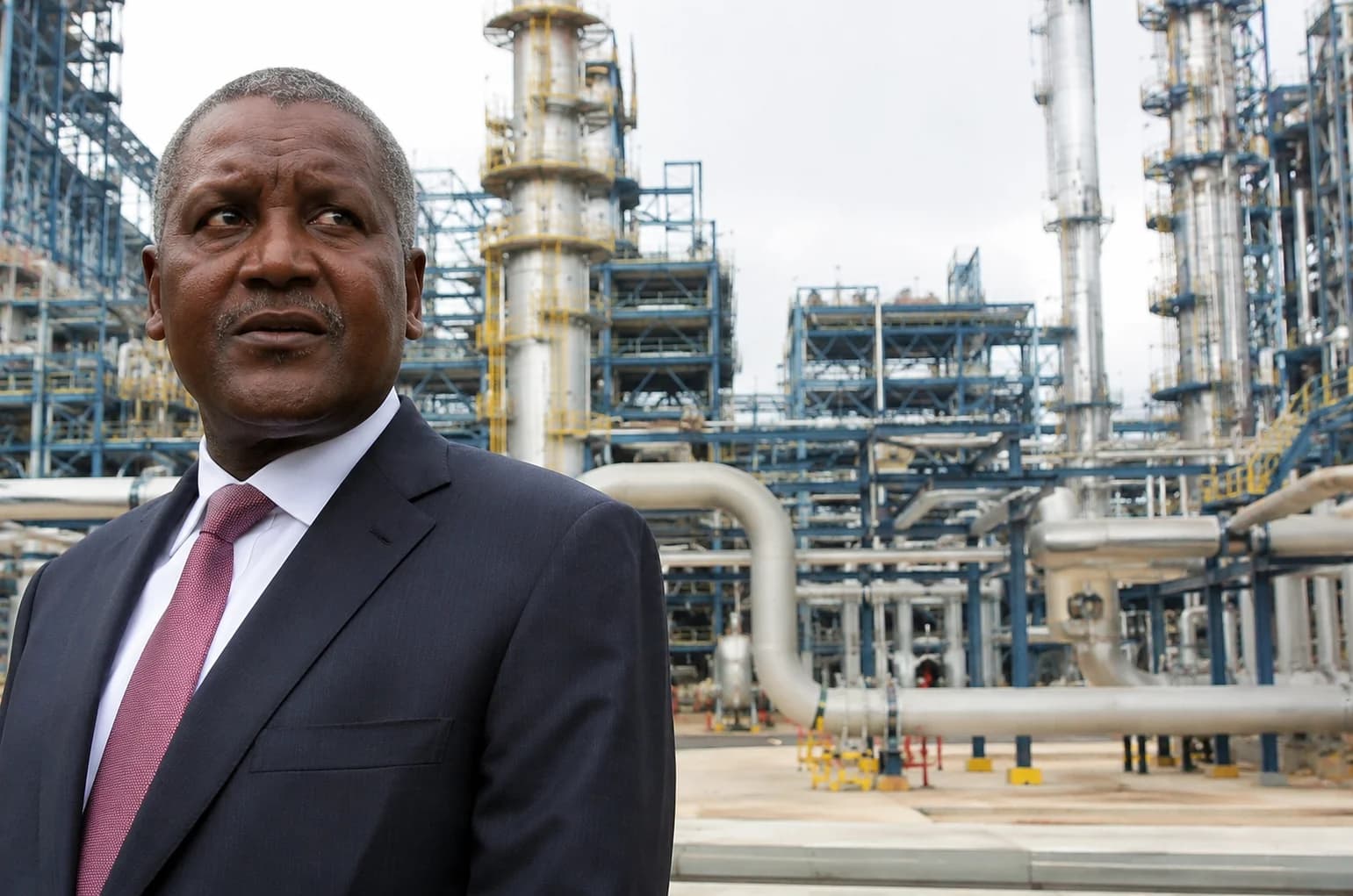
For years, people asked whether Aliko Dangote had made the biggest mistake of his business career.
The refinery was too expensive.
Too complicated.
Too delayed.
Too ambitious.
The cost rose.
Deadlines moved.
Criticism grew.
Nigeria had a long history of failed refineries, and many people wondered whether even Africa’s richest man had underestimated the difficulty of building one of the world’s biggest refining projects.
Then the global energy market changed.
And suddenly, Dangote’s enormous gamble began to look very different.
Current reporting says the Dangote Refinery reached full operational capacity in February 2026, around the same period that the Iran war and disruption in global energy markets increased demand for fuel supplies less dependent on routes around the Strait of Hormuz.
The timing could hardly have been more dramatic.
A project once criticised as dangerously ambitious is now being discussed as a strategic energy asset.
Not only for Nigeria.
For Africa.
And potentially for global fuel markets.
The Refinery Arrived at the Right Moment
Business history is full of companies that built the right thing at the wrong time.
Dangote may have done the opposite.
The refinery took years to build.
Its reported cost reached around $20 billion.
There were delays and overruns.
But when full capacity arrived, the global energy environment was moving in its favour.
Conflict involving Iran disrupted traditional energy calculations.
Buyers became more interested in alternative sources of refined products.
Supply routes became strategic.
Location became valuable.
And Africa suddenly had a refining giant capable of supplying major volumes.
The lesson is powerful.
Timing can transform a business.
Nigeria Spent Decades Exporting Crude and Importing Fuel
The irony of Nigeria’s petroleum economy has always been painful.
One of Africa’s largest oil producers repeatedly exported crude oil and imported refined fuel.
Nigeria sold the raw material.
Other countries processed it.
Nigeria then bought the finished product back.
That structure exported value.
Jobs.
Technical capacity.
Industrial opportunity.
Foreign exchange.
The Dangote Refinery was designed to challenge that model.
Its success or failure therefore matters beyond one billionaire’s balance sheet.
It asks a larger African question:
Why should a continent rich in raw materials remain dependent on others to process them?
The Iran War Exposed the Value of Refining Capacity
Energy crises reveal weaknesses that normal markets can hide.
When supply is stable, countries may not worry much about where their fuel comes from.
When conflict disrupts supply routes, geography suddenly matters.
Refining capacity matters.
Shipping routes matter.
Storage matters.
Alternative suppliers matter.
The Dangote Refinery’s position outside the Strait of Hormuz supply chain increased its strategic relevance as buyers searched for alternatives amid disruption.
This is bigger than temporary profit.
It demonstrates why infrastructure matters.
A refinery cannot be built in three months because a crisis has begun.
Strategic capacity must exist before the emergency.
Dangote’s Wealth Has Risen With the Refinery’s Fortunes
According to current reporting, the improvement in the refinery’s fortunes has helped increase Aliko Dangote’s net worth by billions of dollars.
But the more interesting question is not how rich Dangote becomes.
The bigger question is what the refinery can do for African industrialisation.
Can it reduce dependence on imported fuel?
Can it support aviation?
Can it supply neighbouring markets?
Can it create petrochemical industries?
Can it strengthen logistics networks?
Can it create technical skills?
Can it generate foreign exchange?
A project of this size should be judged by more than the wealth of its owner.
Its real significance will be measured by the economic ecosystem it creates.
The Ambition Is Getting Even Bigger
Dangote is not stopping with Lagos.
A new 700,000-barrel-per-day refinery has been proposed for Lamu, Kenya, potentially giving East Africa a massive new refining hub.
That is an extraordinary ambition.
If completed successfully, it could reshape the regional fuel market.
East African countries have long depended heavily on imported refined petroleum products.
A major refinery located in the region could change supply chains, logistics and energy security.
But a project of this scale will also face difficult questions.
Financing.
Crude supply.
Environmental impact.
Infrastructure.
Political stability.
Regional demand.
Execution.
The Lagos refinery has shown both the enormous difficulty and enormous potential of building mega-scale industrial infrastructure in Africa.
Africa Has Been Exporting Too Much Raw Wealth
The Dangote story connects with a wider African problem.
The continent exports crude oil.
Then imports petrol.
Exports cocoa.
Then imports chocolate.
Exports cotton.
Then imports clothing.
Exports minerals.
Then imports electronics.
This model has lasted too long.
Countries become truly wealthy not simply by owning resources but by building value around them.
Processing.
Manufacturing.
Technology.
Logistics.
Finance.
Research.
Branding.
Distribution.
The refinery is important because it represents an attempt to keep more of the value chain on the continent.
But One Refinery Cannot Solve Everything
The excitement surrounding Dangote should not become economic fantasy.
One company cannot solve all of Nigeria’s energy problems.
The refinery still needs reliable crude supply.
Nigeria still needs pipelines.
Storage.
Roads.
Ports.
Efficient distribution.
Competition.
Strong regulation.
Reliable electricity.
A healthy business environment.
Current reporting points to crude-supply and distribution challenges even as the refinery expands its ambitions.
This matters.
Industrial success does not happen in isolation.
A factory can be world-class and still struggle if the system around it is weak.
Nigeria Must Protect Competition
The refinery’s growing power will naturally create concerns about market dominance.
Those concerns should not be dismissed.
Nigeria needs successful large businesses.
But it also needs competition.
A strong economy should not replace dependence on foreign suppliers with unhealthy dependence on one domestic supplier.
Regulators must protect consumers.
Pricing should remain transparent.
Market access should be fair.
Other investors should be encouraged.
Infrastructure should not become a tool for excluding competitors.
Dangote’s success should inspire more industrial investment, not make future competition impossible.
The Refinery Has Become a Lesson in Patience
Mega-projects are difficult.
They consume capital.
They survive political changes.
They face technical problems.
They test investors.
The Dangote Refinery’s long journey is a reminder that industrial development requires patience.
Africa often celebrates startups and digital businesses—and rightly so.
But economies also need heavy industry.
Refineries.
Steel plants.
Fertiliser factories.
Power systems.
Railways.
Ports.
These projects take longer.
They cost more.
They carry greater risk.
But they can transform entire economic systems.
The Global Energy Crisis Has Created an African Opportunity
The Iran-war disruption is tragic in human and geopolitical terms.
But markets react to crises.
Supply changes.
Demand moves.
Prices adjust.
Businesses positioned in the right place benefit.
The Dangote Refinery has found itself in that position.
The challenge now is converting temporary geopolitical advantage into lasting business strength.
A crisis can create opportunity.
But the crisis will not last forever.
The refinery must remain competitive when global markets stabilise.
Efficiency will matter.
Reliability will matter.
Product quality will matter.
Pricing will matter.
Logistics will matter.
The Kenya Project Could Change East Africa
The planned Lamu refinery is perhaps the clearest sign that Dangote’s ambition is becoming continental.
A 700,000-barrel-per-day facility would be enormous by regional standards.
If built and operated successfully, it could give East Africa a powerful new energy centre.
But the project should also create value beyond fuel.
Local engineering skills.
Construction jobs.
Technical training.
Supplier networks.
Port infrastructure.
Petrochemical industries.
The greatest mistake would be to build a giant industrial facility that operates like an isolated island in the economy.
A refinery should create an ecosystem.
Africa Needs More Builders
The continent has no shortage of business ideas.
What it needs are more people and institutions capable of building at scale.
That includes private investors.
Governments.
Pension funds.
Banks.
Capital markets.
Development-finance institutions.
Africa cannot industrialise if every major project depends entirely on external capital and external expertise.
The continent needs financial systems capable of supporting long-term investment.
The Dangote story shows what can happen when African capital attempts something enormous.
It also shows how difficult that journey can be.
The Next Challenge Is Bigger Than Dangote
The success of one billionaire is not a development strategy.
Africa needs thousands of growing businesses.
Millions of productive jobs.
Competitive markets.
Strong public institutions.
Reliable infrastructure.
Quality education.
But flagship industrial projects can demonstrate possibility.
They can show investors that large-scale production is possible.
They can create supply chains.
They can train workers.
They can inspire competitors.
The question is whether governments can build environments where more companies can attempt ambitious projects.
Nigeria Must Learn From the Moment
Nigeria should not treat the refinery’s rise simply as a private-sector success story.
There are national lessons.
Why did the country struggle for decades to refine enough of its own crude?
Why did public refineries consume enormous resources without producing reliable results?
What regulatory barriers make industrial projects difficult?
How can crude supply become more reliable?
How can infrastructure support exports?
How can local companies enter the supply chain?
How can technical education respond to industrial demand?
A serious country studies success and failure equally.
Dangote’s Biggest Gamble Is Becoming His Biggest Advantage
The refinery was once a source of doubt.
Now it is a source of leverage.
The same scale that made the project frightening has made it strategically important.
A small refinery would not change global calculations.
A giant one can.
That is the paradox of ambition.
The risk is enormous.
But if it works, the reward can reshape markets.
The Iran-war disruption did not create the Dangote Refinery.
Years of investment created it.
But the crisis revealed its strategic value.
From Lagos to the World
The story began as an attempt to solve a Nigerian problem.
Refine fuel at home.
Reduce import dependence.
Create value from Nigerian crude.
But the ambition is now much larger.
Exports.
Continental supply.
Expansion.
A new refinery in Kenya.
Potential public listings.
A broader African energy network.
Whether every ambition succeeds remains uncertain.
Mega-projects always carry risk.
But one thing has changed.
The question is no longer whether an African company can build one of the world’s most consequential refining businesses.
The question is how far it can go.
For decades, Africa watched others process its resources and sell the finished products back.
Dangote is trying to reverse that equation.
And in a world shaken by energy disruption, the timing of that bet may prove to be as important as its enormous size.
PUBLISHER NOTE
About Talk Ya True
Talk Ya True publishes independent reporting and analysis with clear attribution, source transparency and corrections when needed.
Related Articles
Business
Nigeria’s Inflation Falls to 15.43% - But Why Do Things Still Feel So Expensive?
Business
Naira Holds Firm as Brent Oil Climbs Above $94 Amid Middle East Tensions

Business
Nigeria’s Internet Subscriptions Hit 157.4 Million as Broadband Penetration Reaches 56.1%
Business
US Lifts 12-Year Security Restriction on Nigerian Vessels in Major Maritime Boost
Stay Informed
Get the latest stories from Nigeria.
Free news updates. Unsubscribe anytime.
By subscribing, you agree to receive free news updates from Talk Ya True. You can unsubscribe at any time.