Nigeria
Muslim-Muslim Ticket Debate Intensifies as Calls for Continued Northern Political Dominance Resurface
The debate over Nigeria's Muslim-Muslim presidential ticket has returned to the centre of political discourse ahead of the 2027 election. Supporters argue that competence should matter more than religious balancing, while critics fear that maintaining same-faith tickets could deepen perceptions of religious and regional dominance in national politics.
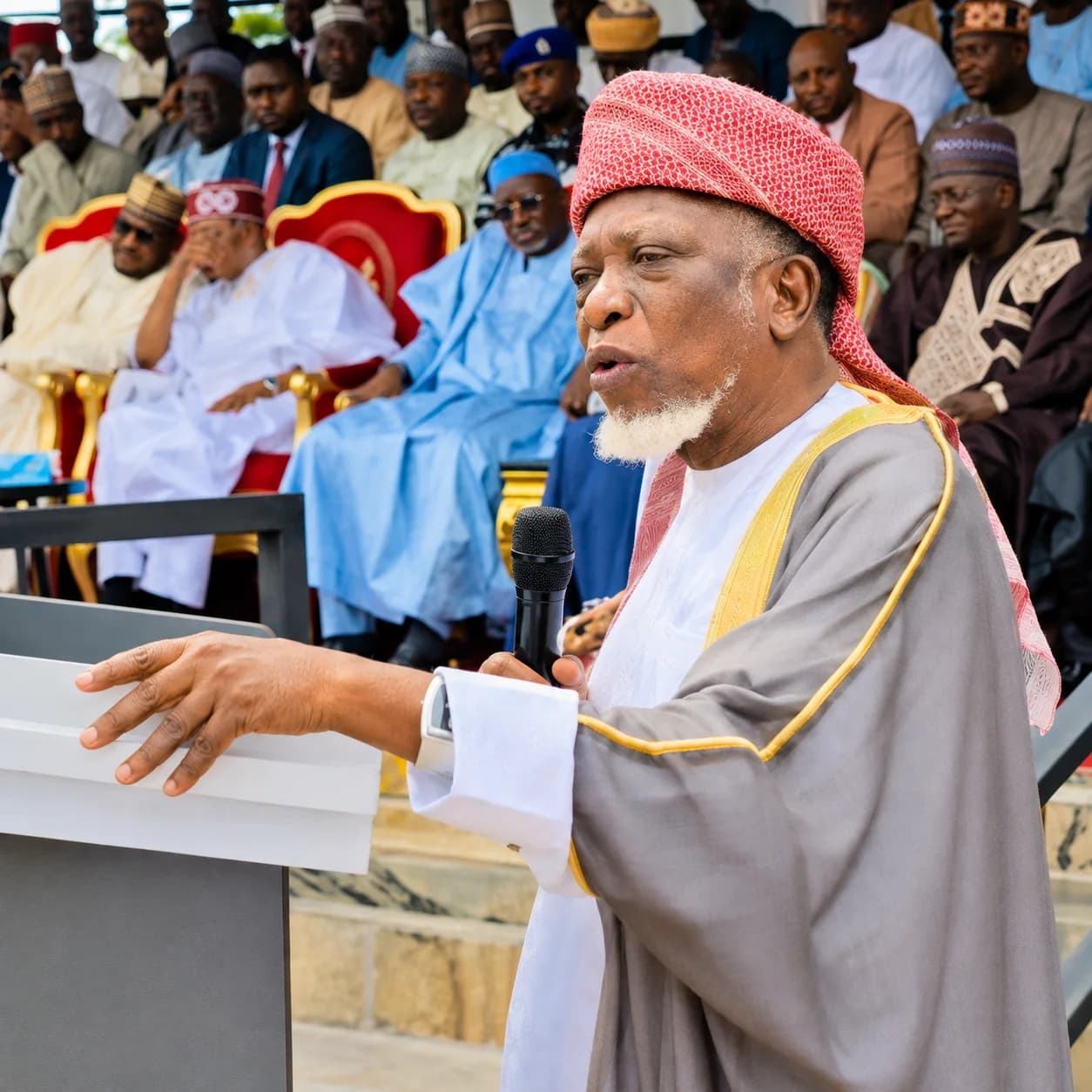
Nigeria's long-running debate over the Muslim-Muslim presidential ticket has returned with renewed force as political parties and interest groups position themselves ahead of the 2027 general election.
The controversy has been reignited by President Bola Ahmed Tinubu's decision to retain Vice President Kashim Shettima, effectively keeping the same-faith presidential ticket that generated significant controversy before the 2023 election.
What was once presented as a controversial electoral strategy has now become a much bigger question about the future of political representation in Nigeria.
The Same-Faith Ticket Returns
Tinubu and Shettima ran together in 2023 as a Muslim-Muslim ticket, breaking with a long-standing political practice in which major presidential tickets often attempted to balance Nigeria's two largest religious communities.
For 2027, the arrangement is continuing.
The decision has attracted considerably less immediate outrage than it did in 2022, although religious and political groups remain sharply divided over its implications. Recent reporting has described the debate as a "quiet return" of the Muslim-Muslim ticket, with the issue now competing with other political concerns ahead of the election.
Why "Dominance" Has Become a Sensitive Word
The most controversial part of the debate is not simply whether two Muslims can occupy Nigeria's two highest elected offices.
Constitutionally and democratically, religious identity does not disqualify a candidate from either position.
The concern raised by critics is whether repeated same-faith tickets could gradually become a political pattern in which one religious community feels permanently excluded from the highest level of government.
That concern has become particularly sensitive because religion remains deeply connected to political identity across parts of Nigeria.
El-Rufai's Old Remarks Resurface
Much of the strongest language associated with the idea of sustaining Muslim political dominance comes from former Kaduna State Governor Nasir El-Rufai.
In 2023, El-Rufai told a gathering of Muslim clerics that the Muslim-Muslim arrangement had helped replicate what he described as Islamic dominance from Kaduna at the federal level.
He also said the arrangement should continue for years.
Those remarks triggered strong reactions from Christian groups and other Nigerians, who accused him of promoting religious domination rather than inclusive governance.
It is important to stress that these comments are not new.
Their relevance today comes from the fact that the Muslim-Muslim ticket has returned as a major issue ahead of 2027.
Supporters Say Religion Should Not Decide Leadership
Supporters of the same-faith ticket have consistently rejected the argument that presidential and vice-presidential candidates must belong to different religions.
Their position is that competence, experience, integrity and political effectiveness should matter more than whether the two candidates are Muslim or Christian.
Some supporters have also pointed to the 1993 presidential ticket of MKO Abiola and Babagana Kingibe, which was also Muslim-Muslim, as evidence that same-faith tickets are not unprecedented in Nigerian politics.
The argument is straightforward:
If Nigerians are free to vote for candidates based on their policies and competence, why should religion determine who can run together?
Critics See a Different Risk
Opponents of the arrangement argue that Nigeria is not an ordinary political environment.
The country is deeply religious and has experienced repeated tensions involving Muslims and Christians.
For that reason, they argue that political leaders should deliberately promote religious inclusion at the highest level.
The concern is not necessarily that every Muslim politician is hostile to Christians.
Rather, critics worry about the symbolism of political exclusion.
If Muslims repeatedly occupy both positions at the top of government, Christians may feel that their representation is being reduced regardless of the intentions of individual office holders.
The Northern Dimension
The debate becomes even more complicated when geography is added to religion.
Nigeria's North has historically been a powerful political bloc, and Muslim-majority northern states contain a substantial share of the country's voters.
Political parties therefore pay enormous attention to northern Muslim voters during presidential elections.
The 2023 election demonstrated how religious and regional identities could overlap with voting behaviour, although voters were by no means politically uniform. Academic research on the election found that religious identity influenced political mobilisation and voting patterns in several northern states.
That reality helps explain why the Muslim-Muslim ticket remains politically significant.
But Is This Really About Religion?
There is another interpretation.
Some political observers argue that Nigerian politicians use religion as one tool among many for building electoral coalitions.
In this view, Tinubu's choice of Shettima was primarily about electoral mathematics and political strategy.
The APC needed strong support in northern Nigeria, while Tinubu already had substantial political strength in the South-West.
A northern Muslim running mate therefore offered the party an opportunity to consolidate particular voter groups.
Supporters say that strategy should be judged by its electoral and governing results rather than by the religious identities of the candidates.
The 2027 Question
The real test may come during the 2027 election itself.
If Tinubu and Shettima win another term, the Muslim-Muslim ticket would become more firmly established as a viable strategy in Nigerian presidential politics.
That could make future political parties less concerned about maintaining religious balance when selecting presidential tickets.
For critics, that possibility is precisely what makes the debate important.
For supporters, it could simply represent the normalisation of a political system where religion is no longer treated as a qualification for public office.
Religious Leaders Are Divided
Religious opinion on the issue is far from uniform.
Some Muslim clerics and political figures have defended the ticket, arguing that Tinubu's administration has demonstrated that Christians can still participate in government under a Muslim presidency.
Others have called for a more visibly balanced political structure.
Christian leaders have similarly expressed different views, although several Christian organisations have raised concerns about the continued same-faith arrangement.
The disagreement demonstrates that neither Muslims nor Christians speak with one voice on the issue.
The Danger of Turning Politics Into Religious Competition
One of the biggest concerns surrounding the debate is what happens when political competition becomes primarily religious competition.
Nigeria's population is almost evenly divided between Muslims and Christians, with significant regional variations.
That means politicians can gain substantial electoral advantages by mobilising voters around religious identity.
But the same strategy can also deepen suspicion and resentment.
Political leaders therefore face a difficult balancing act: mobilising legitimate political support without turning elections into a contest between religious communities.
What Nigerians Are Debating Online
The renewed debate has generated sharply different reactions on social media.
Supporters of the Muslim-Muslim ticket argue that Nigerians should stop treating religious balancing as a constitutional requirement.
Critics counter that political inclusion is about more than constitutional eligibility.
Others have taken a middle position, arguing that a same-faith ticket is acceptable if the government demonstrably treats citizens of all religions equally.
That may ultimately be the most important test.
Not simply who occupies the offices, but how they govern once they get there.
The Bottom Line
Nigeria's Muslim-Muslim ticket debate is entering another important phase ahead of 2027.
The continuation of Tinubu and Shettima's same-faith partnership has reopened questions about religious representation, electoral strategy and whether Nigeria should continue its traditional practice of balancing presidential tickets.
Older remarks associated with Nasir El-Rufai about sustaining Muslim political dominance have also resurfaced, adding fuel to an already sensitive conversation.
But the central question for Nigerians may ultimately be bigger than religion:
Can a government led by two Muslims convincingly demonstrate that political power belongs to every Nigerian — Muslim, Christian and adherent of other faiths alike?
The answer to that question could shape not only the 2027 election, but the way future presidential tickets are constructed in Nigeria.
PUBLISHER NOTE
About Talk Ya True
Talk Ya True publishes independent reporting and analysis with clear attribution, source transparency and corrections when needed.
Related Articles
Politics
Fayose's Unusual Take on Nigeria's Power Crisis Sparks Debate Over Birth Rates
Politics
Primate Ayodele Warns Tinubu: Nigeria's Hardship Could Become a Political Problem
Nigeria
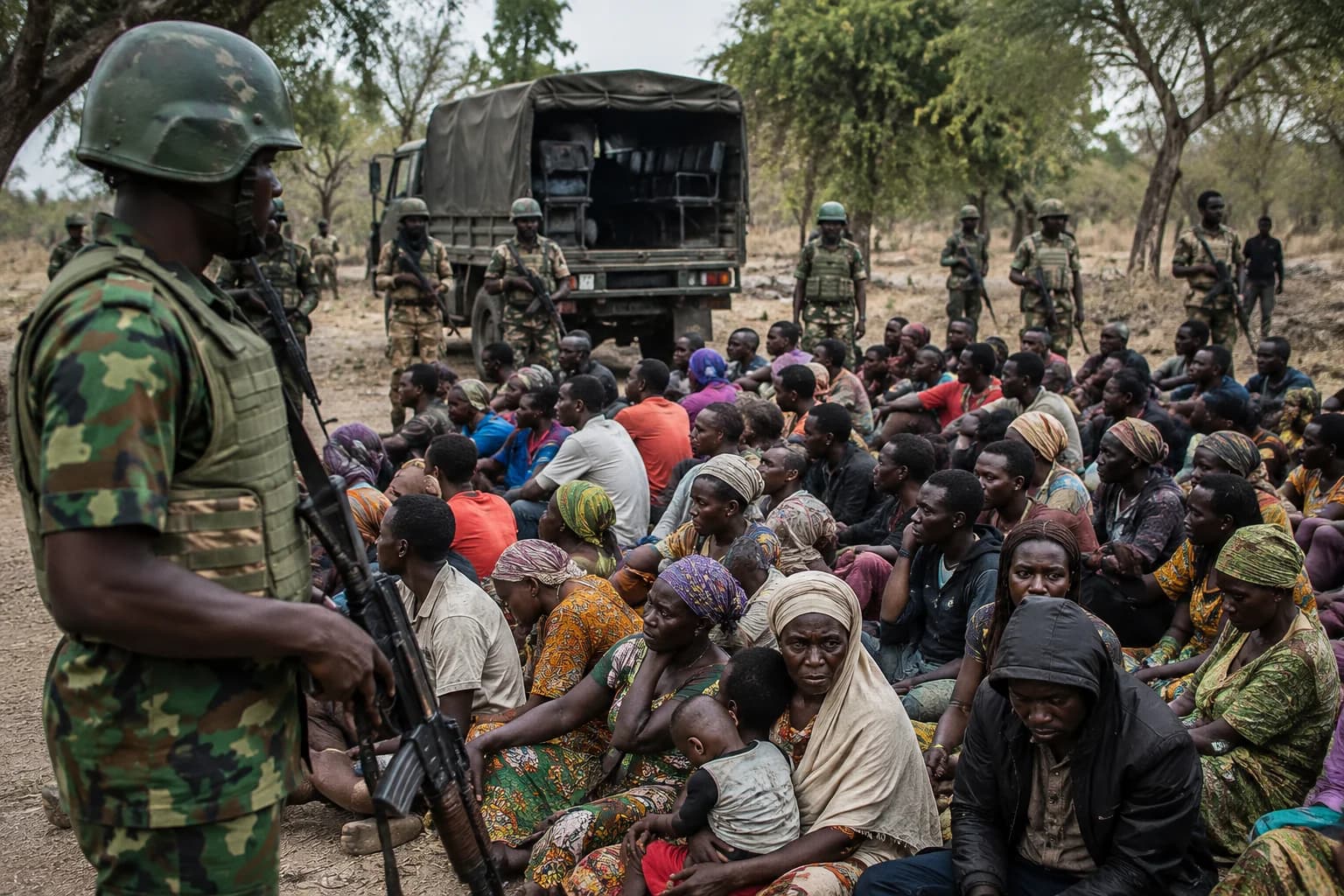
308 Kidnap Victims Rescued in Nigeria's Largest Single-Day Rescue Operation
Politics
ADC Fires Back at Wike Over Amaechi Comments
Stay Informed
Get the latest stories from Nigeria.
Free news updates. Unsubscribe anytime.
By subscribing, you agree to receive free news updates from Talk Ya True. You can unsubscribe at any time.