Politics
“Nigeria Cannot Continue Like This”: Tambuwal Calls for United Front to Vote Tinubu Out in 2027
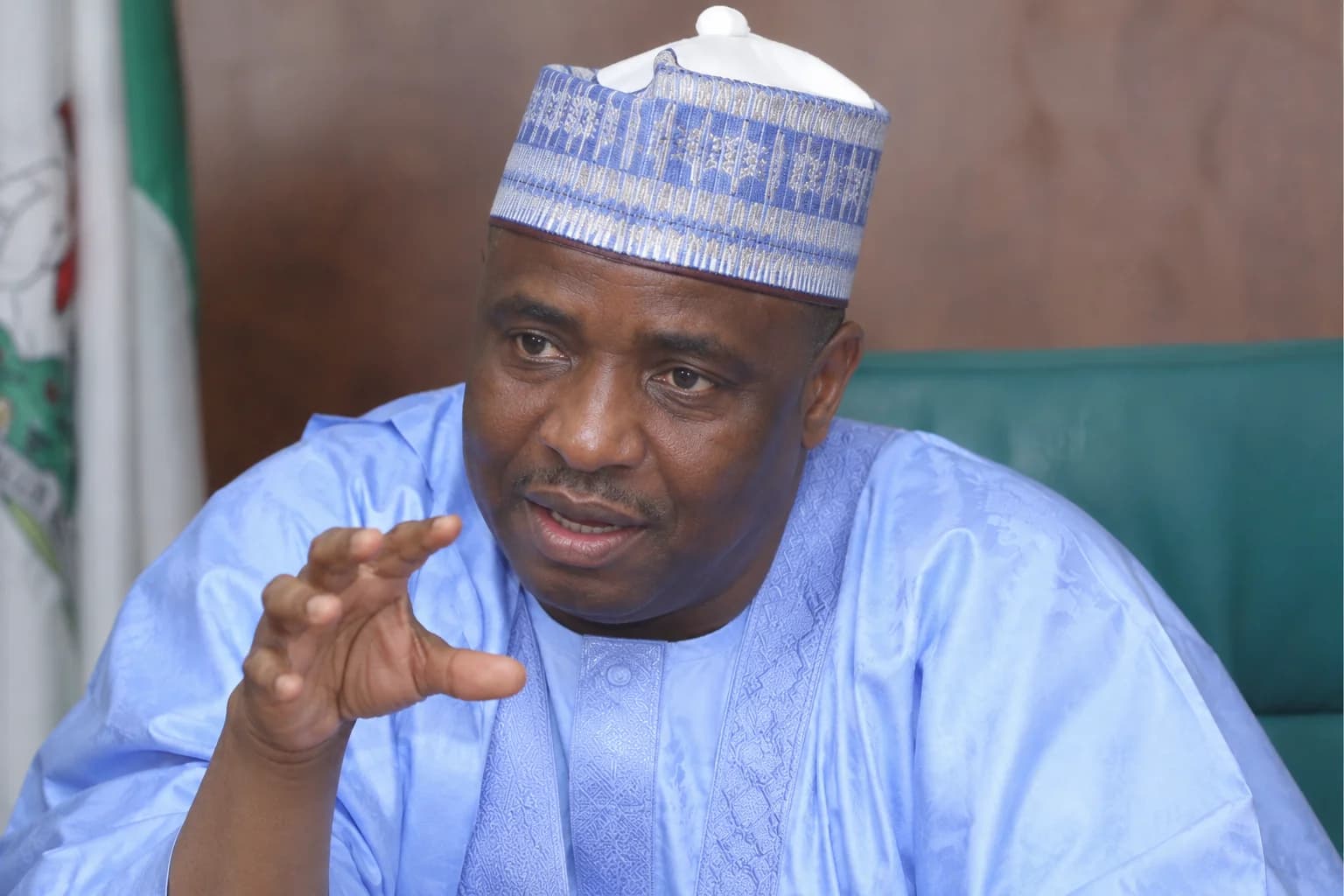
Former Sokoto State governor Aminu Waziri Tambuwal has called on Nigerians to unite and democratically remove President Bola Tinubu’s administration in the 2027 general election, accusing the government of failing to adequately address insecurity and other national challenges. But as opposition forces prepare for another battle against the APC, one question may decide the election before voting even begins: can Tinubu’s opponents overcome their own divisions?
Nigeria’s 2027 presidential election may still be months away.
But the battle has already begun.
Former Sokoto State governor and former Speaker of the House of Representatives Aminu Waziri Tambuwal has called on Nigerians to unite and vote President Bola Tinubu’s administration out of power in the next general election.
His message is clear.
If Nigerians believe the country is moving in the wrong direction, they must not remain silent.
They must organise.
They must unite.
And when the election arrives, they must use the ballot box.
Tambuwal accused the Federal Government of failing to adequately tackle insecurity and other challenges facing the country. His intervention comes as opposition politicians intensify their attacks on Tinubu’s record and position themselves for the approaching 2027 contest.
But Tambuwal’s call raises a bigger question.
Can Nigeria’s opposition actually unite?
Because if the 2027 election becomes another battle between multiple opposition candidates fighting one another while one ruling-party candidate consolidates his base, the opposition may discover that anger with the government is not enough to win an election.
Tambuwal’s Message Is Moving Beyond Criticism
Opposition politicians criticise governments every day.
That is normal.
But Tambuwal’s latest intervention goes beyond complaining about government policies.
It is an electoral call.
His argument is essentially that Nigerians dissatisfied with Tinubu’s government should organise themselves into a democratic movement capable of defeating the president at the ballot box.
That distinction matters.
Complaining is easy.
Building an electoral coalition is difficult.
Nigeria is enormous.
It has different regions.
Different religions.
Different ethnic identities.
Different political interests.
Different economic concerns.
A candidate who is popular on social media may not have structures in rural communities.
A politician who dominates one region may struggle in another.
A movement that excites young urban voters may have difficulty reaching older voters outside major cities.
Winning a Nigerian presidential election requires more than popularity.
It requires organisation.
And this is where Tambuwal’s call will face its greatest test.
The Opposition’s Biggest Enemy May Be Itself
Tinubu’s opponents have many arguments they can make against his government.
They can campaign on insecurity.
The cost of living.
Food prices.
Unemployment.
The pressure on small businesses.
Public frustration with governance.
But none of those issues automatically creates an opposition victory.
The opposition must first agree on a strategy.
Who will be the candidate?
How will that candidate be selected?
Will defeated aspirants genuinely support the winner?
How will regional interests be balanced?
What will happen to politicians who believe it is their turn?
Will personal ambition be sacrificed for coalition unity?
These are not small questions.
They may determine the election.
The history of Nigerian politics shows that opposition coalitions can be powerful when political interests align.
But alliances can also collapse when the question changes from defeating a common opponent to deciding who gets the presidential ticket.
Everybody supports unity when unity means other people supporting them.
The real test begins when someone is asked to step aside.
Nigerians Will Demand More Than “Remove Tinubu”
There is another challenge facing the opposition.
A campaign built entirely around removing one man is not enough.
Voters deserve to know what comes next.
What is the economic programme?
How will insecurity be addressed differently?
What is the plan for electricity?
How will food production increase?
What will happen to the tax system?
How will the government reduce waste?
What is the plan for education?
How will jobs be created?
What will happen to Nigeria’s debt burden?
How will the next government attract investment?
Opposition politicians cannot spend the entire campaign explaining why Tinubu should leave office.
They must explain why they should enter it.
That difference is important.
Anger can mobilise voters.
A credible alternative can sustain a government.
Insecurity Will Be Central to the 2027 Campaign
Tambuwal’s criticism of the government’s security performance will resonate because insecurity remains one of Nigeria’s most emotionally powerful political issues.
Security is not an abstract statistic to affected families.
It is whether a farmer can go to the farm.
Whether a child can attend school.
Whether a traveller can use a highway.
Whether a family member will return after leaving home.
Whether a community can sleep without listening for gunfire.
Any government seeking re-election will be judged on whether citizens feel safer.
The Tinubu administration will point to military operations, arrests, counterterrorism efforts and other interventions.
The opposition will point to kidnappings, attacks and communities that remain vulnerable.
The election campaign will become a battle over which version of Nigeria voters recognise from their own lives.
The Economy May Be Even More Important
Elections are political.
But hunger is personal.
A voter may not understand every argument about monetary policy.
That voter understands the price of rice.
Transport.
Rent.
School fees.
Electricity.
Cooking gas.
Medicine.
A government can produce impressive economic statistics, but citizens will ultimately compare those statistics with their own wallets.
That creates both an opportunity and a challenge for the opposition.
The opportunity is obvious.
Economic frustration can become electoral anger.
The challenge is harder.
What would the opposition do differently?
Would it reverse existing reforms?
Modify them?
Maintain them while expanding social protection?
How would it finance its promises?
How would it stabilise prices?
How would it increase productivity?
A serious opposition must provide answers.
The 2027 campaign should not become a competition between slogans.
Nigeria’s problems are too serious.
Tambuwal Is an Important Figure in the Opposition Conversation
Tambuwal is not a political newcomer.
He has served as Speaker of the House of Representatives and governor of Sokoto State.
That gives his intervention significance.
He understands both federal politics and the political dynamics of northern Nigeria.
His call also comes amid wider opposition efforts to position the African Democratic Congress as a vehicle for challenging the ruling APC. Recent political reporting has linked Tambuwal’s remarks to the broader opposition campaign and his argument that the ADC and opposition figures are putting pressure on the ruling party ahead of 2027.
But political experience alone will not create unity.
The opposition contains powerful personalities.
Powerful personalities have powerful ambitions.
The challenge will be turning those ambitions into one coherent campaign.
Social Media Is Not Nigeria
One mistake every political movement should avoid is confusing social-media popularity with national electoral organisation.
Nigeria’s election will not be decided only on X.
Or Facebook.
Or TikTok.
Millions of voters live outside the loudest online political conversations.
They have local concerns.
Local loyalties.
Religious considerations.
Regional interests.
Community leaders.
Party structures.
Family networks.
Political movements that want to win must understand this.
A viral hashtag cannot replace polling agents.
A trending video cannot replace local organisation.
An online movement cannot protect votes at thousands of polling units without people on the ground.
The opposition will need enthusiasm.
But it will also need machinery.
Tinubu Should Not Be Underestimated
The opposition would make a serious mistake by assuming economic hardship automatically means defeat for the president.
Incumbency matters.
Party structures matter.
Political alliances matter.
Regional calculations matter.
Governors matter.
Local networks matter.
The ruling APC is already seeing groups and political leaders declare support for Tinubu’s re-election effort.
That does not guarantee victory.
But it means the opposition faces a serious political organisation, not an empty chair.
Tinubu is one of Nigeria’s most experienced political strategists.
His opponents know this.
If they want to defeat him, they will need more than outrage.
They will need discipline.
The 2023 Lesson Still Hangs Over the Opposition
The most important lesson for Tinubu’s opponents is simple.
A divided opposition can produce a ruling-party victory even in a highly competitive political environment.
When major opposition figures compete separately, they divide money, structures, volunteers, regional support and media attention.
Coalition politics attempts to solve that problem.
But coalitions have their own danger.
They can look united before candidate selection and collapse immediately afterwards.
The true test of the current opposition movement will not be how many politicians attend meetings together.
It will be what happens when the presidential ticket is decided.
Will the losers stay?
Will they campaign?
Will they ask their supporters to vote for the winner?
Or will they return to separate political camps?
That moment may determine whether Tambuwal’s call becomes a serious electoral movement or another political speech.
Nigerians Must Also Protect Their Own Democratic Power
There is a wider message in Tambuwal’s call that goes beyond supporting or opposing any politician.
Elections are the constitutional mechanism for changing governments.
Citizens dissatisfied with leadership have the right to organise peacefully.
Campaign.
Debate.
Register.
Vote.
Observe.
And demand credible counting.
Political change through democratic participation is stronger than political violence.
But citizens must also demand integrity from the opposition.
A politician should not become a hero simply because he criticises the government.
Opposition politicians should be questioned too.
What is their record?
What did they achieve in previous offices?
What are their policies?
How transparent are they?
Democracy becomes weak when voters only examine the government and give its opponents a free pass.
Every person asking for power should be questioned.
2027 Must Become a Competition of Ideas
Nigeria deserves a serious presidential campaign.
Not insults.
Not ethnic fear.
Not religious manipulation.
Not fabricated stories.
Not personality cults.
The country needs arguments about security.
Energy.
Manufacturing.
Agriculture.
Education.
Technology.
Healthcare.
Infrastructure.
Federalism.
Taxation.
Public spending.
Nigeria’s political class often reduces elections to personalities.
Who is from where?
Whose turn is it?
Who has endorsed whom?
But millions of young Nigerians want a country that works.
They want opportunity.
The 2027 campaign should tell them how that will be created.
Tambuwal Has Issued the Challenge; Now the Opposition Must Prove It Can Unite
Calling Nigerians to vote Tinubu out is the easy part.
Building the machine capable of doing it is the hard part.
The opposition must find a candidate.
Build a national structure.
Resolve internal disputes.
Present a credible programme.
Protect electoral participation.
Reach voters beyond social media.
Convince undecided Nigerians.
And maintain unity after the difficult decisions are made.
If it cannot do those things, Tambuwal’s words may become another memorable political statement without electoral consequences.
But if the opposition genuinely unites around a credible candidate and a serious programme, the 2027 election could become one of the most competitive political battles in Nigeria’s recent history.
Tambuwal has told Nigerians who are dissatisfied with the government to use the ballot box.
The bigger question is whether the opposition will give them one clear alternative—or several competing ones.
That may be the question that decides 2027.
PUBLISHER NOTE
About Talk Ya True
Talk Ya True publishes independent reporting and analysis with clear attribution, source transparency and corrections when needed.
Related Articles
Politics
Buratai Warns Release of Tinubu’s Alleged Drug Records Could Damage Nigeria’s Image
Politics
Tinubu Gives Matawalle Key Security Role in APC's 2027 Campaign
Politics
Peter Obi: “Nigeria Is Not at War” as Insecurity Triggers Fresh Outcry
Politics
US Court Weighs FBI Request Over Records Linked to Tinubu Drug Investigation
Stay Informed
Get the latest stories from Nigeria.
Free news updates. Unsubscribe anytime.
By subscribing, you agree to receive free news updates from Talk Ya True. You can unsubscribe at any time.