Africa
“We Never Gave Up”: Inside the 56-Day Intelligence Operation That Freed Oyo Schoolchildren
The rescue of the abducted Oyo schoolchildren and their teachers was not the result of luck or last-minute negotiations. According to the Nigerian Army and other security officials, it was the product of a painstaking intelligence-led operation involving multiple security agencies, weeks of surveillance and coordinated pressure on the kidnappers. The successful rescue has brought relief to families across Nigeria, but it has also revealed both the strengths and the weaknesses of the country's fight against mass kidnapping.
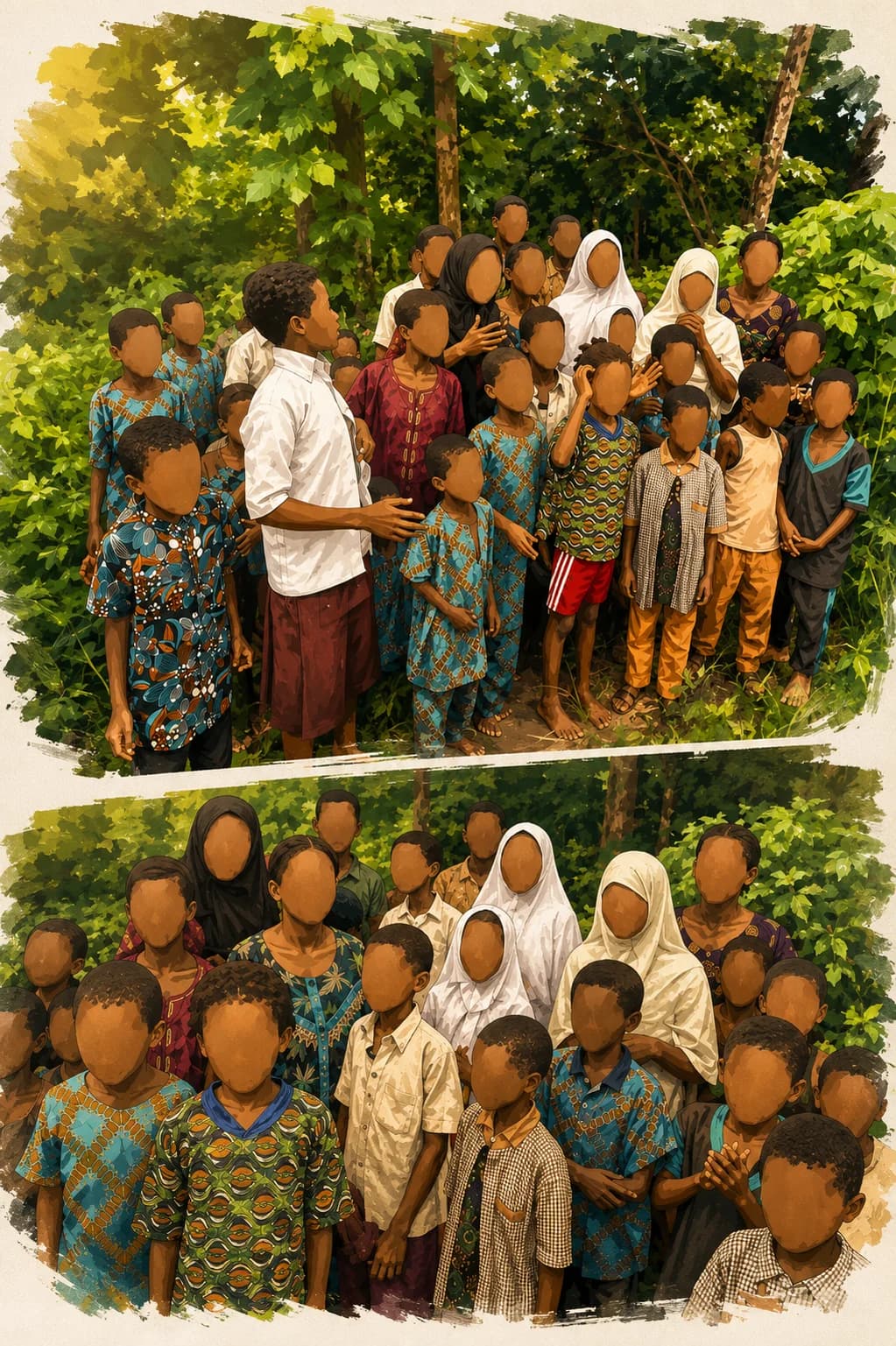
For 56 days, time stood still.
Parents woke every morning with the same fear.
Teachers wondered whether their colleagues were still alive.
Children across Oyo State returned to classrooms with one question lingering in their minds.
Could this happen to us too?
The kidnapping of dozens of pupils and teachers from schools in Oriire Local Government Area was more than another security incident.
It was an attack on education.
An attack on hope.
An attack on every parent who believes school should be the safest place for a child.
When the Federal Government announced that the victims had finally regained their freedom, Nigerians celebrated.
But behind that announcement was a story that had unfolded quietly for nearly two months.
Not with dramatic television cameras.
Not with public negotiations.
But through intelligence.
Surveillance.
Patience.
And cooperation among multiple security agencies.
According to the Nigerian Army, the rescue operation involved coordinated efforts by the Army, the Department of State Services (DSS), the National Counter Terrorism Centre (NCTC), the Nigeria Police Force, the Nigerian Air Force, the Nigerian Navy, Amotekun, local hunters and vigilante groups. (Punch)
That level of coordination tells an important story.
This was never going to be a simple rescue mission.
Why the Government Didn't Rush In
Many Nigerians asked the same question during the ordeal.
"If security agencies knew where the children were, why didn't they simply attack?"
The answer is straightforward.
Because dozens of frightened children were involved.
A reckless military assault could have turned a kidnapping into a massacre.
Every decision had to balance speed with safety.
Security commanders reportedly prioritised preserving the lives of the captives while gradually weakening the kidnappers' ability to move and operate.
Sometimes patience saves more lives than force.
Intelligence Became the Real Weapon
Modern counter-kidnapping operations are rarely won by bullets alone.
They are won by information.
Who are the kidnappers?
Where are they hiding?
Who supplies them?
Who communicates with them?
Who moves food into the camps?
Who buys fuel?
Who carries messages?
Who finances them?
Every answer creates another opportunity to weaken a criminal network.
The Nigerian Army said the operation relied heavily on intelligence gathering before the final rescue was carried out. (Punch)
That intelligence almost certainly came from multiple sources.
Electronic surveillance.
Human informants.
Community cooperation.
Inter-agency information sharing.
Each small piece of information becomes part of a much bigger picture.
This Was Bigger Than One Security Agency
One of the most encouraging aspects of the operation is that no single agency claimed sole credit.
The Army.
The DSS.
The Police.
The Air Force.
The Navy.
The National Counter Terrorism Centre.
Amotekun.
Traditional hunters.
Community vigilantes.
Each reportedly contributed to the operation.
Nigeria has often been criticised for poor coordination among security institutions.
This operation suggests that cooperation can produce better results.
Criminal groups do not respect institutional boundaries.
Neither should those fighting them.
The Kidnappers Were Gradually Cornered
Rather than relying on one dramatic assault, security agencies appear to have gradually restricted the kidnappers' options.
Pressure increased.
Escape routes became more dangerous.
Movement became more difficult.
The criminal group reportedly found itself operating under growing surveillance.
Eventually, that pressure contributed to the release of the captives and the arrest of eight suspected kidnappers, while some other members of the gang were reportedly killed during the wider operation. (Punch)
That is often how successful intelligence operations work.
The objective is not simply to find criminals.
It is to remove every safe option they believe they have.
No Ransom, No Prisoner Swap
One of the biggest controversies during the kidnapping involved reports that the abductors wanted detained terrorist suspects released in exchange for the children.
That possibility alarmed many Nigerians.
If governments begin exchanging convicted or detained terrorists for hostages, criminal groups may become even more encouraged to target schools.
Following the rescue, the Presidency insisted there was no ransom payment and no prisoner exchange.
Officials maintained that the operation succeeded through security efforts rather than concessions to the kidnappers. (Punch)
If confirmed in full, that could become one of the most important lessons from the operation.
But the Rescue Also Exposes a Hard Truth
Every successful rescue begins with one painful fact.
The kidnapping happened.
Armed men entered schools.
Children were taken.
Teachers were taken.
Families suffered.
Communities lived in fear.
For 56 days.
The rescue deserves praise.
But it should never become an excuse to ignore the security failures that made the kidnapping possible.
A nation cannot rescue its way out of an insecurity crisis.
Eventually, it must prevent these crimes before they happen.
The Real Heroes Were Not Only in Uniform
The headlines naturally celebrate soldiers and security officers.
They should.
Many risked their lives.
Some paid the ultimate price during the wider operation.
But there were other heroes too.
Parents who refused to lose hope.
Teachers who stood together.
Community leaders who cooperated with investigators.
Local residents who reportedly shared information with security agencies.
Traditional hunters who know forests better than maps.
Successful intelligence operations often depend on ordinary citizens deciding to help.
Security is strongest when communities trust those protecting them.
The Children Will Carry Invisible Wounds
Freedom is not the end of the story.
Many of these children spent nearly two months living under conditions no child should ever experience.
Some may struggle to sleep.
Others may fear returning to school.
Some may need counselling for months.
Perhaps years.
Trauma cannot be measured only by physical injuries.
The government has said the rescued pupils and teachers will receive medical attention and psychosocial support.
That commitment must continue long after the television cameras leave.
Nigeria Must Protect Schools Before Another Attack
The Oyo rescue should become more than a success story.
It should become a turning point.
Authorities should examine every lesson.
How quickly was intelligence gathered?
What delayed the operation?
How did the kidnappers move?
Why were the schools vulnerable?
What early-warning systems failed?
Could local communities have been better protected?
Every major security incident should improve future preparedness.
Otherwise, the next community may face the same tragedy.
The Arrests Could Prevent Future Kidnappings
The rescue brought immediate relief.
But the arrests may prove even more valuable.
Eight suspects now reportedly remain in custody.
Investigators have an opportunity to dismantle the wider criminal network.
Kidnapping gangs rarely operate alone.
They need suppliers.
Informants.
Transporters.
Weapons.
Money.
Communication.
Every arrest creates another opportunity to expose the larger organisation.
If the investigation stops with only those captured, Nigeria may miss the chance to destroy an entire kidnapping network.
Nigerians Want More Than Good News
The rescue has given Nigerians something they desperately needed.
Hope.
But hope alone will not protect the next school.
Parents now want action.
Teachers want security.
Communities want reassurance.
Citizens want fewer kidnappings—not simply better rescue operations.
That is the standard every government should aim for.
A Victory Worth Celebrating—A Warning Worth Remembering
The rescue of the Oyo pupils and teachers reminds Nigerians that security agencies can succeed when intelligence, coordination and determination come together.
It is a victory for the families.
A victory for the security personnel involved.
And a victory for every Nigerian who prayed for the children's safe return.
But the celebration should come with a promise.
Never again.
Children should not become bargaining chips.
Teachers should not become hostages.
Schools should never become battlefields.
If the lessons from this 56-day operation lead to stronger school security, better intelligence and faster responses, then the rescued children may leave behind something even more valuable than their own survival.
They may help prevent the next tragedy.
PUBLISHER NOTE
About Talk Ya True
Talk Ya True publishes independent reporting and analysis with clear attribution, source transparency and corrections when needed.
Related Articles

Africa
Chidimma Adetshina’s Deportation Fight Deepens as South African Protesters Demand Her Exit

Africa
Chidimma Adetshina Faces Angry Protesters Outside South African Court as Deportation Battle Continues
Africa
South Africa Seeks R292m From Nigeria, Malawi and Ethiopia for Migrant Repatriation Costs

Africa
Angélique Kidjo Makes History as First African Artist to Receive Hollywood Walk of Fame Star
Stay Informed
Get the latest stories from Nigeria.
Free news updates. Unsubscribe anytime.
By subscribing, you agree to receive free news updates from Talk Ya True. You can unsubscribe at any time.