Nigeria
APC Rice Distribution in Osun Triggers Vote-Buying Debate Days Before Election
A viral video showing APC supporter Ero-Arike distributing small portions of rice to residents while campaigning for Bola Oyebamiji has triggered a fierce debate over poverty, voter inducement and electoral ethics in Osun. The incident comes just days before the August 15 governorship election, with Nigerians questioning whether food should be linked to political support.

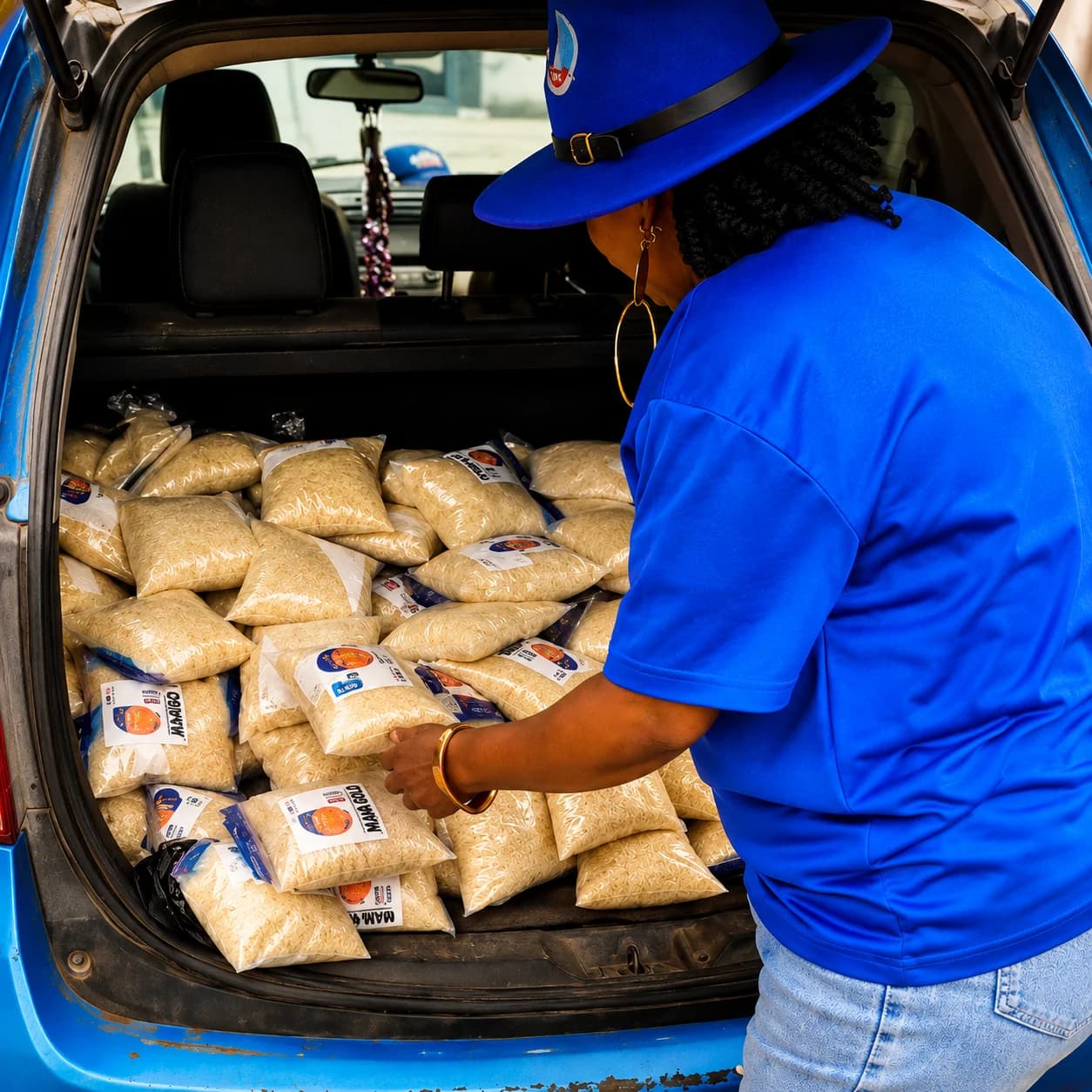
A viral video showing an APC supporter distributing small portions of rice to residents in Osun while urging them to vote for the party's governorship candidate has ignited a fresh debate over voter inducement ahead of Saturday's election.
The woman in the video is identified as Alhaja Falilat Yusuf, popularly known as Ero-Arike, an Osun businesswoman and APC supporter.
She was filmed handing out rice packed in transparent polythene bags bearing APC stickers while wearing campaign clothing featuring the party's logo and the image of its governorship candidate, Bola Oyebamiji, popularly known as AMBO.
What might ordinarily have been seen as food distribution quickly became controversial because the giveaway was accompanied by an explicit appeal for votes.
Rice With a Political Message
In the video, Ero-Arike tells people receiving the rice to support the APC candidate in the August 15 governorship election.
Reports say she told recipients that the rice had been provided by the wife of a former Osun governor, although that claim has not been independently verified.
She also reportedly told people that although each person was supposed to receive one portion, she would give some recipients two.
The political message, however, was clear.
The rice was being distributed in an environment where voters were simultaneously being asked to support a particular candidate.
The Controversial Warning
The most explosive part of the video was the reported warning directed at people who accepted the food.
According to reports, Ero-Arike warned recipients against taking the rice and then refusing to vote for Oyebamiji. Another report quoted her as saying that anyone who took money or food from the group and failed to vote for the APC candidate would suffer consequences involving their children.
That statement has intensified criticism of the exercise.
For many Nigerians online, the problem is no longer simply that food was distributed.
It is the apparent attempt to connect the food to a specific electoral choice.
Nigerians Immediately Raise Vote-Buying Concerns
The video has generated strong reactions on social media.
One widely shared response argued that distributing food items such as rice, beans, cooking oil or hampers while telling people to vote for a particular candidate can amount to electoral bribery.
Others described the situation as a painful reflection of Nigeria's economic hardship.
Their argument is that politicians know food is valuable to struggling families and can therefore use basic necessities to influence political behaviour.
The timing has made the criticism even stronger.
The election is only days away.
But Another Question Is Being Asked
Not everyone responding to the video is blaming the people collecting the rice.
Some Nigerians argue that it is easy to criticise poor residents from a position of comfort.
For a household struggling to put food on the table, even a small quantity of rice can have immediate value.
That has created an uncomfortable dilemma:
Should a hungry person reject food simply because a politician or political supporter is distributing it?
Some Nigerians online have effectively answered no.
They argue that residents should take whatever legitimate assistance is offered but remain free to vote for whichever candidate they choose.
"Collect the Rice, Vote Your Conscience"
That sentiment has appeared repeatedly in Nigerian political discussions involving food and cash distributions.
The argument is based on the belief that politicians should not be able to purchase a voter's political loyalty simply by providing temporary assistance.
In that view, accepting a bag of rice does not necessarily mean surrendering one's vote.
But the controversy becomes more complicated when the distributor explicitly tells recipients that they are expected to vote for a particular candidate.
That is where the line between campaign outreach and voter inducement becomes a major issue.
Poverty Has Become Part of the Election Conversation
The rice video has also exposed the economic conditions shaping the election.
Food prices have become one of the biggest concerns for Nigerian households.
Rice is a staple food, and even small quantities have significant value for families struggling with rising living costs.
That makes food distribution an especially powerful political tool.
A politician does not necessarily need to offer a large amount of cash if a family is already struggling to afford dinner.
A small bag of rice can become politically significant.
Why the Portions Matter
The small size of the rice portions has itself become a talking point.
Rather than full bags, the video shows rice being distributed in relatively small transparent bags.
That has prompted some Nigerians to question the symbolism of the exercise.
Critics argue that it demonstrates how little voters may receive in exchange for being courted politically.
Others see the small portions differently, arguing that distributing something — however small — is better than offering nothing to people who are struggling.
The disagreement ultimately comes back to the same question:
Is this welfare or electoral inducement?
The Election Is Only Days Away
The controversy comes at a highly sensitive point in the Osun political calendar.
The governorship election is scheduled for Saturday, August 15, 2026, with APC's Oyebamiji facing incumbent governor Ademola Adeleke of the Accord Party, alongside other candidates including ADC's Najeem Salaam.
Campaign activity has intensified as the parties enter the final stretch.
That makes every public appearance, endorsement and giveaway more politically significant.
APC's Candidate Is Already Gaining Momentum
The rice controversy comes against a backdrop of growing political activity around Oyebamiji.
The APC candidate has recently received support from other political figures, including the withdrawal of the APGA candidate, Adesina Adeyemi-Doro, who announced that he would back Oyebamiji.
APC leaders have also been urging party members to unite behind the candidate ahead of the election.
The party therefore enters the final days with significant political momentum.
But Food Distribution Creates a Different Conversation
Instead of talking about Oyebamiji's policies, the viral video has shifted attention toward electoral ethics.
That could become politically damaging because voters are increasingly sensitive to allegations of vote buying.
People want candidates to explain what they will do about employment, education, infrastructure, healthcare, food prices and security.
A video of rice being distributed can therefore create a very different impression from a policy speech.
What Supporters Could Argue
Supporters of the exercise could argue that giving food to residents is simply an act of assistance.
Political supporters routinely provide food and other materials during campaigns.
They could also argue that the rice is not necessarily government money and that private individuals should be allowed to support people in their communities.
That distinction matters.
The mere distribution of food is not automatically proof of electoral malpractice.
The controversy arises from the context and explicit connection between the distribution and the request for votes.
What Critics Are Saying
Critics, meanwhile, see the incident as a textbook example of how poverty can be exploited during elections.
Some have argued that politicians should be competing over ideas rather than food.
Others say the incident demonstrates why Nigeria needs stronger enforcement against voter inducement.
Another group has turned the criticism toward the voters themselves, arguing that Nigerians should reject small gifts and demand better governance.
That last argument, however, has also received pushback from people who say it unfairly blames citizens for accepting help during an economic crisis.
The Voter Is Still the Final Decision-Maker
Whatever happens with the rice, one fact remains important:
A voter who receives food is still entitled to vote according to their conscience.
A gift does not legally or morally transfer ownership of a person's vote.
That is why attempts to attach conditions to campaign gifts are so controversial.
A free meal should not become a political contract.
The Bigger Question
The incident raises a much larger issue about Nigerian democracy.
What does an election mean when poverty becomes part of the campaign machinery?
If voters are struggling to buy food, political actors have an obvious incentive to offer immediate relief.
But the long-term consequence can be a cycle in which politicians provide short-term assistance during elections while voters continue facing the same structural problems afterward.
That is why many Nigerians online are calling for voters to look beyond what they receive during campaign season.
Rice Today, Governance Tomorrow
A portion of rice can feed a family today.
But it cannot build a road.
It cannot create a permanent job.
It cannot fix a hospital.
It cannot reduce electricity costs.
And it cannot guarantee that food prices will remain affordable after election day.
Those are the issues voters will ultimately have to consider when they enter the polling booth.
The Bottom Line
The viral video of Ero-Arike distributing APC-branded rice while urging Osun residents to support Bola Oyebamiji has opened another heated debate just days before the state's governorship election.
Critics say linking food distribution to a direct appeal for votes risks crossing into voter inducement, while others argue that struggling Nigerians should not be condemned for accepting food offered to them.
The claim that the rice was supplied by the wife of a former Osun governor remains unverified.
But the larger question is bigger than this particular video.
Nigeria's democracy cannot ultimately be measured by how much rice is handed out before election day.
It should be measured by what happens after the votes are counted.
Because voters may eat the rice today.
They will still need good governance tomorrow.
EDITORIAL TEAM
About Talk Ya True Editorial Team
The Talk Ya True Editorial Team is an independent newsroom committed to factual reporting, responsible journalism and thoughtful analysis across Africa and around the world.
Related Articles

Politics
Davido Raises Alarm Over Osun Poll, Says He Could Turn to Trump if Election Is Rigged

Nigeria
Kano's ₦1.5bn Mass Wedding Sparks Debate as 1,500 Couples Begin New Lives

Politics
Senator Yayi Turns 57, Pledges Renewed Commitment to Service as 2027 Ogun Race Looms

Politics
Orji Kalu Calls for Two-Year Amnesty to Recover Nigeria's Allegedly Looted Funds
Stay Informed
Get the biggest stories from Nigeria, Africa and around the world.
Free news updates. Unsubscribe anytime.
By subscribing, you agree to receive free news updates from Talk Ya True. You can unsubscribe at any time.