Nigeria
Reps Uncover 58 Bank Accounts and Alleged ₦400m Deal in PFIPC Investigation
A House of Representatives investigation into the purported Presidential Foreign Intervention Promotion Council has uncovered about 58 bank accounts allegedly linked to its detained Director-General, Prince Adeniyi Adeyemi, alongside an alleged ₦400 million transaction. The committee also said it found forged or altered government documents and cleared President Tinubu’s Chief of Staff, Femi Gbajabiamila, of involvement in the purported organisation.
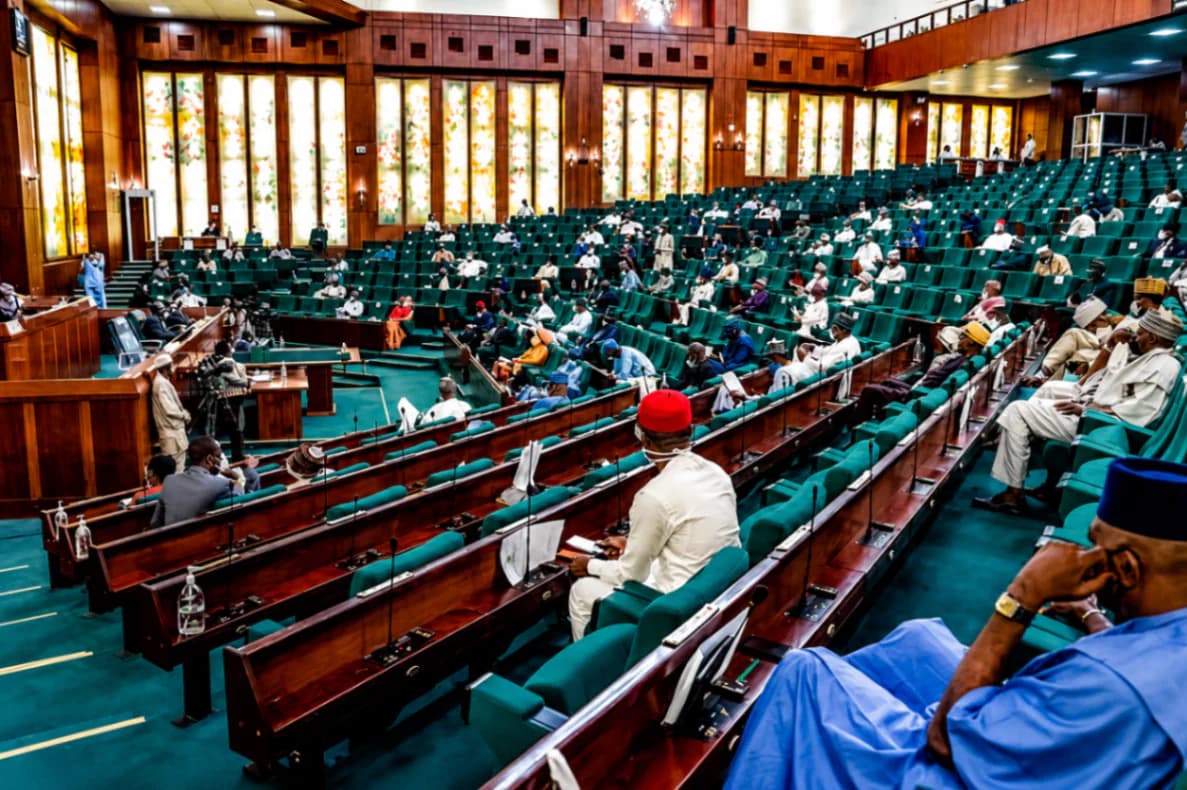
The controversy surrounding the purported Presidential Foreign Intervention Promotion Council, PFIPC, has taken a new turn after a House of Representatives investigative committee uncovered about 58 bank accounts allegedly linked to the organisation’s detained Director-General, Prince Adeniyi Adeyemi.
The committee also revealed an alleged ₦400 million transaction involving a company that claimed it was induced to make payments after Adeyemi allegedly represented that he could secure a government-related contract.
The revelations were contained in the preliminary findings of the House Ad Hoc Committee investigating how the purported organisation gained access to government structures and became recognised within parts of the Federal Government’s administrative and budgetary system.
However, the committee stressed that its findings are preliminary and that the discovery of bank accounts or financial transactions does not by itself establish criminal wrongdoing.
WHAT IS THE PFIPC CONTROVERSY ABOUT?
The House committee was established to investigate the circumstances surrounding the emergence of the purported Presidential Foreign Intervention Promotion Council and its inclusion in the 2026 Federal Budget Framework.
According to the committee, its investigation found no valid Act of the National Assembly, gazetted enactment, Presidential Executive Order or other lawful instrument establishing the organisation.
The panel said the purported organisation operated under different names, including the Presidential Foreign Intervention Promotion Council and the Presidential Economic Advisory Council.
That finding has raised questions about how an organisation allegedly lacking a legal foundation managed to gain access to government facilities, administrative systems and budgetary processes.
The investigation therefore goes beyond the individuals connected to the organisation and examines possible weaknesses within government institutions that allowed the purported agency to appear legitimate.
58 BANK ACCOUNTS LINKED TO ADEYEMI
One of the most significant discoveries announced by the committee concerns the financial network allegedly associated with Adeyemi.
The lawmakers said preliminary financial information indicated that identifying details associated with Adeyemi were linked to approximately 58 bank accounts.
More than 30 of those accounts were reportedly operated in the names of various agencies, companies, foundations or related entities.
The committee said the wider network involved more than 12 entities with names connected to investment promotion, youth organisations, entrepreneurship, education and foundations.
However, lawmakers were careful to point out that the existence of the accounts does not automatically establish that the accounts or their activities were illegal.
The committee said it is still reconciling bank mandates, registration records, beneficial ownership information, signatories and transaction histories to establish who controlled the accounts and how they were used.
THE ALLEGED ₦400 MILLION TRANSACTION
The financial investigation also uncovered an alleged ₦400 million transaction involving a company that appeared before the committee.
According to the preliminary findings, the company alleged that Adeyemi induced it to make payments totalling approximately ₦400 million in four instalments.
The company reportedly believed the payments were connected to a contract involving the renovation, furnishing or improvement of a residential property presented as Adeyemi’s official residence in his claimed capacity as PFIPC Director-General.
The committee said it is now tracing where the money went, identifying the account holders and beneficial owners involved and verifying the ownership and status of the property.
The lawmakers have not declared the alleged transaction to be proven fraud.
Instead, they said further investigation is required before responsibility can be established.
GBajabiamila CLEARED BY HOUSE PANEL
Another major aspect of the investigation concerns President Bola Tinubu’s Chief of Staff, Femi Gbajabiamila.
Adeyemi had previously made allegations connecting Gbajabiamila to the purported organisation and claimed that money was paid through proxies in connection with its activities.
Gbajabiamila denied the allegations.
After examining documents and correspondence presented during the investigation, the House committee said it found no evidence that the Chief of Staff authorised, established or participated in the activities of the purported PFIPC.
Instead, the committee said evidence showed that Gbajabiamila took steps to alert security and investigative agencies after concerns about the organisation were brought to his attention.
The agencies contacted included the Nigeria Police Force, the Office of the National Security Adviser, the Department of State Services and the Economic and Financial Crimes Commission.
The committee said Gbajabiamila also initiated administrative verification concerning the organisation.
WHY WAS GBajabiamila NOT QUESTIONED?
The committee chairman, Yusuf Gagdi, has explained why Gbajabiamila was not invited for questioning despite documents that had previously linked his name to the controversy.
Gagdi said the committee's mandate was not to investigate Gbajabiamila personally.
Instead, lawmakers were tasked with establishing whether the purported organisation was legally created, who created it and how it gained access to government systems.
He said Gbajabiamila became part of the investigation because documents submitted to the committee contained references to him.
According to Gagdi, the committee would invite individuals where specific petitions or allegations required a response, but the investigation itself was not designed around one individual.
PURPORTED PRESIDENTIAL APPOINTMENT LETTER DECLARED FAKE
The committee also examined a document that purportedly appointed Adeyemi as Director-General of the PFIPC.
The document allegedly carried the authority and signature of Gbajabiamila.
But lawmakers said evidence obtained from the State House showed that no such appointment was made or approved by the Presidency.
The committee said the letterhead, reference number, language and administrative format differed from genuine State House correspondence.
It therefore made a preliminary finding that the appointment letter had been fabricated and falsely attributed to the Presidency.
PURPORTED EXECUTIVE ORDER ALSO QUESTIONED
The investigation uncovered another document presented as Presidential Executive Order No. 5, dated February 24, 2026.
According to the committee, the document was allegedly used to give the purported organisation legal authority.
However, lawmakers said evidence before the committee indicated that the document was not an authentic Executive Order issued through lawful presidential processes.
The panel described the alleged fabrication of a presidential instrument as a serious matter because such documents can give private organisations the appearance of official government authority.
PURPORTED NATIONAL ASSEMBLY ACT FOUND TO BE INVALID
The committee also examined a document presented as an Act of the National Assembly establishing the PFIPC.
Lawmakers said the document was never passed by both chambers of the National Assembly, assented to by the President or gazetted as an Act of the Federation.
The panel further said parts of another legislative document appeared to have been electronically altered or substituted to create the impression that Parliament had established the purported organisation.
If ultimately established, such conduct would represent a serious breach of the integrity of Nigeria’s legislative process.
A FAKE STATE HOUSE LETTER ALSO EMERGED
Another document examined by the committee was a letter dated November 7, 2024, which purportedly came from the State House.
The letter allegedly requested an administrative code for the PFIPC and was attributed to an individual identified as Akambi Adewale, described as a Director of Administration and Support Services.
The committee said the State House informed it that the office and directorate described in the letter did not exist in the stated form.
It also said there was no State House official known as Akambi Adewale occupying the claimed position.
The panel is now examining how such a document was able to enter the government's administrative system.
HOW DID THE PURPORTED AGENCY GET INTO GOVERNMENT SYSTEMS?
Perhaps the biggest question arising from the investigation is not simply how many bank accounts were discovered.
It is how an organisation that the House committee says had no valid legal foundation was able to present itself as a government institution.
The committee said the purported organisation allegedly obtained access to government facilities, administrative processes and elements of the federal budget system.
It also raised concerns about the verification of government agencies, authentication of official correspondence, allocation of government accommodation and processing of government-related documentation.
These issues could potentially reveal weaknesses that go beyond the PFIPC controversy itself.
If government institutions do not have effective systems for verifying the identity and legal status of organisations claiming to be federal agencies, similar situations could potentially happen again.
THE ROLE OF GOVERNMENT INSTITUTIONS
The committee's investigation has also placed attention on several government institutions.
The Office of the Accountant-General of the Federation came under scrutiny over correspondence connected to the purported organisation.
The Budget Office was also questioned about how the organisation came to be recognised within aspects of the Federal Budget Framework.
The committee said it is investigating whether any failures resulted from negligence, inadequate verification procedures, deliberate facilitation or other forms of misconduct.
No final conclusions have been reached on those questions.
THE 39 PEOPLE ALLEGEDLY RECRUITED
The House panel also disclosed that approximately 39 people were allegedly presented as employees of the purported organisation.
Their recruitment, appointment letters, identification documents, salaries and allowances are now part of the investigation.
Lawmakers said they also want to determine whether any people were required to make payments in order to secure employment.
The committee said it would distinguish between individuals who may have been deceived by the organisation and anyone who knowingly participated in activities under investigation.
ADEYEMI REMAINS AT THE CENTRE OF THE PROBE
Prince Adeniyi Adeyemi, who presented himself as the Director-General of the purported PFIPC, remains a central figure in the investigation.
The committee's preliminary findings place his alleged network of accounts and associated entities at the heart of the financial aspect of the probe.
However, the committee has repeatedly emphasised that its findings are not a criminal conviction.
Any criminal liability will ultimately have to be established through the appropriate legal process.
WHY THE FINDINGS ARE STILL PRELIMINARY
The House committee has not presented its report as a final verdict.
It said further work is required to establish beneficial ownership of the accounts, trace financial transactions and determine the roles of individuals and institutions.
The committee also said it would make recommendations concerning possible administrative, civil, financial or criminal action after completing the investigation.
This distinction is important.
An investigative committee can uncover evidence and make recommendations, but criminal guilt is ultimately determined by a court of competent jurisdiction.
TALK YA TRUE ANALYSIS
The most disturbing part of the PFIPC investigation may not actually be the reported 58 bank accounts or the alleged ₦400 million transaction.
The bigger issue is how a purported organisation could allegedly move through government systems while presenting itself as a legitimate federal institution.
If the House committee's preliminary findings are eventually confirmed, Nigeria would be facing a serious institutional problem.
Government agencies deal with official letters, budget requests, appointments, accommodation, vehicles and financial systems every day.
There should be safeguards capable of quickly determining whether a purported government agency actually exists.
A fake document should not become legitimate simply because it carries an official-looking letterhead.
A person should not become a government official simply because an appointment letter says so.
And an organisation should not gain access to public resources without a verifiable legal foundation.
That is why the final report of the House committee could be more important than the headlines surrounding the 58 accounts.
The investigation has an opportunity to identify exactly where the system failed.
If individuals deliberately exploited those weaknesses, they should face the consequences established by law.
If government institutions failed because of poor verification procedures, those procedures need to be strengthened.
And if the allegations against Adeyemi are ultimately proven in court, the financial trail could provide investigators with important evidence.
But Nigerians should also wait for the final findings and judicial processes before declaring anyone criminally guilty.
FINAL WORD
The House of Representatives has uncovered approximately 58 bank accounts allegedly linked to Prince Adeniyi Adeyemi and an alleged ₦400 million transaction as part of its investigation into the purported Presidential Foreign Intervention Promotion Council.
The committee also said it uncovered documents it believes were forged or altered to give the organisation the appearance of presidential and legislative approval.
At the same time, the panel cleared President Tinubu's Chief of Staff, Femi Gbajabiamila, saying it found no evidence that he authorised, established or participated in the purported organisation.
The investigation is not yet over.
The committee still has to trace the financial transactions, establish beneficial ownership of the accounts and determine whether anyone else played a role in the alleged scheme.
Its final report could therefore reveal even more about how the purported organisation operated and how it gained access to government systems.
For now, one question stands above the rest:
How did an organisation that lawmakers say had no legal foundation manage to look legitimate inside parts of the Nigerian government?
That may ultimately be the most important question for Nigeria to answer.
KEY FACTS
Organisation under investigation: Purported Presidential Foreign Intervention Promotion Council (PFIPC)
Investigation body: House of Representatives Ad Hoc Committee
Committee chairman: Yusuf Gagdi
Purported Director-General: Prince Adeniyi Adeyemi
Bank accounts allegedly linked to Adeyemi: Approximately 58
Wider entities allegedly associated with the network: More than 12
Alleged transaction under investigation: Approximately ₦400 million
Reported payment structure: Four instalments
Status of ₦400m allegation: Under investigation
Purported appointment letter: Committee says it was fabricated
Purported Executive Order: Committee says it was not authentic
Purported National Assembly Act: Committee says it was never validly enacted
Femi Gbajabiamila: Cleared by the committee of involvement in establishing or operating the purported organisation
Committee report status: Preliminary
Criminal guilt: Not established by the House investigation
Next step: Further investigation and final report
SOURCES
Channels Television — House panel clears Femi Gbajabiamila and details the alleged ₦400 million transaction and 58 bank accounts.
Premium Times — Committee chairman Yusuf Gagdi explains the scope of the PFIPC investigation and why Gbajabiamila was not invited.
P.M. News — Report on the 58 bank accounts, alleged ₦400 million transaction and the purported agency's lack of legal foundation.
Vanguard — Report on alleged forged presidential and legislative documents and the committee's findings.
Pointblank News — Detailed report on the House committee's preliminary findings and alleged government-document fabrications.
PUBLISHER NOTE
About Talk Ya True
Talk Ya True publishes independent reporting and analysis with clear attribution, source transparency and corrections when needed.
Related Articles

Nigeria
37 Suspected Illegal Miners Die in NSCDC Custody as Tinubu Orders Independent Probe

Nigeria
FG to Give 5 Million Nigerian Students 100MB Free Daily Data From October

Business
Nigeria’s Foreign Reserves Hit $52.83 Billion as Naira Holds Relatively Steady

Nigeria
APC Rice Distribution in Osun Triggers Vote-Buying Debate Days Before Election
Stay Informed
Get the latest stories from Nigeria.
Free news updates. Unsubscribe anytime.
By subscribing, you agree to receive free news updates from Talk Ya True. You can unsubscribe at any time.