Nigeria
First Niger Bridge to Shut for Two Weeks as FG Begins Emergency Repairs
The Federal Government will fully close the First Niger Bridge in Onitsha from September 7 to September 21, 2026, for emergency rehabilitation. Motorists have been directed to use the Second Niger Bridge through Obosi and Asaba while repairs, resurfacing, security upgrades and other safety works are carried out.
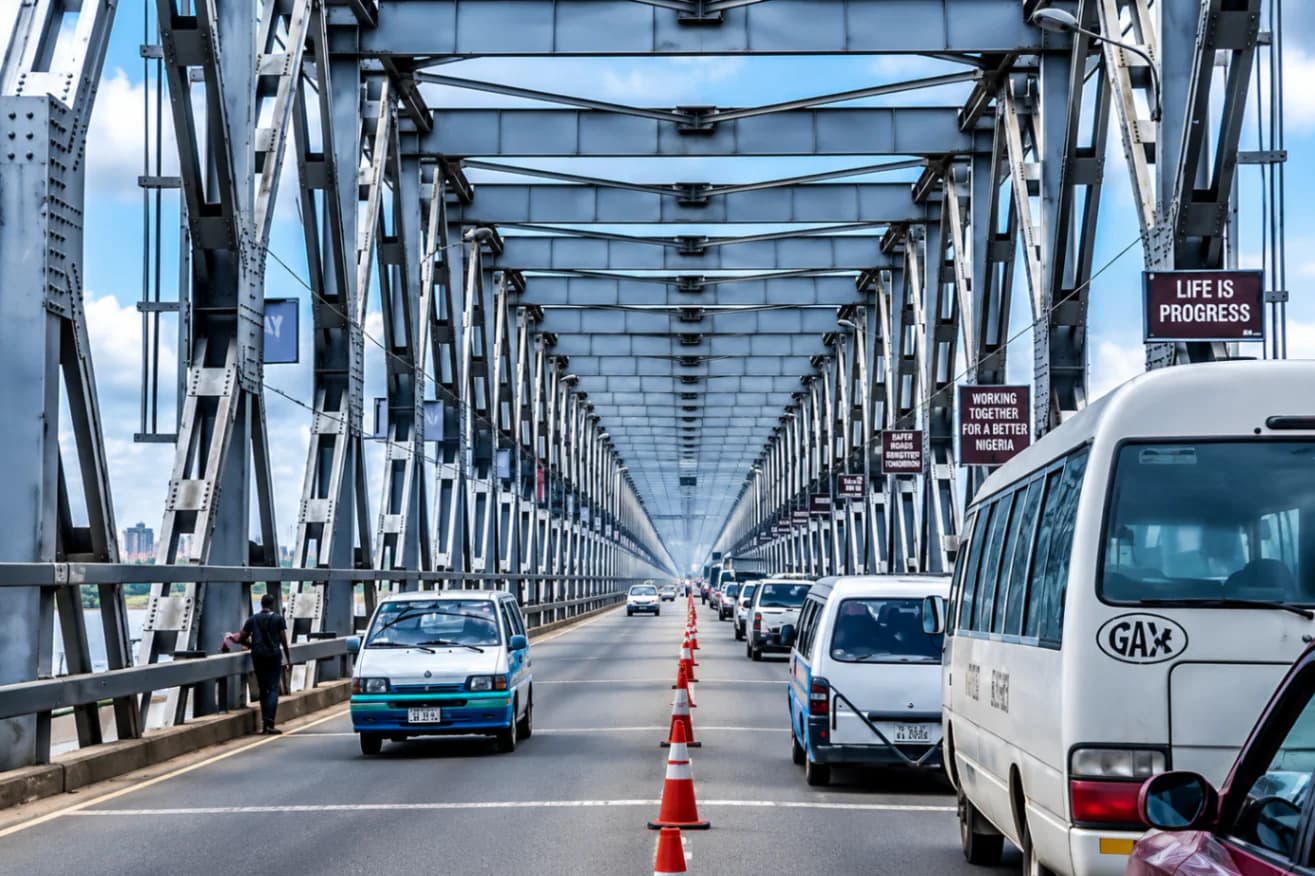
The Federal Government has announced the temporary closure of the First Niger Bridge in Onitsha, Anambra State, as emergency rehabilitation works begin on the major transport link between the South-East and other parts of Nigeria.
The bridge will be fully closed to traffic from Monday, September 7, and is expected to reopen on Monday, September 21, 2026.
The Federal Ministry of Works said the intervention became necessary after an inspection revealed deterioration of the bridge's carriageway and damage to some of its structural components.
The announcement was made by Timothy Emenike, Acting Federal Controller of Works in Anambra State, following a recent inspection by Works Minister David Umahi.
According to the ministry, some components of the bridge had also been affected by vandalism, including portions of the expansion-joint steelwork as well as nuts and bolts connected to the bridge's stanchions and steel trusses.
Why the First Niger Bridge Is Being Closed
The Federal Ministry of Works said the immediate objective is to restore the bridge to a safer and more durable condition.
The main rehabilitation work will involve milling and removing the deteriorated asphalt surface before laying an approximately 40mm asphalt wearing course.
Additional maintenance and safety works will also be carried out during the intervention.
The ministry said the contractor handling the relevant section of the Onitsha-Enugu Dual Carriageway, SKECC, has been directed to undertake the emergency intervention.
Work is expected to continue during both the day and night in an effort to complete the project within the two-week closure period and minimise disruption to road users.
Second Niger Bridge Becomes Main Alternative
With the First Niger Bridge completely closed, motorists have been advised to use the Second Niger Bridge.
The recommended route is through Obosi towards Asaba in Delta State and onward to other destinations.
The Federal Ministry of Works said traffic diversion arrangements, road signs, safety barriers and traffic-control personnel would be deployed around the affected areas.
Motorists have also been urged to obey temporary traffic signs, reduce speed around construction zones, avoid reckless overtaking and follow instructions from traffic-control personnel and security agencies.
Motorists Warned to Expect Longer Journeys
The closure is expected to affect commuters, commercial transport operators, freight companies and businesses that rely on the First Niger Bridge as a major route between Anambra and Delta states.
Road users have been advised to allow additional travel time and plan their journeys before setting out.
Although the Second Niger Bridge provides an alternative crossing, increased traffic could place additional pressure on connecting roads, particularly around Obosi and Asaba.
The government is therefore relying on traffic management measures to reduce congestion during the two-week period.
Security Upgrades Included in the Repairs
The rehabilitation will not be limited to resurfacing the road.
The Federal Ministry of Works said solar-powered streetlights and closed-circuit television cameras will also be installed as part of the intervention.
The CCTV system is expected to improve surveillance around the bridge, particularly in response to concerns over vandalism.
The government has previously raised concerns about the removal of bridge components, including bolts and other metal parts.
The inclusion of surveillance infrastructure means the project is also being used to improve security around the bridge and discourage further damage.
Why the First Niger Bridge Matters
The First Niger Bridge is one of Nigeria's most important transportation links.
It connects Onitsha in Anambra State with Asaba in Delta State and serves as a major route for people and goods moving between the South-East, South-South and other parts of the country.
The bridge was completed in 1965 and has remained a crucial part of Nigeria's road network for decades.
The Second Niger Bridge, which was commissioned in 2023, was developed in part to provide additional capacity and reduce pressure on the older crossing.
With the First Niger Bridge now undergoing emergency works, the newer bridge will play an even more important role in keeping traffic moving across the Niger during the closure period.
Government Appeals for Cooperation
The Federal Ministry of Works has acknowledged that the closure will create temporary difficulties for motorists, residents and businesses.
However, officials say the repairs are necessary in the public interest because of the deteriorated condition of the bridge.
The ministry has appealed to road users to cooperate with traffic-management officials and comply with diversion instructions throughout the project.
If the repairs are completed as scheduled, the First Niger Bridge is expected to reopen on Monday, September 21.
TALK YA TRUE ANALYSIS
The First Niger Bridge closure is a reminder that major infrastructure cannot simply be maintained when problems become severe.
The bridge has carried enormous volumes of traffic for decades, making regular maintenance essential to preventing small defects from becoming major safety problems.
What makes the current situation particularly concerning is the reported vandalisation of structural components.
A bridge is not ordinary infrastructure where missing bolts or steel components can simply be ignored. Every structural component has a purpose, and the removal of parts can create risks that may not immediately be visible to ordinary motorists.
The Federal Government therefore needs to ensure that the current intervention is more than a temporary resurfacing exercise.
The installation of CCTV cameras and solar-powered lighting is a positive step if the equipment is properly maintained and actually monitored.
There is also a lesson for road users and commuters.
The two-week closure may cause frustration, longer journeys and additional transport costs, but ignoring a deteriorating bridge would create a far greater risk.
The bigger question is what happens after September 21.
The government should publish clear information about the work completed, the condition of the bridge after rehabilitation and the maintenance schedule going forward.
Infrastructure should not have to reach an emergency stage before government action begins.
FINAL WORD
The First Niger Bridge will be completely closed from September 7 to September 21, 2026, as the Federal Government carries out emergency rehabilitation and maintenance.
Motorists are encouraged to use the Second Niger Bridge through Obosi and Asaba and allow extra time for their journeys.
The temporary inconvenience may be significant, but restoring the bridge to a safe and reliable condition is essential.
The real test, however, will be whether the government can maintain the bridge properly after the current emergency intervention and prevent vandalism from creating another crisis.
KEY FACTS
• The First Niger Bridge in Onitsha will close completely from September 7 to September 21, 2026.
• The closure is for emergency maintenance and rehabilitation.
• The bridge connects Anambra and Delta states across the Niger River.
• The carriageway surface has deteriorated and requires resurfacing.
• Some bridge components have reportedly been affected by vandalism.
• Repairs will include removal of deteriorated asphalt and installation of approximately 40mm of new asphalt wearing course.
• Solar-powered streetlights and CCTV cameras are also planned.
• SKECC has been directed to carry out the emergency intervention.
• Work is expected to continue during the day and at night.
• Motorists are advised to use the Second Niger Bridge through Obosi towards Asaba.
• Road users should expect possible delays and allow additional travel time.
SOURCES
Punch Newspapers — Federal Government announces the September 7–21 closure and details of the rehabilitation works.
TheCable — Closure dates, alternative route, deterioration and planned repairs.
Premium Times — Details of vandalised bridge components and background on the First and Second Niger Bridges.
Channels Television — Anambra State notification and traffic-diversion guidance.
BusinessDay — Emergency repairs, vandalised components and planned rehabilitation works.
Tags
PUBLISHER NOTE
About Talk Ya True
Talk Ya True publishes independent reporting and analysis with clear attribution, source transparency and corrections when needed.
Related Articles
Nigeria
37 Suspected Illegal Miners Die in NSCDC Custody as Tinubu Orders Independent Probe

Business
Nigeria’s Inflation Falls to 15.39% as Food Price Pressure Eases

Business
Nigeria’s Oil Output Hits 1.68m Barrels Per Day as OPEC Compliance Continues

World
Diezani’s UK Acquittal Won’t End Nigeria’s Probe, HEDA Says
Stay Informed
Get the latest stories from Nigeria.
Free news updates. Unsubscribe anytime.
By subscribing, you agree to receive free news updates from Talk Ya True. You can unsubscribe at any time.