Nigeria
Governor Otti Gets Emotional Watching Children With Disabilities Parade
Abia State Governor Alex Otti has drawn widespread attention online after becoming visibly emotional while watching children with physical disabilities take part in a parade. The moment, captured on video and shared on X, has sparked a wider conversation about compassion, disability inclusion and the responsibility of government to ensure that people living with disabilities are not left behind.
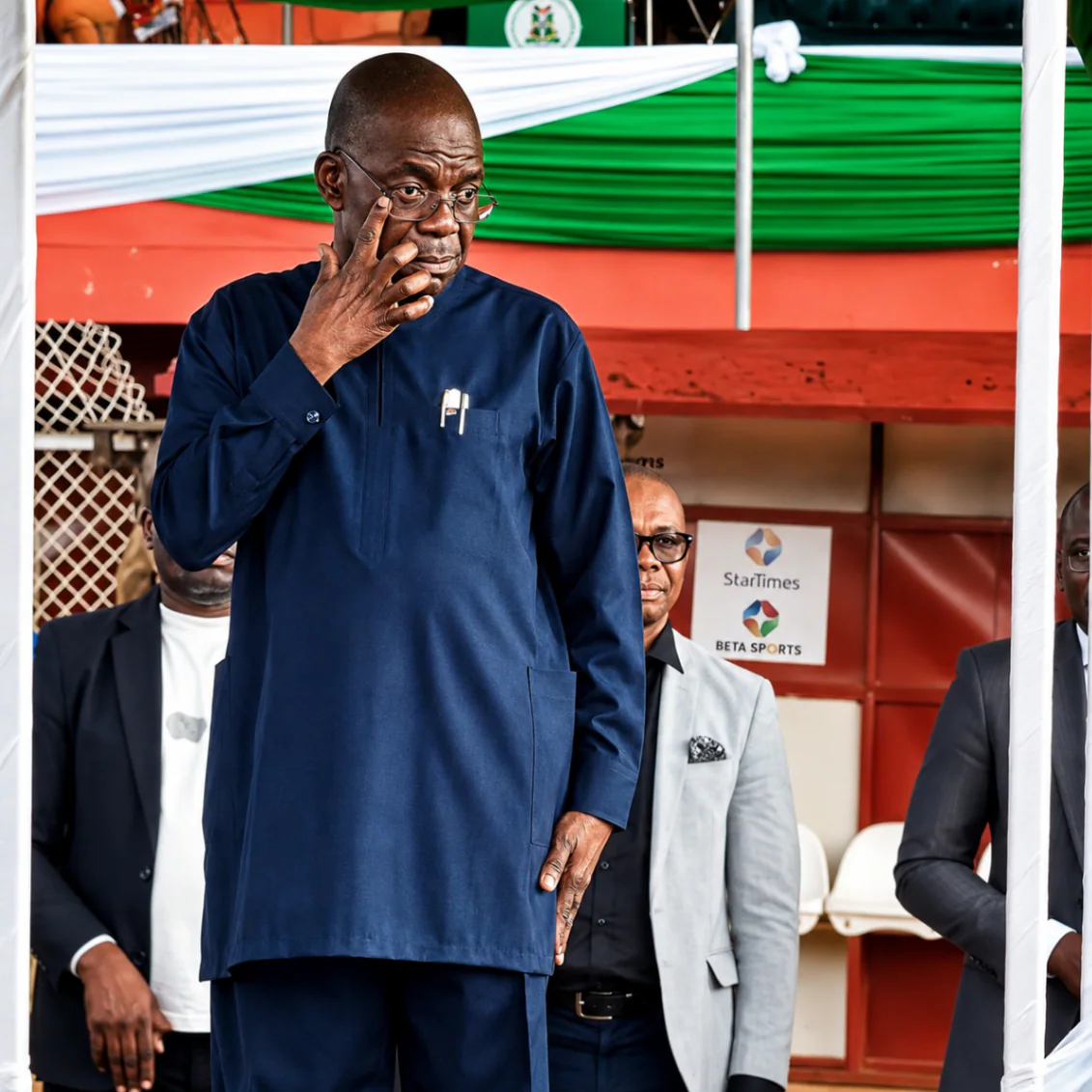
Governor Alex Otti of Abia State has attracted attention on social media after he was filmed becoming visibly emotional while watching children with physical disabilities take part in a public parade.
The video, shared widely on X, shows the governor watching the children as they participated in the event. His emotional reaction quickly became a talking point, with many Nigerians praising what they described as a genuine display of empathy.
But while the governor's reaction has generated attention, the moment also raises a much bigger question about how Nigeria treats people living with disabilities.
The children featured in the video were not simply participating in a ceremony. Their appearance highlighted the importance of giving people with disabilities opportunities to participate fully in society.
For many Nigerians, the emotional scene served as a reminder that disability should not prevent anyone from pursuing education, sports, employment or other ambitions.
WHAT HAPPENED
The footage circulating online shows Governor Otti watching children with physical disabilities as they took part in a parade.
The governor appeared visibly moved as the children passed before him.
The video does not establish exactly what Otti was thinking or the precise reason for his emotional reaction. For that reason, it would be inappropriate to claim that he became emotional for a specific reason unless he personally explains it.
What is clear from the footage is that the governor's reaction has resonated with many Nigerians.
The discussion has now expanded beyond the governor himself to the broader issue of disability inclusion.
WHY THE MOMENT HAS ATTRACTED ATTENTION
People living with disabilities can face challenges that extend far beyond their physical conditions.
They may encounter inaccessible public buildings, difficulties using public transportation, limited educational opportunities, inadequate healthcare facilities and social attitudes that underestimate their abilities.
For children in particular, these barriers can affect their education, confidence and future opportunities.
That is why seeing children with disabilities participating publicly can be significant.
It shows that they are present.
It shows that they can participate.
And it reminds society that they should not be defined solely by their physical limitations.
NIGERIANS REACT ON X
The visible reactions to the video have largely focused on the governor's emotional response and the significance of the children participating in the event.
Some Nigerians praised Otti for appearing genuinely moved by what he saw.
One reaction described the moment as a powerful display of empathy, while another focused on the fact that the children were being given an opportunity to participate publicly.
Other comments connected the video to the broader need for government to support people living with disabilities.
There were also reactions that suggested emotional moments should eventually lead to practical action.
That is an important part of the conversation.
A viral video can generate sympathy for a few days.
Government policy can change people's lives for years.
FROM EMOTION TO ACTION
The most important question following the video is therefore not simply whether Governor Otti became emotional.
It is what happens next.
People living with disabilities need more than sympathy.
They need accessible schools.
They need reliable transportation.
They need healthcare and rehabilitation services.
They need accessible public buildings.
They need sporting opportunities.
They need employment and entrepreneurship opportunities.
And they need to be treated as citizens who can contribute to society.
A government that genuinely wants to improve the lives of people with disabilities has the ability to address many of these issues through policy and infrastructure.
ABIA'S RECENT FOCUS ON ACCESSIBILITY
The viral moment comes against the backdrop of recent disability-related initiatives and events in Abia State.
The state government has highlighted accessibility features in its electric Green Shuttle buses, including provisions intended to make public transportation more accessible to people living with disabilities.
Abia has also hosted the 2026 Abia Open National Para-Powerlifting Championship, bringing athletes from 14 states together for a major sporting competition.
The championship provided another platform for athletes living with disabilities to demonstrate their abilities and compete at a high level.
These developments are important because they shift the conversation from disability as a matter of charity to disability as a matter of participation and opportunity.
WHY ACCESSIBLE TRANSPORTATION MATTERS
Transportation is one of the areas where inclusion can make an immediate difference.
A person may have access to education or employment but still struggle to participate fully in society if they cannot travel independently.
Accessible buses, terminals, roads and pedestrian infrastructure can make it easier for people with disabilities to attend school, work, medical appointments and social events.
That is why accessibility should be considered when governments design public transportation systems.
It should not be treated as an optional feature added after infrastructure has already been built.
THE CHILDREN SHOULD REMAIN AT THE CENTRE
There is also a danger that the story could become entirely about Governor Otti.
The children themselves deserve attention.
They should not be presented simply as objects of sympathy.
They are students, athletes, future professionals, entrepreneurs and members of their communities.
A child with a physical disability can have ambitions just like any other child.
The responsibility of government and society is to ensure that unnecessary barriers do not prevent those ambitions from becoming reality.
DISABILITY IS NOT THE ABSENCE OF ABILITY
One of the biggest problems surrounding disability is the tendency to focus on what someone cannot do rather than what they can do.
The para-powerlifting competition recently held in Abia provides a powerful counterexample.
Athletes living with disabilities competed, trained and represented their states.
Their achievements demonstrate that the right facilities, training and support can allow people to reach levels that society may otherwise underestimate.
That lesson should extend beyond sport.
It should apply to education, employment, technology, business and public service.
THE ROLE OF GOVERNMENT
Governments have an important responsibility to remove barriers.
That can include ensuring that public buildings are accessible, improving transportation, supporting inclusive education and providing opportunities for vocational training.
Healthcare and rehabilitation services also matter.
So does employment.
A person living with a disability should not automatically be viewed as someone who needs charity.
They should also be viewed as someone who can work, create, contribute and participate.
THE PROBLEM WITH SEEING DISABILITY ONLY THROUGH CHARITY
Nigeria's conversation around disability sometimes focuses heavily on charitable assistance.
Helping people who need support is important, but charity alone cannot solve the underlying problem.
If a school cannot be accessed by a wheelchair user, giving that student money does not solve the accessibility problem.
If public transportation cannot accommodate someone with a physical disability, financial assistance does not necessarily solve the transportation problem.
If a qualified person cannot find employment because of discrimination, charity does not address the discrimination.
Inclusion requires structural changes.
TALK YA TRUE ANALYSIS
Governor Otti's emotional reaction is understandable as a human moment, but the real value of the incident will depend on whether moments like this lead to meaningful action.
Politicians regularly attend public events where they encounter vulnerable people.
The difference between symbolic empathy and effective governance is what happens afterwards.
If a governor sees children struggling with accessibility and responds by improving schools, transportation, healthcare and sporting facilities, then the emotional moment becomes part of something much bigger.
That is the standard Nigerians should apply.
Not whether a politician cried.
Not whether a video went viral.
But whether people's lives improved.
The children in the video should ultimately be remembered not because they made a governor emotional, but because they were given the opportunity to participate.
That is the kind of story Nigeria needs more of.
WHAT NIGERIANS SHOULD WATCH
The most important developments to watch are whether Abia continues improving accessibility across public infrastructure and transportation.
People should also watch for continued investment in inclusive education, healthcare, rehabilitation and sports.
If these areas receive sustained attention, the benefits could extend well beyond the children shown in the viral video.
FINAL WORD
Governor Alex Otti's emotional reaction while watching children with physical disabilities parade has captured the attention of Nigerians online.
The footage has generated praise, discussion and a broader conversation about disability inclusion.
But the most important lesson is that compassion should not end when the cameras stop recording.
Children living with disabilities deserve opportunities to learn, compete, work and participate fully in society.
They deserve accessible schools.
They deserve transportation they can use.
They deserve healthcare.
They deserve sporting facilities.
And they deserve to be recognised for what they can do rather than defined by what they cannot.
The viral moment may last for a few days.
But the policies created from moments like this can last for generations.
The ultimate measure of leadership is therefore not simply the ability to feel compassion.
It is the ability to turn compassion into action.
KEY FACTS
Person: Alex Otti
Position: Governor of Abia State
Viral moment: Otti became visibly emotional while watching children with physical disabilities parade
Platform: X
Public reaction: Many Nigerians praised the governor's apparent empathy
Main issue: Disability inclusion and accessibility
Recent Abia initiative: Accessibility features have been highlighted on Abia Green Shuttle electric buses
Recent sporting event: 2026 Abia Open National Para-Powerlifting Championship
Participating states: 14
Main message: People living with disabilities should have access to opportunities, infrastructure and full participation in society
Important clarification: The video shows Otti's emotional reaction but does not independently establish the precise reason for his emotions
Status: Viral social-media story
Tags
PUBLISHER NOTE
About Talk Ya True
Talk Ya True publishes independent reporting and analysis with clear attribution, source transparency and corrections when needed.
Related Articles

Stay Informed
Get the latest stories from Nigeria.
Free news updates. Unsubscribe anytime.
By subscribing, you agree to receive free news updates from Talk Ya True. You can unsubscribe at any time.