Nigeria
Lagere Flyover Opens in Ile-Ife as Nigerians Debate Its ₦14.9bn Cost and Design
The newly inaugurated Lagere Flyover in Ile-Ife has become a major talking point across Nigeria, with residents celebrating the infrastructure while others question its ₦14.9 billion cost and design. Online debate has particularly focused on lane width, traffic capacity and whether the project will deliver the long-term congestion relief promised.
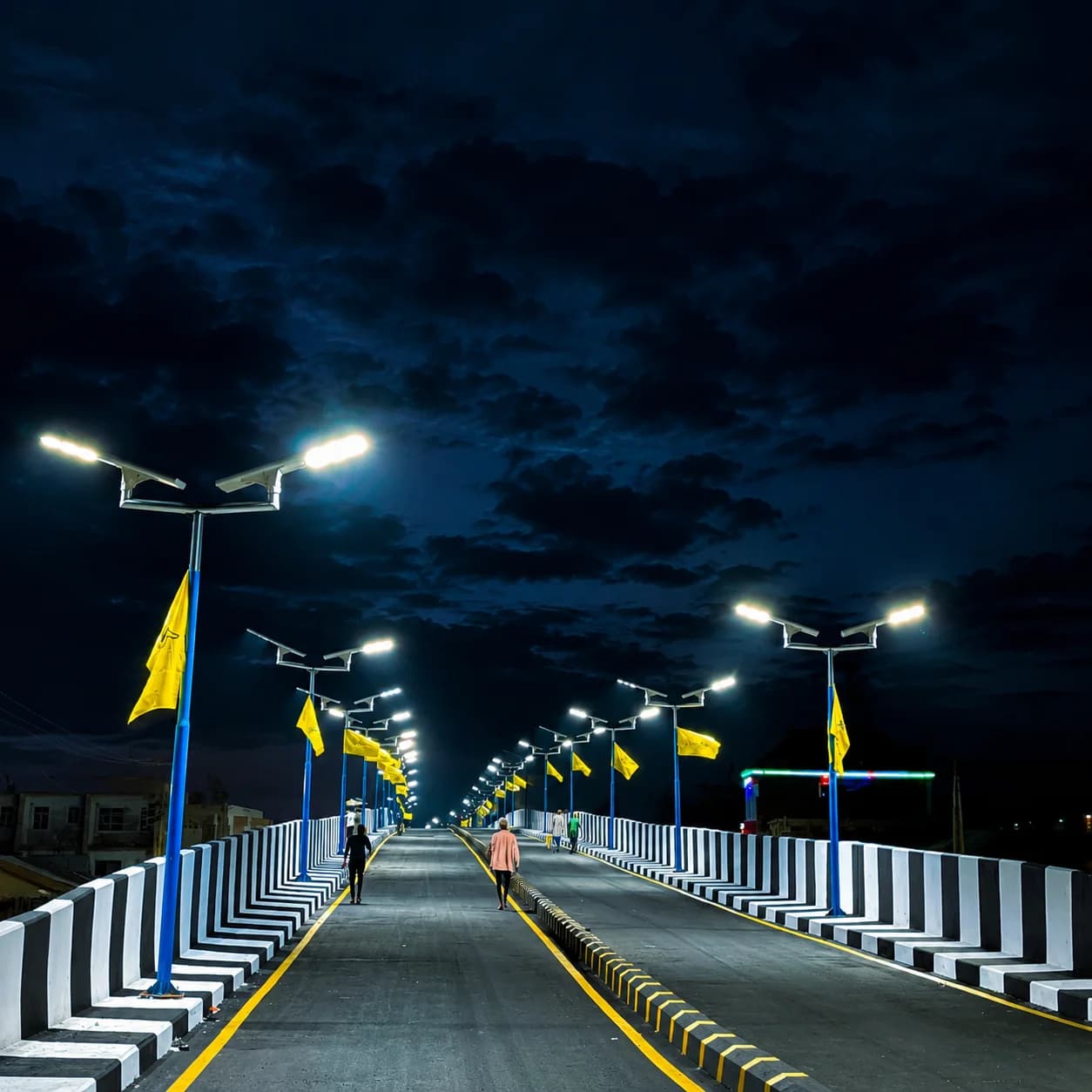
The newly completed Lagere Flyover in Ile-Ife, Osun State, has officially opened amid celebrations, political excitement and a growing online debate over the project's cost and design.
The flyover, located at the busy Lagere Junction, was inaugurated on Monday as part of the infrastructure programme of Governor Ademola Adeleke's administration.
Videos from the commissioning ceremony quickly spread across X, showing large crowds gathering around the project and supporters celebrating what they describe as a major transformation of one of Ile-Ife's busiest areas.
But alongside the celebration came another conversation:
Was the ₦14.9 billion project worth the money, and will its design actually solve the traffic problems at Lagere?
A ₦14.9 Billion Project
The Lagere Flyover was initially awarded at a contract sum of approximately ₦14.94 billion.
Official records from the project's 2024 flag-off put the exact contract figure at ₦14,938,924,771.45, with a planned completion period of 12 months.
The project was conceived to address traffic congestion around Lagere Junction, one of the major commercial and transport points in Ile-Ife.
The junction connects important routes within the ancient city and carries traffic moving between different parts of Osun and neighbouring areas.
Why Lagere Needed a Flyover
The choice of location has been defended by the state government on traffic and economic grounds.
At the original flag-off, Adeleke's administration described the project area as an important economic hub where banks, businesses and traders attract people from surrounding communities.
The government argued that a flyover would ease congestion, improve connectivity and stimulate economic activity around the area.
That argument has found support among residents who believe the project addresses a genuine infrastructure problem.
"Finally, Ile-Ife Has a Flyover"
Some of the most enthusiastic reactions on X have come from people proud of the project as an infrastructure milestone for the ancient city.
One X user described being particularly proud as an Ife person while sharing his view of the newly completed bridge.
Other supporters have gone further, celebrating the project as the first flyover in Ile-Ife's history and crediting Adeleke's administration for delivering it.
For these supporters, the debate should not obscure the significance of finally giving one of Nigeria's historic cities a major modern transport structure.
But Then Came the Questions About Design
The most interesting criticism online is not necessarily about whether Ile-Ife needs a flyover.
It is about what was built.
One detailed X reaction questioned the decision to have what the author described as relatively narrow lanes at a junction considered one of the city's major convergence points.
The argument is that Lagere handles significant traffic and that the infrastructure should therefore be designed with future traffic growth in mind.
That raises an important infrastructure question:
Is the project designed for today's traffic or tomorrow's?
Will It Actually Reduce Congestion?
A flyover does not automatically eliminate traffic.
Its effectiveness depends on how traffic moves before, during and after the bridge.
If vehicles are able to bypass the busiest intersection efficiently, congestion can fall dramatically.
But if bottlenecks simply move to the approaches, exits or adjoining roads, drivers may eventually experience a different version of the same problem.
That is why the coming months could provide a much more useful assessment than the inauguration ceremony itself.
The ₦14.9 Billion Question
The project's price tag has also become a major part of the online conversation.
At approximately ₦14.94 billion, the flyover represents a significant public investment.
Supporters argue that major infrastructure naturally costs substantial amounts of money, particularly in an environment where construction materials, labour and equipment have become more expensive.
Critics, however, want greater scrutiny of the contract and value delivered for the money.
Their argument is not necessarily that Ile-Ife should not have received a flyover.
It is that taxpayers deserve to know whether the design, construction quality and final cost represent good value.
The Government's Larger Infrastructure Programme
The Lagere project is not an isolated investment.
At the 2024 flag-off, the Osun government also announced the commencement of 55.86 kilometres of roads across the state's 30 local government areas and area office, with the road projects valued at more than ₦30.67 billion.
The state has subsequently included the Lagere flyover among its major capital projects.
Osun's 2025 budget documents also listed the construction of the Lagere flyover as a capital project, with more than ₦5.47 billion budgeted for the project in that year's spending plan.
The Ooni's Earlier Warning
Interestingly, concerns about the project are not entirely new.
At the 2024 flag-off, the Ooni of Ife, Oba Adeyeye Ogunwusi, welcomed the project but urged the governor not to simply flag it off and leave it unfinished.
He specifically appealed to Adeleke to complete the bridge and also address other poor roads in Ile-Ife.
That warning has become relevant again now that the project has finally reached inauguration.
The question has moved from:
"Will it be completed?"
to:
"Will it work as intended?"
Davido Joins the Celebration
The inauguration has also become part of the political conversation.
Afrobeats star Davido, who is Governor Adeleke's nephew and a prominent supporter of his political career, shared videos of the large crowd at the event on X.
He praised the turnout and described the project as part of what he sees as progress under Adeleke.
He also criticised the APC, accusing the opposition party of attempting to obstruct progress in Osun State.
That has added another layer to the story because the inauguration comes only days before the August 15 Osun governorship election.
Infrastructure Meets Politics
The timing could hardly be more politically significant.
A major infrastructure project is being inaugurated just days before voters head to the polls.
For Adeleke's supporters, the flyover provides tangible evidence of what they describe as the governor's development record.
For opponents, the timing invites questions about whether the project is being used as part of the campaign narrative.
Neither interpretation changes the physical reality of the bridge.
But it does explain why the project has generated so much political discussion.
Supporters Say Results Matter
The strongest argument from supporters is simple:
Ile-Ife needed the infrastructure, and now it has it.
They point to the completed bridge rather than promises, saying residents can now judge the project based on what they can actually see.
Some supporters have also linked the flyover to Adeleke's broader infrastructure programme, which includes road construction and other bridges across Osun State.
For them, the ₦14.9 billion should be viewed as an investment in mobility and economic activity rather than simply a large expenditure.
Critics Want the Numbers Examined
Critics are asking for a different kind of evidence.
They want to know whether the bridge provides sufficient traffic capacity.
They want to know whether the construction cost is competitive.
They want to know how much was spent on associated road works.
And they want to know whether the project was delivered according to its original specifications.
Those are legitimate questions for any major public infrastructure project.
The Real Test Begins Now
Perhaps the most important point is that the inauguration is not the final test.
Traffic data will be.
If motorists can move through Lagere faster, the bridge will have achieved its central purpose.
If congestion simply shifts elsewhere, engineers and traffic authorities may need to make additional adjustments.
And if the structure develops maintenance problems, the initial excitement will quickly disappear.
Infrastructure is ultimately judged by how well it serves people after the cameras leave.
What Nigerians Are Really Debating
The online argument is therefore broader than whether the flyover looks good.
It is really a debate about public money and public value.
One side sees a major piece of infrastructure that Ile-Ife has needed for years.
The other sees a ₦14.9 billion project that should be subjected to serious scrutiny, particularly regarding its design and capacity.
Both conversations can exist at the same time.
A project can be genuinely useful and still deserve financial scrutiny.
A government can deliver infrastructure and still be questioned about how it spent the money.
That is how public accountability should work.
The Bottom Line
The Lagere Flyover has officially opened in Ile-Ife, marking a major infrastructure milestone for the ancient city.
The project was awarded for approximately ₦14.94 billion and was designed to improve traffic flow and connectivity around one of Ile-Ife's busiest junctions.
On X, some residents and supporters are celebrating the bridge as evidence of development and a historic addition to Ile-Ife's infrastructure. Others are questioning the cost, lane width and overall design, arguing that a project at such a major junction should be built with future traffic demands in mind.
With the project now open, the debate will eventually be settled by something more important than political arguments:
the traffic.
If motorists move faster, businesses benefit and congestion falls, the ₦14.9 billion investment will have a strong practical defence.
If bottlenecks simply move to another part of the road network, Nigerians will have every reason to ask whether Lagere's biggest infrastructure problem was truly solved.
For now, Ile-Ife has its flyover. The next question is whether the flyover will live up to the expectations placed on it.
Tags
PUBLISHER NOTE
About Talk Ya True
Talk Ya True publishes independent reporting and analysis with clear attribution, source transparency and corrections when needed.
Related Articles
Business
Petrol Hits ₦1,500 in Parts of Nigeria as Global Oil Surge Deepens Fuel Crisis
Nigeria
37 Suspected Illegal Miners Die in NSCDC Custody as Tinubu Orders Independent Probe

Business
Nigeria’s Inflation Falls to 15.39% as Food Price Pressure Eases

Business
Nigeria’s Oil Output Hits 1.68m Barrels Per Day as OPEC Compliance Continues
Stay Informed
Get the latest stories from Nigeria.
Free news updates. Unsubscribe anytime.
By subscribing, you agree to receive free news updates from Talk Ya True. You can unsubscribe at any time.