Business
Nigeria’s Inflation Falls to 15.43% as Food Prices Surge in July
Nigeria’s headline inflation rate eased to 15.43% in July 2026, down from 15.91% in June. However, food inflation moved sharply higher, reaching 20.31% year-on-year and raising fresh concerns about the cost of living for households.

Nigeria’s headline inflation rate fell to 15.43% in July 2026, offering a fresh sign that overall price pressures are moderating even as the cost of food continues to put pressure on households.
The latest figure, released by the National Bureau of Statistics (NBS), represents a 0.48 percentage-point decline from the 15.91% recorded in June. The NBS also reported that month-on-month headline inflation slowed slightly to 1.57%, compared with 1.66% in June.
The official NBS account also published the July figures on X, confirming the 15.43% headline rate and the latest food-inflation data.
But behind the headline improvement is a development that could matter more to many Nigerian households: food inflation accelerated significantly during the month.
Food Inflation Climbs Above 20%
Food inflation rose to 20.31% year-on-year in July, compared with 17.52% in June.
On a month-on-month basis, food inflation increased to 5.56%, up from 3.75% in June. That represents a 1.82 percentage-point increase in the monthly food inflation rate.
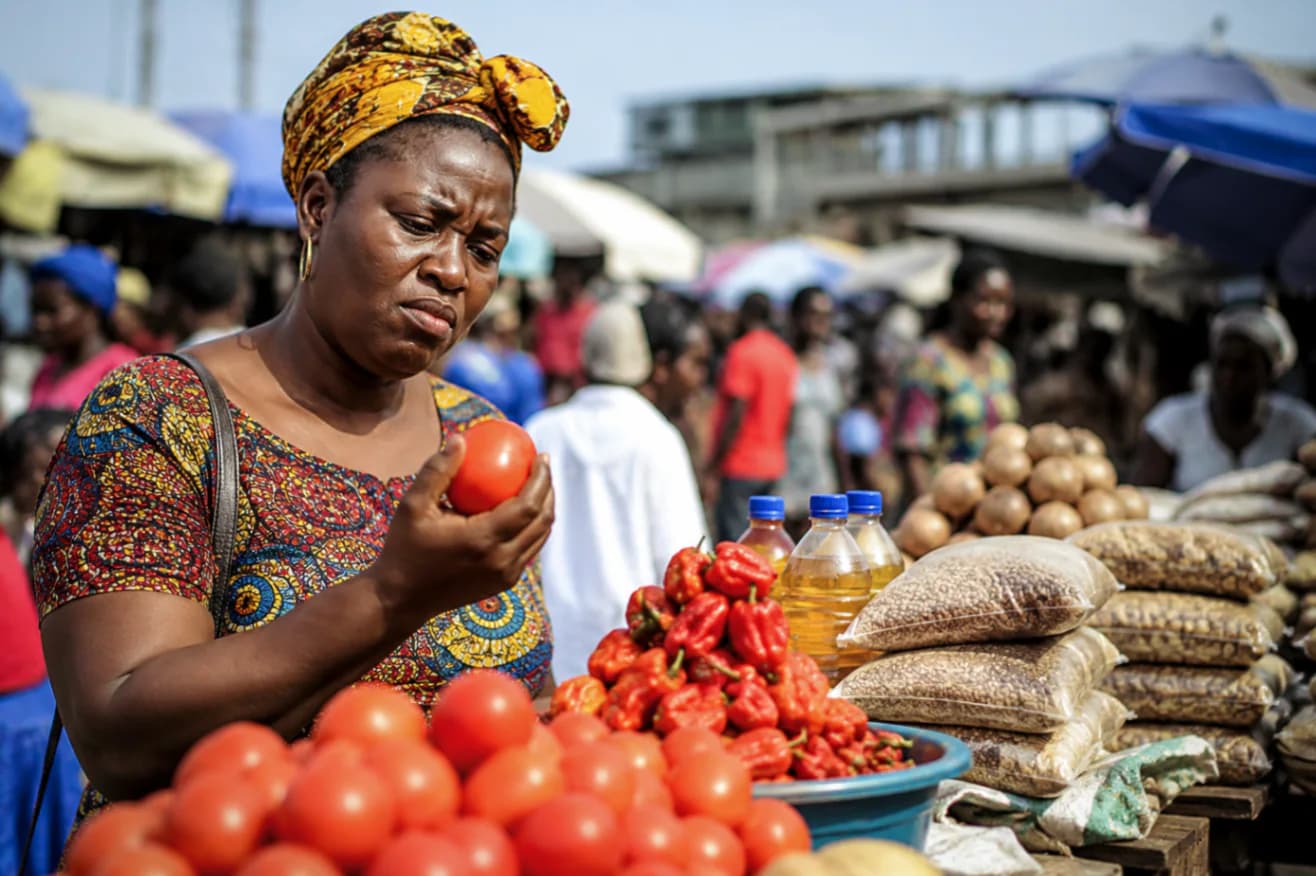
The NBS attributed the movement to price changes in several food items, including fresh pepper, onions, carrots, rice, water yam, tomatoes, garri, plantain, beef, eggs, guinea corn, ginger and plantain flour.
This means that while the annual inflation figure is moving lower, consumers may not immediately experience the improvement when buying everyday food.
Why the Numbers Appear Contradictory
At first glance, falling headline inflation alongside rising food inflation may appear confusing.
Inflation measures the rate at which prices are changing, rather than whether prices themselves have returned to previous levels.
Therefore, a decline in the headline inflation rate does not mean that food, transport or household goods have suddenly become cheaper.
It means that, on average, prices are increasing at a slower annual rate than before.
Food prices, meanwhile, continued to experience strong upward pressure in July, creating a different experience for households whose budgets are heavily concentrated on food and other necessities.
Core Inflation Also Moderates
Nigeria’s core inflation rate, which excludes volatile agricultural produce and energy, stood at 14.97% year-on-year in July.
The month-on-month core inflation rate was 0.15%, down from 1.66% in June.
The moderation in core inflation provides another indication that some of the broader price pressures in the economy are easing.
However, the sharp increase in food prices remains a significant concern because food is one of the most visible components of household spending.
Nigerians May Still Feel the Pressure
For many households, the latest inflation figures are likely to be judged against what they are paying in markets rather than the headline percentage alone.
A family buying rice, vegetables, meat, eggs and other basic food items can still face higher bills even when the annual inflation rate falls.
This is why economists and financial analysts have continued to distinguish between disinflation and an actual reduction in the cost of living.
Disinflation means the pace of price increases is slowing. It does not necessarily mean that the prices consumers are currently paying have fallen.
The July figures illustrate that distinction particularly clearly.
Inflation Is Still Lower Than a Year Ago
Despite the latest food-price pressure, Nigeria's headline inflation rate remains substantially below where it was a year earlier.
The July 2026 headline rate of 15.43% compares with 24.94% in July 2025, representing a decline of 9.51 percentage points over the year.
That represents significant progress in the headline inflation measure.
The challenge for policymakers is ensuring that the improvement becomes more visible in areas that directly affect household budgets, particularly food.
What Happens Next?
The direction of food prices will be one of the key issues to watch in the coming months.
The latest figures show that food inflation has accelerated even while headline inflation has moderated. If that trend continues, households could continue to experience significant pressure despite improvements in the broader inflation numbers.
Agricultural production, transportation costs, supply chains, market access and the availability of food across different regions will all remain important factors.
For the Central Bank of Nigeria and other economic policymakers, the latest data provides both positive and challenging signals.
The headline inflation decline suggests that overall price pressures are easing, but the sharp increase in food inflation shows that the cost-of-living problem is far from resolved.
For Nigerians, the most important question will ultimately be whether the moderation in inflation eventually translates into more affordable food and everyday essentials.
For now, the July data tells a mixed story: Nigeria's overall inflation rate is falling, but food prices are moving in the opposite direction.
What People Are Saying Online
The latest figures have also generated discussion on social media, particularly around the difference between the headline inflation rate and what consumers are experiencing in markets.
The official NBS X account confirmed the 15.43% headline figure, while the sharp rise in food inflation has prompted attention from Nigerians and economic commentators.
The most important point to keep in mind is that a lower inflation rate does not automatically mean lower prices. That distinction is central to understanding why an apparently positive economic figure can coexist with continued frustration over food costs.
Rather than attributing unverified reactions to “Nigerians on X,” Talk Ya True is treating the social-media conversation as public reaction to the official figures and keeping the underlying statistics tied to the NBS data.
Sources
National Bureau of Statistics (NBS) — July 2026 Consumer Price Index and inflation data.
NBS on X — official announcement of the July headline and food inflation figures.
The PUNCH — report on July inflation falling to 15.43% while food inflation accelerated.
Vanguard — report on food inflation rising to 20.31%.
The Sun Nigeria — breakdown of the NBS figures and major contributors to headline inflation.
BusinessDay — analysis of the impact of rising food prices on Nigeria's disinflation progress.
Tags
PUBLISHER NOTE
About Talk Ya True
Talk Ya True publishes independent reporting and analysis with clear attribution, source transparency and corrections when needed.
Related Articles

Business
Petrol Hits ₦1,500 in Parts of Nigeria as Global Oil Surge Deepens Fuel Crisis

Nigeria
37 Suspected Illegal Miners Die in NSCDC Custody as Tinubu Orders Independent Probe
Business
Nigeria’s Inflation Falls to 15.39% as Food Price Pressure Eases

Business
Nigeria’s Oil Output Hits 1.68m Barrels Per Day as OPEC Compliance Continues
Stay Informed
Get the latest stories from Nigeria.
Free news updates. Unsubscribe anytime.
By subscribing, you agree to receive free news updates from Talk Ya True. You can unsubscribe at any time.