Business
NNPC Signs Six Major Gas Deals to Drive Industrial Growth and Strengthen Nigeria's Energy Future
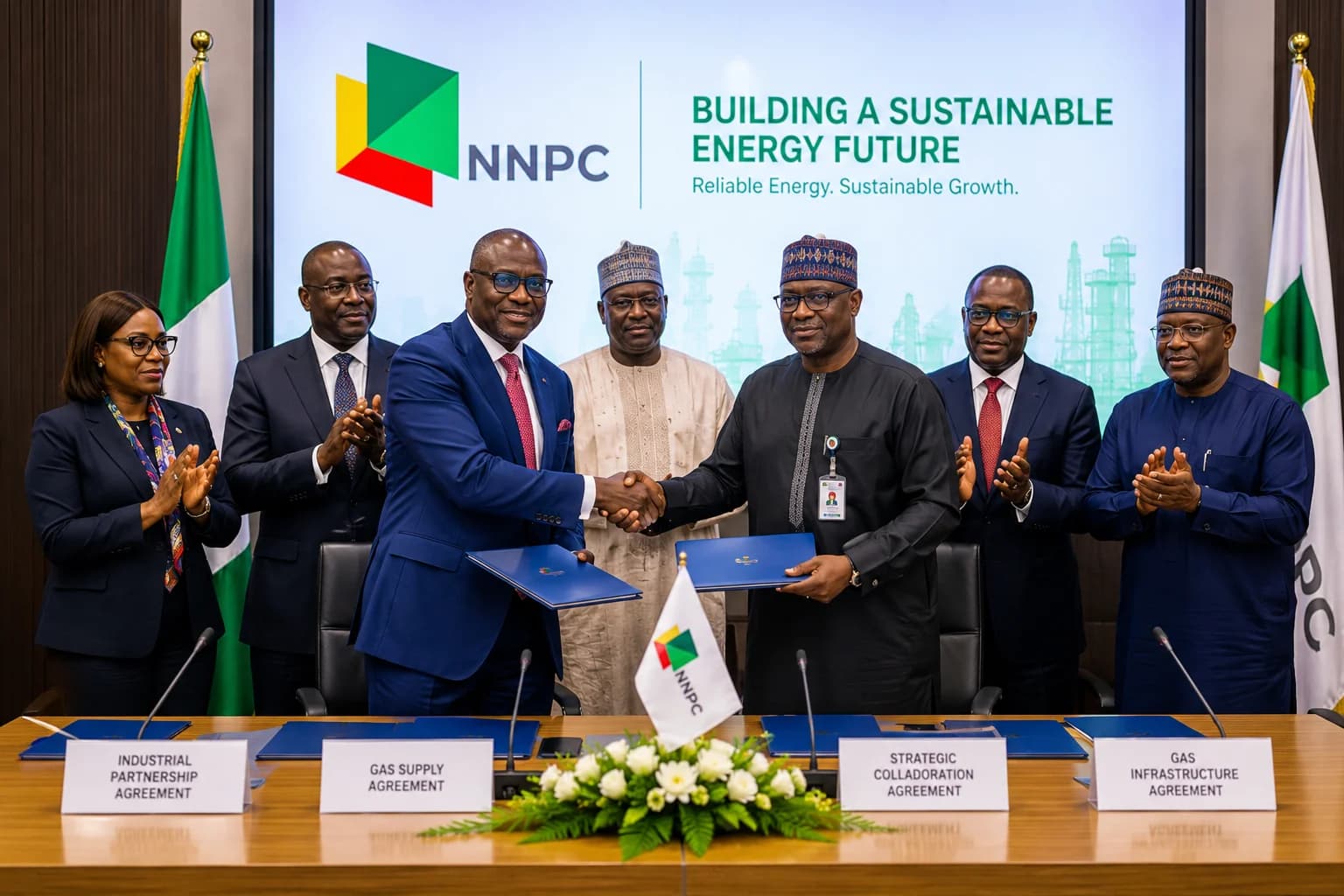
The Nigerian National Petroleum Company Limited (NNPC Ltd) has signed six strategic gas agreements with key industry partners in a move aimed at accelerating Nigeria's gas-based industrialisation agenda. The agreements are expected to boost domestic gas supply, attract investment, create jobs and improve energy security as the country pushes to unlock the economic potential of its vast natural gas reserves.
For decades, Nigeria has been known around the world as an oil-producing nation.
Yet beneath its soil lies another resource that many experts believe could transform the country's future.
Natural gas.
Nigeria possesses one of the largest proven natural gas reserves in Africa, but much of that potential remains underdeveloped. Successive governments have promised to change that, describing natural gas as the fuel that can power industries, expand electricity generation and reduce dependence on imported energy products.
Now, the Nigerian National Petroleum Company Limited (NNPC Ltd) says it has taken another significant step in that direction.
The company has signed six strategic agreements with local and international partners to support the Federal Government's gas-based industrialisation programme and strengthen Nigeria's long-term energy security.
A Shift From Oil to Gas
For many years, crude oil dominated Nigeria's energy strategy.
Today, the conversation is changing.
Government policymakers increasingly see natural gas as the bridge between fossil fuels and cleaner energy, while also viewing it as a catalyst for industrial development.
NNPC says the newly signed agreements are designed to expand gas infrastructure, improve domestic utilisation and encourage greater investment across the gas value chain.
The message is clear:
Nigeria wants to become not only an oil giant but also a gas powerhouse.
What the Agreements Aim to Achieve
Although each agreement covers a different aspect of the gas industry, together they are expected to support several national objectives, including:
Expanding domestic gas supply.
Accelerating gas infrastructure projects.
Supporting manufacturing and industrial growth.
Improving electricity generation.
Encouraging private-sector investment.
Creating employment opportunities across the energy sector.
For businesses that rely on stable energy, these goals could have far-reaching economic benefits.
Why Gas Matters More Than Ever
Nigeria's economy has long been vulnerable to fluctuations in global crude oil prices.
Natural gas offers an opportunity to diversify.
Unlike crude oil, gas can be used extensively within the country.
It powers factories.
Generates electricity.
Supports fertiliser production.
Provides feedstock for petrochemical industries.
Supplies compressed natural gas (CNG) for transportation.
Expanding domestic gas use could therefore reduce production costs for businesses while strengthening the wider economy.
The "Decade of Gas" Vision
The latest agreements also align with the Federal Government's "Decade of Gas" initiative, which seeks to transform Nigeria into a leading gas-based economy.
The policy aims to monetise the country's vast gas reserves while providing more reliable energy for homes, industries and transportation.
Industry experts argue that achieving those ambitions will require sustained investment, modern infrastructure and stable policies.
The new agreements represent another step toward those objectives.
More Jobs, More Investment
Beyond energy production, gas development has the potential to stimulate economic activity across multiple sectors.
Construction companies build pipelines.
Engineering firms design processing facilities.
Manufacturers gain more reliable energy.
Transport operators increasingly adopt gas-powered vehicles.
Small businesses benefit from improved electricity availability.
Each new investment therefore creates opportunities that extend well beyond the oil and gas industry itself.
A Vote of Confidence
The signing of six major agreements also sends an important signal to investors.
Large-scale energy projects require confidence that policies will remain stable and that infrastructure will continue to improve.
By expanding partnerships, NNPC hopes to demonstrate that Nigeria remains committed to developing its gas industry despite global uncertainty in energy markets.
That confidence could encourage additional domestic and international investment.
Challenges Still Lie Ahead
Despite the optimism, significant obstacles remain.
Gas infrastructure is still insufficient in many parts of the country.
Pipeline vandalism and energy theft continue to pose risks.
Financing large-scale projects remains challenging.
Global competition for energy investment is also increasing.
The success of these agreements will ultimately depend on implementation rather than announcements alone.
Projects must move from signed documents to completed infrastructure.
Building Nigeria's Energy Future
Around the world, countries are investing heavily in cleaner and more efficient energy systems.
For Nigeria, natural gas represents an opportunity to balance economic growth with a gradual transition toward lower-carbon energy sources.
If successfully implemented, the six agreements could help provide more electricity, strengthen industrial production, increase exports and create thousands of jobs.
More Than Six Signatures
On paper, the announcement is about six agreements.
In reality, it is about something much bigger.
It is about whether Nigeria can finally unlock the enormous economic value of its natural gas resources.
For years, experts have described gas as Nigeria's "forgotten wealth."
These agreements suggest the country is determined to change that narrative.
If the projects deliver on their promises, they could become another important milestone in Nigeria's journey toward energy security, industrial expansion and long-term economic growth.
PUBLISHER NOTE
About Talk Ya True
Talk Ya True publishes independent reporting and analysis with clear attribution, source transparency and corrections when needed.
Related Articles
Business
Dangote Refinery Drives 767% Surge in Nigeria’s Fuel Exports to Europe

Business
Nigeria’s Foreign Reserves Hit $52.83 Billion as Naira Holds Relatively Steady
Business
Nigeria’s Inflation Falls to 15.43% - But Why Do Things Still Feel So Expensive?

Business
Naira Holds Firm as Brent Oil Climbs Above $94 Amid Middle East Tensions
Stay Informed
Get the latest stories from Nigeria.
Free news updates. Unsubscribe anytime.
By subscribing, you agree to receive free news updates from Talk Ya True. You can unsubscribe at any time.