Africa
Tinubu Orders 30-Day ICPC Probe Into Alleged Fake Presidential Council and Forged Appointments
President Bola Tinubu has ordered the ICPC to investigate an alleged fictitious presidential council accused of using forged appointment letters and government documents to seek official recognition, diplomatic support and visa facilitation. The investigation now faces a bigger question: how did a body the Presidency says never legally existed allegedly acquire the appearance of government legitimacy?
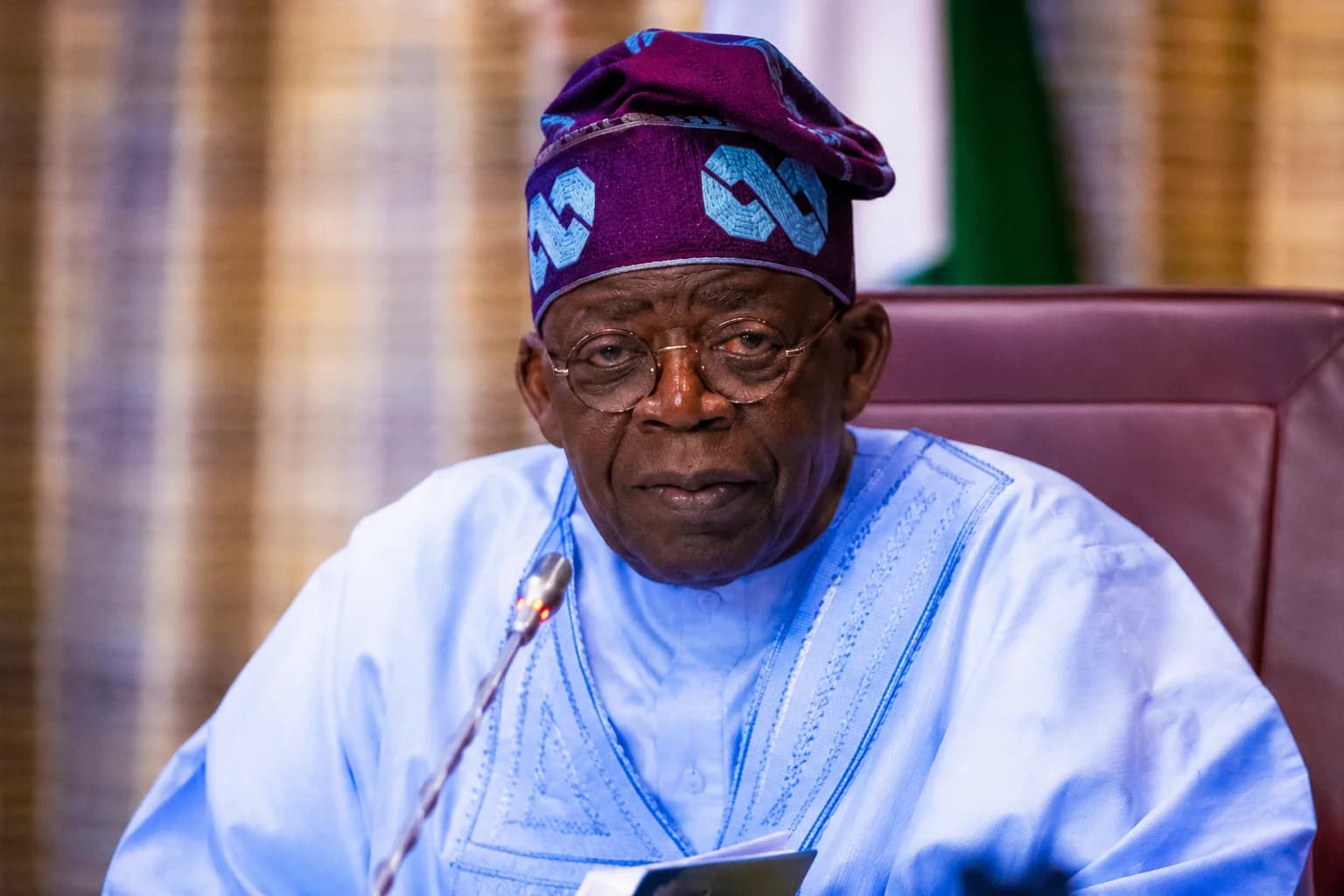
President Bola Tinubu has ordered a comprehensive investigation into the activities of the purported Presidential Foreign Intervention Promotion Council, an organisation the Presidency says was never created by the Federal Government and had no legal authority to operate as a government body.
The President directed the Independent Corrupt Practices and Other Related Offences Commission to investigate the alleged activities of the council, the man accused of presenting himself as its Director-General and any collaborators who may have played a role in the controversy.
The ICPC has been given 30 days to complete its investigation and submit a comprehensive report.
According to the Presidency, the investigation will examine allegations involving forged presidential appointment letters and official government documents.
It will also investigate claims that the purported presidential appointment was used to seek official recognition, diplomatic support and visa facilitation.
Perhaps even more significantly, investigators have been asked to examine allegations that multiple bank accounts were opened in the names of purported government agencies using allegedly forged documents.
The allegations are serious.
But the most important question may extend beyond whether one individual forged documents or falsely presented himself as a presidential appointee.
The bigger question is how an organisation the Presidency says never legally existed could allegedly acquire enough appearance of legitimacy to interact with institutions and pursue official recognition.
A Presidential Council That the Presidency Says Never Existed
At the centre of the controversy is the purported Presidential Foreign Intervention Promotion Council, commonly referred to as PFIPC.
The Presidency says the body was fictitious.
According to the government’s account, it was never established through legislation, a presidential instrument, executive approval or any other lawful act of the Federal Government.
Yet allegations surrounding the organisation suggest that it presented itself with the appearance and language of an official government institution.
Adeniyi Adeyemi Mathew has been accused of presenting himself as the Director-General of the purported council and claiming to be a presidential appointee.
The allegations against him remain subject to investigation, and the ICPC probe will be expected to establish the facts, identify any collaborators and determine whether criminal offences were committed.
Until the investigation and any resulting legal proceedings are concluded, the allegations must be treated as allegations rather than established guilt.
However, the controversy has already created serious questions for the government.
If the council had no legal existence, how far did its alleged activities reach?
Which institutions interacted with it?
Were government officials approached?
Were foreign missions or diplomatic institutions contacted?
Were any financial transactions carried out through accounts allegedly opened using purported government documents?
And, perhaps most importantly, did failures within Nigeria’s administrative systems make the alleged operation easier?
Those are the questions the 30-day investigation must answer.
Forged Appointment Letters at the Centre of Investigation
The alleged use of forged presidential appointment letters is one of the most serious aspects of the controversy.
Government appointment letters carry authority because they represent the power of the state.
If such documents can be convincingly imitated and used to obtain recognition, the problem goes beyond ordinary fraud.
It becomes an institutional security issue.
The Presidency has directed the ICPC to investigate the allegedly forged appointment letters and other official documents connected to the purported council.
Investigators will need to determine how the documents were created, who produced them and whether any person inside or outside government assisted in making them appear authentic.
They will also need to establish where the documents were presented and what benefits, access or recognition may have been obtained through their use.
The investigation should not end with identifying who allegedly possessed the documents.
It should examine the entire chain.
Who designed them?
Who signed or purported to sign them?
Were official letterheads, reference numbers, seals or other government identifiers reproduced?
Did any institution attempt to independently verify the documents?
If verification requests were made, what responses were received?
A serious investigation must answer these questions if the government wants to prevent a similar controversy in the future.
Claims of Diplomatic Support and Visa Facilitation Raise Wider Concerns
The Presidency says the investigation will also examine allegations that the purported presidential appointment was used to seek official recognition and diplomatic assistance, including visa facilitation.
This aspect of the investigation could prove particularly important.
Diplomatic processes depend heavily on trust in official government communication.
Foreign ministries, embassies and international organisations regularly receive requests and communications from governments.
If fraudulent actors can exploit the appearance of official authority, the consequences could damage Nigeria’s diplomatic credibility.
The ICPC investigation must therefore determine which diplomatic institutions, if any, were approached and whether any official support was obtained.
It should also establish whether government ministries or agencies unknowingly assisted the purported council after being presented with documents they believed to be genuine.
This is not simply about embarrassment.
Government identity has real value.
Official recognition can create access to meetings, institutions, financial relationships and diplomatic channels that are unavailable to ordinary individuals.
Any system capable of being manipulated in this way requires urgent examination.
Multiple Bank Accounts Allegedly Opened in Government-Style Names
Another significant part of the investigation concerns allegations that multiple bank accounts were opened in the names of purported government agencies using allegedly forged documents.
If established, this would raise serious questions about financial compliance and institutional verification.
Opening a bank account in the name of a government institution should require significant documentation and verification.
Investigators will need to determine which financial institutions were involved, what documents were submitted and what verification procedures were followed.
They will also need to establish whether the accounts received money, where any funds came from and how any transactions were used.
The financial trail could become one of the most important parts of the investigation.
Documents can be forged.
Websites can be created.
Titles can be invented.
But money leaves a trail.
A comprehensive financial investigation could help establish the true scale of the alleged operation and whether it involved a wider network.
The Presidency Wants Investigators to Look Beyond One Man
One of the most important aspects of Tinubu’s directive is the instruction to investigate the wider circumstances surrounding the controversy.
This matters because the case should not be reduced to a simple story of one individual allegedly pretending to hold a government position.
If a purported organisation gained the appearance of official legitimacy, the investigation must establish how that happened.
The President has directed the ICPC to examine the circumstances that may have enabled a fictitious body and a false claim of presidential appointment to appear legitimate.
That instruction could widen the investigation considerably.
The probe may need to examine interactions across government ministries, agencies, financial institutions and diplomatic channels.
It may also need to investigate whether anyone knowingly provided assistance or whether institutions were deceived by apparently convincing documentation.
The distinction will be important.
Institutional failure is not necessarily the same as criminal collaboration.
But both require attention.
If officials knowingly assisted a fraudulent operation, they should be held accountable according to law.
If institutions were deceived because verification systems were weak, those weaknesses should be corrected.
The Investigation Must Follow Evidence, Not Politics
The controversy has already attracted political attention and competing public narratives.
That makes an independent, evidence-based investigation essential.
The ICPC must resist pressure to produce a predetermined conclusion.
Its responsibility should be to establish what happened, who was involved and whether the allegations are supported by evidence.
The investigation should reconstruct the history of the purported council from its earliest known activities.
Investigators should establish when it began operating, how it represented itself publicly, which institutions it contacted and whether any benefits were obtained through alleged misrepresentation.
The investigation should also determine whether the purported council had employees, representatives or associates who believed they were working for a legitimate government institution.
Not everyone connected to an allegedly fraudulent organisation is necessarily aware of the fraud.
A careful investigation must distinguish between alleged organisers, knowing collaborators and people who may themselves have been deceived.
That is why evidence matters.
Nigeria Needs a Better System for Verifying Government Appointments
Whatever the final findings of the investigation, the controversy has exposed the need for a more reliable way to verify federal appointments and government agencies.
Ordinary Nigerians should not have to depend on social media arguments to determine whether someone is genuinely a presidential appointee.
Foreign missions should have secure channels for confirming official positions.
Banks should be able to verify the legal existence of government agencies before opening accounts in their names.
Government ministries should have access to authoritative records showing which agencies legally exist and who is authorised to represent them.
Nigeria could benefit from a central, publicly accessible digital register of federal ministries, departments, agencies, commissions, councils and presidential appointees.
Such a system would not eliminate fraud completely.
But it would make verification easier and impersonation more difficult.
In an age when sophisticated documents and convincing websites can be produced quickly, government verification systems must become faster and more secure.
The Reputation of the Presidency Is Also at Stake
The controversy affects more than the individuals directly involved.
It touches the credibility of the Presidency itself.
The authority of the President of Nigeria is one of the most powerful forms of institutional authority in the country.
A claim of presidential appointment can open doors.
It can attract attention from public officials.
It can create an assumption of influence.
It can encourage institutions to treat a person differently.
That is precisely why the government must protect the integrity of presidential appointments and official communications.
The Presidency must ensure that every legitimate appointment can be quickly verified and every false claim can be quickly exposed.
Delayed clarification creates confusion.
Confusion creates opportunities for exploitation.
And where government communication is inconsistent or difficult to verify, fraudsters may find space to operate.
The 30-Day Deadline Must Produce Answers
President Tinubu has given the ICPC 30 days to complete its investigation and submit a comprehensive report.
That deadline creates an opportunity for the government to demonstrate that the matter will not disappear into another prolonged investigation without public answers.
At the end of the process, Nigerians deserve clarity.
Was the purported council entirely fictitious?
How long did it allegedly operate?
How many institutions interacted with it?
Were forged documents used?
Were bank accounts opened?
Did money move through those accounts?
Was diplomatic assistance requested or obtained?
Did anyone within government knowingly assist the alleged operation?
Were institutions deceived because of weaknesses in verification procedures?
And what reforms will be introduced to prevent a similar situation?
Those questions are bigger than any single suspect.
They go to the heart of how government authority is protected and how public institutions verify the people who claim to represent the Nigerian state.
A Test of Institutional Credibility
The alleged fake presidential council controversy is not merely an unusual story about a disputed appointment.
It is a test of Nigeria’s institutional credibility.
If the allegations are established, the country must understand how the alleged scheme worked and whether it was enabled by individual collaboration, weak verification systems or a combination of both.
If allegations against any individual are not supported by evidence, that must also be made clear.
Justice requires accountability, but it also requires fairness.
The ICPC now has 30 days to follow the evidence.
Nigeria should expect more than arrests, accusations and dramatic headlines.
It should expect answers.
Because the most disturbing question raised by the controversy is not simply whether someone allegedly created a fake government body.
It is whether Nigeria’s institutions are strong enough to quickly recognise when government authority itself is being imitated.
PUBLISHER NOTE
About Talk Ya True
Talk Ya True publishes independent reporting and analysis with clear attribution, source transparency and corrections when needed.
Related Articles

Africa
Chidimma Adetshina’s Deportation Fight Deepens as South African Protesters Demand Her Exit

Africa
Chidimma Adetshina Faces Angry Protesters Outside South African Court as Deportation Battle Continues
Africa
South Africa Seeks R292m From Nigeria, Malawi and Ethiopia for Migrant Repatriation Costs

Africa
Angélique Kidjo Makes History as First African Artist to Receive Hollywood Walk of Fame Star
Stay Informed
Get the latest stories from Nigeria.
Free news updates. Unsubscribe anytime.
By subscribing, you agree to receive free news updates from Talk Ya True. You can unsubscribe at any time.