Africa
“We Are Not Bandits”: Hausa Community Protests Ethnic Profiling as Tension Grows in Ibadan
Members of the Hausa community in Ibadan have protested against what they describe as growing ethnic profiling and collective blame over insecurity. The development raises a difficult question for Nigeria: how can communities fight crime without turning ethnicity into evidence of guilt?
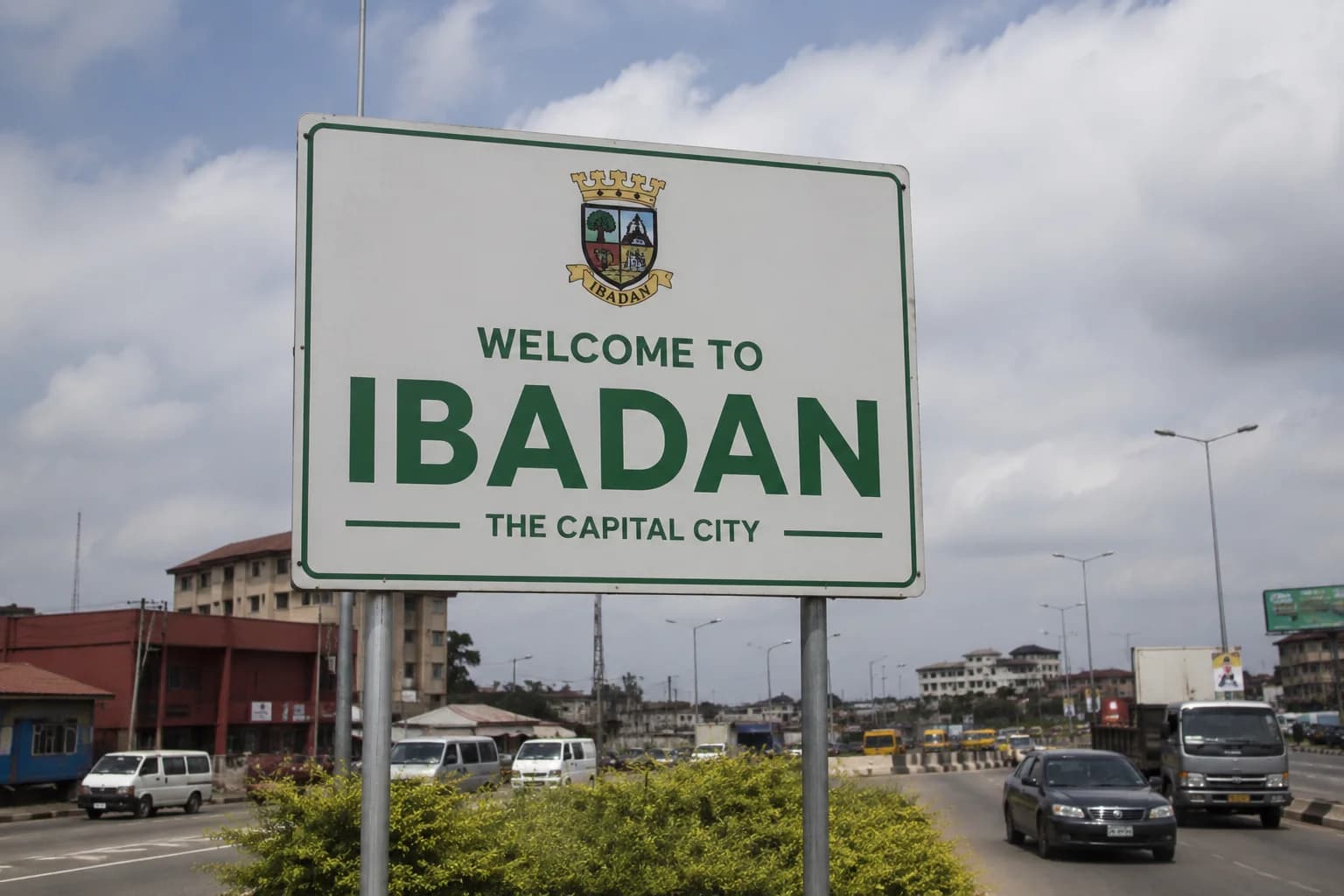
A peaceful protest by members of the Hausa community in Ibadan has brought renewed attention to growing concerns over ethnic profiling, insecurity and relations between communities in Oyo State.
The protesters took to the streets to reject what they described as the increasing stigmatisation of Hausa residents and the tendency to associate an entire ethnic group with kidnapping, banditry and other forms of criminality.
Their message was simple: “We are not bandits.”
Behind those words, however, lies a much bigger national problem.
Nigeria is facing a serious security crisis.
Kidnapping has become a major threat in different parts of the country. Communities are frightened. Families have paid ransoms. Travellers worry about highways. Farmers in some areas fear going to their farms.
But as fear grows, another danger is emerging.
The danger that criminality will be given an ethnic identity.
The danger that innocent people will become suspects because of the language they speak, the clothes they wear or the part of Nigeria their families come from.
Ibadan is now facing a test that many Nigerian cities may eventually face.
Can a society confront genuine security threats without turning neighbours against one another?
A Protest Against Collective Blame
Members of the Hausa community who participated in the protest said it was wrong to label an entire ethnic group as criminal because of the actions of suspected kidnappers.
That argument deserves serious consideration.
Nigeria's criminal justice system is supposed to punish individuals based on evidence.
A kidnapper is a criminal because he kidnaps people, not because he belongs to a particular ethnic group.
An armed robber is an armed robber because of the crime he commits, not because of his language.
A murderer must face justice because of the evidence connecting him to murder.
Once a society begins to replace individual responsibility with collective ethnic suspicion, innocent people become vulnerable.
The consequences can be dangerous.
A trader can lose customers because of his ethnicity.
A tenant can be rejected by a landlord.
A worker can be treated with suspicion.
A motorcyclist can become a target of harassment.
Rumours can spread quickly.
And in the worst circumstances, fear can turn into violence.
This is why the protest in Ibadan should not be dismissed as an ordinary demonstration.
It is a warning that community relations require careful attention.
Insecurity Is Real, but Ethnic Blame Is Not a Solution
There should be no attempt to minimise the security fears of residents.
People have a right to be afraid of kidnapping.
Communities have a right to demand protection.
Parents have a right to expect that their children can attend school without fear of abduction.
Farmers should be able to work without fear.
Travellers should be able to use roads safely.
The government has a responsibility to confront criminals aggressively and lawfully.
But ethnic profiling is not effective policing.
In fact, it can make policing more difficult.
Security agencies depend on information.
They need communities to report suspicious activity.
They need residents to trust officers enough to provide intelligence.
They need people to identify genuine criminal networks.
When an entire community believes it is being treated as suspicious, cooperation with law enforcement can become more difficult.
People may withdraw.
Trust may disappear.
Criminals may even benefit from the division.
The most effective response to insecurity is intelligence-led policing based on evidence, not suspicion based on ethnicity.
Ibadan’s Diversity Must Be Protected
Ibadan is one of Nigeria's major commercial and cultural centres.
For generations, people from different parts of Nigeria have lived, traded and worked in the city.
Hausa communities are part of the economic and social life of Ibadan.
They are traders, transport workers, artisans, labourers, business owners and families raising children.
Like every large community, they cannot be reduced to a single identity.
The actions of criminals should not become a permanent label attached to millions of people.
At the same time, community leaders also carry responsibility.
Every community must cooperate with law enforcement agencies in identifying criminal activity.
No criminal should be protected because of ethnicity, religion or community loyalty.
The strongest response from Hausa community leaders would be twofold: reject ethnic profiling while also supporting legitimate efforts to identify and prosecute criminals.
Those positions do not contradict each other.
A community can defend innocent members while helping the authorities remove criminals from its midst.
That is how trust is built.
Nigeria Must Be Careful With the Language of Insecurity
Words matter during periods of fear.
When criminal acts are repeatedly described primarily through ethnic labels, the public may gradually begin to associate criminality with entire populations.
This is particularly dangerous on social media, where unverified claims can reach thousands of people within minutes.
A photograph from one state can be shared as though it came from another.
An old video can be presented as a new attack.
A crime committed by individuals can be described as an organised ethnic invasion without evidence.
By the time the truth emerges, anger may already have spread.
Politicians, journalists, activists and social media users therefore carry a serious responsibility.
Crime should be reported accurately.
Suspects should be identified based on verified information.
Communities should not be collectively accused without evidence.
This does not mean hiding the identity of suspects where that information is genuinely relevant and verified.
It means refusing to turn individual crimes into accusations against millions of innocent people.
The Shadow of Past Communal Violence
Nigeria has seen what happens when a disagreement between individuals becomes interpreted as a conflict between ethnic groups.
Small incidents can quickly become larger confrontations when rumours, fear and historical grievances enter the situation.
Markets can close.
Businesses can be destroyed.
Families can be displaced.
People who had nothing to do with the original incident can become victims.
That history should encourage caution in Ibadan.
The current verified development is a peaceful protest against alleged profiling, not evidence of a new ethnic war.
That distinction matters.
Authorities and media organisations should resist language that could unnecessarily inflame the situation.
At the same time, the concerns expressed by both residents worried about insecurity and community members worried about profiling should be taken seriously.
Ignoring either side would be a mistake.
Government Must Create Space for Dialogue
The Oyo State Government, security agencies and community leaders have an opportunity to prevent suspicion from developing into deeper hostility.
Dialogue should begin early.
Yoruba community leaders, Hausa community representatives, traditional rulers, religious leaders, market associations, youth representatives and security officials should have channels for discussing concerns before they become crises.
These conversations should be practical.
Residents should know how to report suspicious activities safely.
Community leaders should know which security officials to contact when threats emerge.
Security agencies should explain how intelligence is assessed and how communities can cooperate without creating vigilante violence.
False rumours should be challenged quickly.
Where crimes occur, investigations should be transparent enough to reduce speculation.
Silence creates space for rumours.
Communication creates opportunities for trust.
Criminals Have No Ethnic Monopoly
One truth must remain at the centre of this discussion.
No Nigerian ethnic group has a monopoly on criminality.
Nigeria has more than 200 million people and hundreds of ethnic communities.
Criminals exist across the country.
So do honest people.
There are kidnappers from different backgrounds.
There are corrupt officials from different backgrounds.
There are armed robbers from different backgrounds.
And there are millions of peaceful Nigerians from every region who simply want to work, raise their families and live safely.
Nigeria will not defeat crime by changing the definition of suspicion from behaviour to ethnicity.
The country will defeat crime through intelligence, professional policing, functioning courts, border security, economic opportunity and communities willing to cooperate with law enforcement.
The Hausa protest in Ibadan should therefore be understood as part of a wider national conversation.
How does Nigeria protect citizens from criminals while also protecting innocent citizens from collective blame?
Both protections matter.
Fear Must Not Destroy Neighbourhood Relations
The greatest victory for criminals would be to make ordinary Nigerians see one another as enemies.
Kidnappers benefit from weak security.
They also benefit from communities that do not trust one another.
When neighbours stop communicating because of ethnicity, intelligence becomes weaker.
When communities believe security operations are targeting identity rather than crime, cooperation suffers.
When rumours replace facts, criminals can hide inside confusion.
The response to insecurity must therefore be firm but intelligent.
Arrest suspects where evidence exists.
Investigate criminal networks.
Prosecute offenders.
Protect vulnerable communities.
Strengthen intelligence gathering.
But do not turn millions of innocent people into suspects.
That is neither justice nor security.
Ibadan Has an Opportunity to Choose Peace
The protest by members of the Hausa community should be treated as an opportunity for dialogue rather than evidence that ethnic conflict is inevitable.
The concerns expressed by the protesters deserve to be heard.
The fears of residents concerned about kidnapping and insecurity also deserve attention.
These concerns can exist at the same time.
The solution is not to choose one community against another.
The solution is to build a security system that protects everyone and investigates individuals based on evidence.
Ibadan can demonstrate that diversity and security do not have to be enemies.
Community leaders must reject inflammatory language.
Security agencies must remain professional.
Political actors must avoid exploiting fear.
Residents must resist unverified rumours.
And every community must cooperate in exposing genuine criminals.
Nigeria's diversity has always required careful leadership.
At moments of insecurity, that responsibility becomes even greater.
The message from the streets of Ibadan was: “We are not bandits.”
The correct response should be simple.
No community should be judged collectively.
Find the criminals.
Prosecute them.
Protect the innocent.
And do not allow fear to turn neighbours into enemies.
PUBLISHER NOTE
About Talk Ya True
Talk Ya True publishes independent reporting and analysis with clear attribution, source transparency and corrections when needed.
Related Articles

Africa
Chidimma Adetshina’s Deportation Fight Deepens as South African Protesters Demand Her Exit

Africa
Chidimma Adetshina Faces Angry Protesters Outside South African Court as Deportation Battle Continues

Africa
South Africa Seeks R292m From Nigeria, Malawi and Ethiopia for Migrant Repatriation Costs
Africa
Angélique Kidjo Makes History as First African Artist to Receive Hollywood Walk of Fame Star
Stay Informed
Get the latest stories from Nigeria.
Free news updates. Unsubscribe anytime.
By subscribing, you agree to receive free news updates from Talk Ya True. You can unsubscribe at any time.