Business
Dangote Refinery Targets $1.5 Billion IPO as Company Plans Major Capacity Expansion
Dangote Group is preparing to raise between $1.5 billion and $1.8 billion through an initial public offering of Dangote Petroleum Refinery, in what could become one of Nigeria’s biggest capital-market transactions. The proposed share sale is expected to help finance an expansion that could eventually double the refinery’s processing capacity.
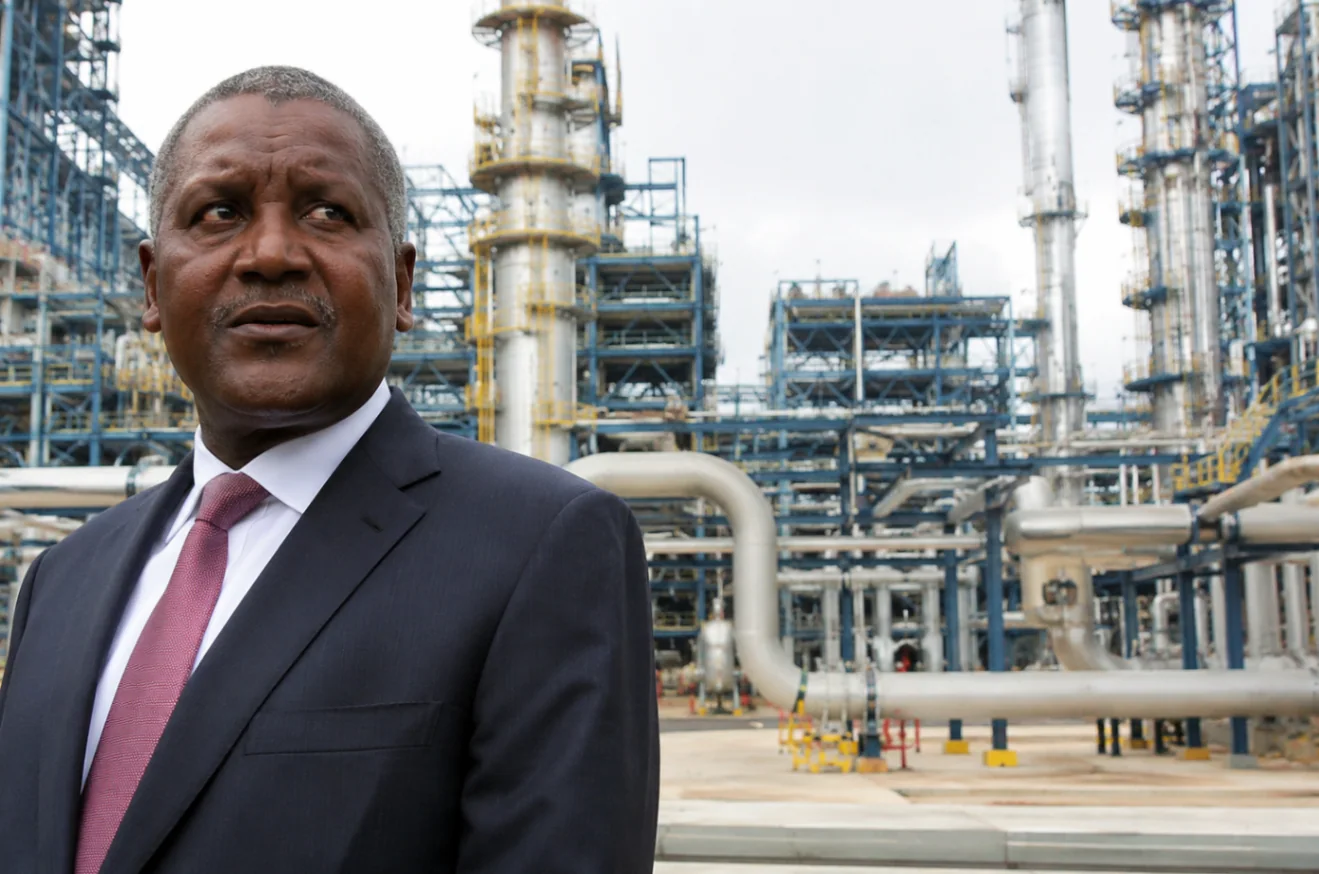
Dangote Group is preparing for a major move in Nigeria’s capital market as it plans to raise between $1.5 billion and $1.8 billion through an initial public offering of Dangote Petroleum Refinery.
The proposed transaction could become one of the largest IPOs in Nigeria’s history and would give investors an opportunity to buy shares in one of Africa’s most important new oil-processing facilities.
According to reports, the offer is expected to open on September 14, 2026, with approximately 4.1 billion shares reportedly priced at ₦525 each.
The proceeds are expected to support the refinery’s expansion plans as Dangote looks to significantly increase its production capacity.
A HUGE DEAL FOR NIGERIA'S CAPITAL MARKET
An IPO, or initial public offering, is the process through which a privately held company offers shares to the public for the first time.
For Dangote Refinery, the proposed listing would represent a major change in ownership structure.
Investors who purchase shares would become shareholders in the refinery and could potentially benefit from future profits and growth.
For the Nigerian capital market, the transaction could also attract renewed interest from domestic and international investors.
The size of the proposed fundraising makes the development particularly significant.
The reported target of up to $1.8 billion would make the transaction one of the largest offerings ever attempted on the Nigerian Exchange.
WHY DANGOTE IS RAISING THE MONEY
The proposed fundraising is closely connected to the refinery’s expansion plans.
Dangote Refinery currently has a nameplate capacity of about 650,000 barrels per day.
The company is working towards expanding that capacity significantly.
Reports indicate that the long-term objective is to reach approximately 1.4 million barrels per day.
If achieved, that would more than double the refinery’s existing capacity and make the facility an even more significant player in the global refining industry.
The expansion would require substantial investment in infrastructure, equipment, logistics and other areas of the refinery's operations.
An IPO provides Dangote with a way to raise large amounts of capital while also bringing new investors into the business.
WHAT MAKES THE REFINERY SO IMPORTANT?
The Dangote Refinery is located in the Lekki area of Lagos State and was built to process crude oil into products including petrol, diesel, aviation fuel and other refined petroleum products.
Nigeria has historically depended heavily on imported refined petroleum products despite being one of Africa's largest oil producers.
That created enormous pressure on the country's foreign exchange reserves and exposed consumers to international fuel-price movements.
The development of a large domestic refinery therefore has strategic importance beyond the Dangote Group itself.
If domestic refining capacity continues increasing, Nigeria could reduce its dependence on imported petroleum products.
THE REFINERY'S JOURNEY
Dangote Refinery took years and billions of dollars to construct.
The facility eventually began supplying refined petroleum products to the Nigerian market after completing the necessary commissioning and regulatory processes.
Its emergence has transformed Nigeria's petroleum market.
The refinery has increasingly become a major supplier of refined products, while its operations have also triggered significant changes in the relationship between domestic refiners, fuel importers and other players in the downstream petroleum sector.
The facility's growing production has also created the possibility of Nigeria becoming a net exporter of some refined petroleum products.
WHAT AN EXPANSION TO 1.4 MILLION BARRELS MEANS
An expansion to around 1.4 million barrels per day would place the refinery among the largest refining facilities in the world by capacity.
For Nigeria, such a development could have major implications.
More domestic refining could mean greater availability of locally processed petroleum products.
It could also reduce the amount of crude oil that needs to be exported only for Nigeria to import refined products.
In theory, this could improve energy security and reduce pressure on foreign exchange.
But the benefits will depend on several factors, including crude supply, production efficiency, domestic demand and the competitiveness of Nigerian refined products.
THE FOREIGN EXCHANGE QUESTION
One of the biggest economic arguments for expanding domestic refining is Nigeria's long-standing dependence on imported petroleum products.
When refined products are imported, companies generally need foreign currency to pay international suppliers.
That can place pressure on the naira, particularly when global oil prices or import costs rise.
A large and efficient domestic refinery can reduce some of that foreign-exchange demand by processing crude within Nigeria.
However, the refinery itself still operates within a global oil market.
Its profitability can be affected by crude prices, international refining margins, exchange rates and domestic fuel demand.
WHAT WILL INVESTORS BE BUYING?
The proposed IPO would allow investors to acquire shares in the refinery rather than simply purchasing petroleum products from it.
That means potential investors will need to examine the company's financial performance, profitability, debt, future capital requirements and business risks before making investment decisions.
A large and strategically important refinery does not automatically mean that its shares will always increase in value.
Investors will still be exposed to the normal risks associated with the energy industry.
Those risks include changes in crude prices, government policy, competition, exchange rates and global refining margins.
WHY THIS MATTERS TO ORDINARY NIGERIANS
At first glance, an IPO can sound like something that concerns only wealthy investors.
But the refinery's expansion could affect ordinary Nigerians as well.
If domestic refining capacity increases significantly, the country could potentially become less dependent on imported refined petroleum products.
That could have implications for fuel availability, foreign-exchange demand and the wider economy.
Lower dependence on imports could also strengthen Nigeria's position in the regional petroleum market.
The refinery could potentially supply neighbouring African countries while serving Nigeria's domestic market.
But consumers should not assume that a larger refinery automatically means permanently cheaper petrol.
Fuel prices will continue to depend on crude oil prices, taxes, logistics, exchange rates, market competition and other factors.
A POTENTIAL BOOST FOR THE NIGERIAN STOCK MARKET
The IPO could also provide a major boost to the Nigerian Exchange.
Nigeria's capital market has faced periods of volatility as investors have responded to inflation, exchange-rate pressures, interest rates and broader economic uncertainty.
A large listing by one of the country's most prominent industrial companies could increase market activity and potentially attract new investors.
It could also encourage other large privately held Nigerian companies to consider raising capital through the stock market.
If successful, the Dangote transaction could therefore have an impact beyond the refinery itself.
IT COULD CHANGE DANGOTE'S OWNERSHIP STRUCTURE
The proposed IPO would also mark an important development for Dangote Group.
Africa's richest businessman, Aliko Dangote, has invested enormous amounts of capital in the refinery project.
Selling shares to public investors would mean that a portion of the business would effectively be owned by a broader group of shareholders.
That could provide Dangote Group with additional capital while allowing Nigerians and institutional investors to participate in the refinery's future growth.
It could also increase public scrutiny of the company's financial performance.
A publicly traded company generally faces greater disclosure and reporting obligations than a privately held business.
THE TIMING IS IMPORTANT
The proposed IPO comes at an important moment for Nigeria's petroleum industry.
The country has been implementing major reforms in the downstream oil sector, including changes to fuel subsidies and petroleum pricing.
Domestic refining capacity has also been increasing.
The Dangote Refinery has become a major part of that transformation.
If the company successfully raises the targeted capital and expands production, it could further change the structure of Nigeria's petroleum market.
But the transaction will also be watched closely by investors who want to know whether the refinery can generate sufficient returns to justify its enormous capital requirements.
TALK YA TRUE ANALYSIS
The proposed Dangote Refinery IPO could be much bigger than a normal stock-market listing.
It is potentially a test of how investors view the future of Nigeria's energy industry.
For years, Nigeria's biggest petroleum paradox was simple:
The country produced millions of barrels of crude oil but imported huge quantities of refined fuel.
The Dangote Refinery was built partly to change that equation.
Now Dangote wants to raise potentially billions of dollars from investors to expand the facility even further.
That suggests the company believes the future opportunity is much bigger than the current operation.
For Nigeria, that could be good news.
More refining capacity could mean more domestic value added to Nigerian crude.
Instead of exporting crude and buying back finished products, more of the refining process could happen locally.
That could create jobs, generate taxes and support related industries.
But Nigerians should also remain realistic.
A refinery does not automatically solve every problem in the petroleum sector.
Nigeria still needs reliable crude supply, functioning pipelines and logistics, competitive markets, stable policies and infrastructure.
There is also the question of fuel pricing.
Consumers may expect increased refining capacity to translate immediately into cheaper petrol.
That is not guaranteed.
The real benefit may instead come through greater supply security, reduced dependence on imports and a stronger domestic energy industry.
For investors, the proposed IPO could be particularly interesting.
But this is not simply a story about buying shares in a famous Nigerian company.
Anyone considering the investment will need to study the company's financial statements, valuation, risks and future plans carefully.
The biggest question may ultimately be whether Dangote Refinery can turn its enormous scale into sustainable profits.
If it can, the IPO could become a landmark transaction.
If it struggles, the size of the refinery alone will not protect investors from losses.
FINAL WORD
Dangote Group is preparing to raise between $1.5 billion and $1.8 billion through a proposed IPO of Dangote Petroleum Refinery.
The offer is expected to involve about 4.1 billion shares reportedly priced at ₦525 each, with the transaction expected to open on September 14, 2026.
The money would support the company's expansion ambitions, including plans to increase refining capacity from approximately 650,000 barrels per day towards 1.4 million barrels per day.
For Nigeria, the development could have major implications for the petroleum industry, foreign-exchange demand and the country's ambition to become a stronger regional refining hub.
For investors, however, the IPO represents an opportunity that will need to be assessed carefully.
The Dangote Refinery may be one of Africa's most important industrial projects.
The next question is whether the investment opportunity will prove equally important for shareholders.
KEY FACTS
Company: Dangote Petroleum Refinery
Parent group: Dangote Group
Location: Lekki, Lagos State
Current nameplate capacity: Approximately 650,000 barrels per day
Proposed long-term capacity: Approximately 1.4 million barrels per day
Planned fundraising: Approximately $1.5 billion to $1.8 billion
Reported shares on offer: About 4.1 billion
Reported offer price: ₦525 per share
Expected offer opening: September 14, 2026
Purpose of fundraising: Refinery expansion and related capital requirements
Market significance: Potentially one of Nigeria's largest IPOs
Industry: Oil and gas / petroleum refining
Potential national impact: Increased domestic refining capacity and reduced dependence on imported refined products
SOURCES
Reuters — Report on Dangote Refinery's proposed IPO, expected fundraising range, share offering and planned capacity expansion.
Reuters — Additional reporting on the proposed Dangote Refinery share sale and expansion plans.
Dangote Group — Corporate information on Dangote Petroleum Refinery and its operations.
Tags
PUBLISHER NOTE
About Talk Ya True
Talk Ya True publishes independent reporting and analysis with clear attribution, source transparency and corrections when needed.
Related Articles

Business
Dangote Refinery Records $1.82bn Profit as IPO Opens
Business
Petrol Prices Rise Above ₦1,400 as Dangote Refinery Raises Price Again
Business
Dangote Refinery Launches ₦2.15tn IPO as Nigerians Get Chance to Buy Shares
Business
Oil Hits $108 as Middle East Crisis Raises Fresh Fuel Price Fears in Nigeria
Stay Informed
Get the latest stories from Nigeria.
Free news updates. Unsubscribe anytime.
By subscribing, you agree to receive free news updates from Talk Ya True. You can unsubscribe at any time.