Politics
INEC Raises Fresh Alarm Over AI Disinformation Ahead of Nigeria’s 2027 Election
The Independent National Electoral Commission has warned that increasingly sophisticated artificial intelligence-generated misinformation could threaten the credibility of Nigeria’s 2027 general elections. INEC says it is auditing its electoral technology and considering a mock presidential election to test accreditation, result transmission and result viewing before Nigerians go to the polls.
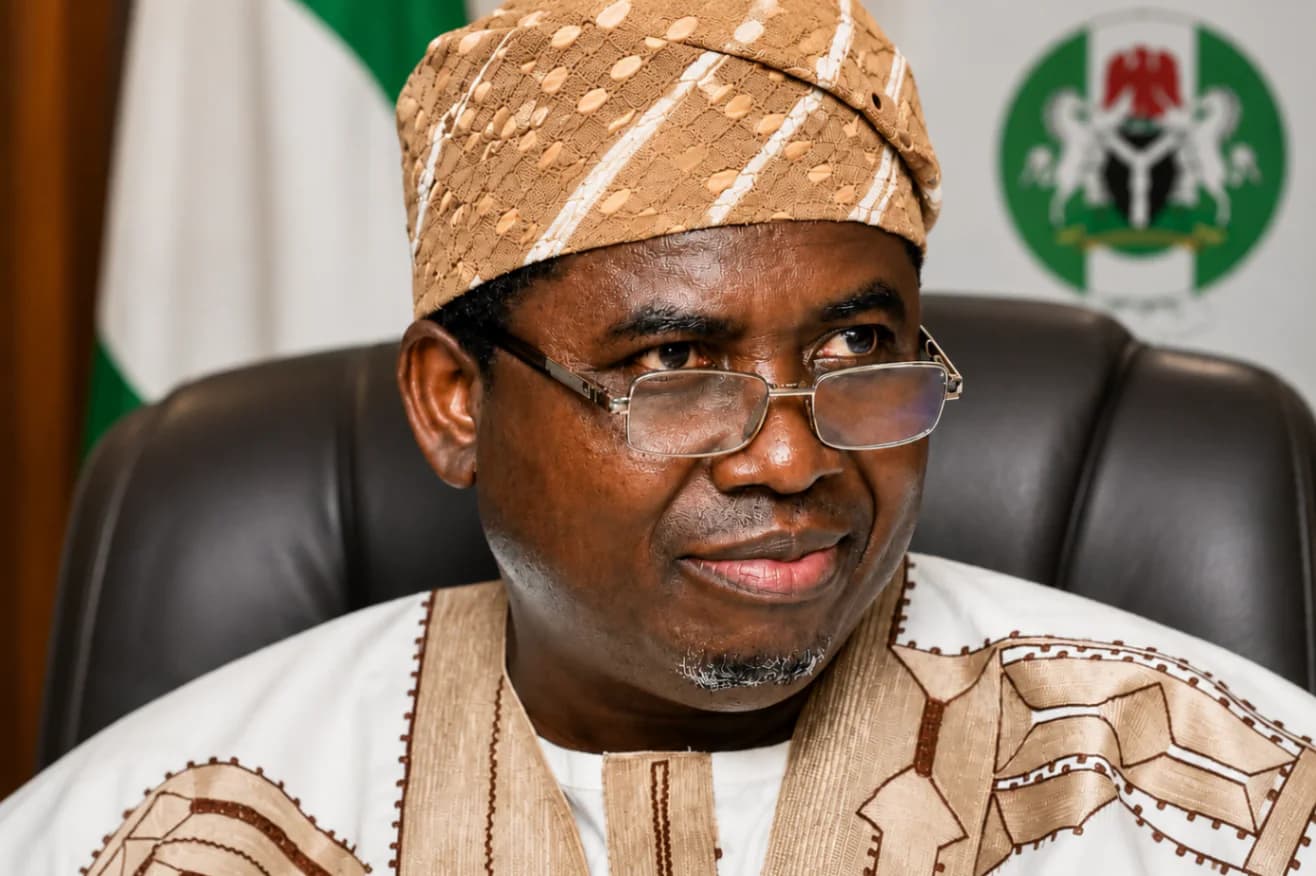
The Independent National Electoral Commission, INEC, has raised a fresh warning about the potential impact of artificial intelligence-generated disinformation on Nigeria’s 2027 general elections.
INEC Chairman, Professor Joash Amupitan, said the rapid development of generative artificial intelligence has made it cheaper and increasingly difficult to detect fake videos, audio recordings and images capable of misleading voters.
The warning comes as the electoral commission prepares for the 2027 elections and works to strengthen public confidence in the technology that will be used during the polls.
Amupitan made the remarks in Abuja during the 13th Annual International Conference of the Association of Communication Scholars and Professionals of Nigeria.
His keynote address was delivered on his behalf by INEC National Commissioner Sani Adam.
AI COULD CHANGE HOW ELECTION DISINFORMATION SPREADS
Artificial intelligence has made it significantly easier to create convincing digital material.
A person can now produce manipulated photographs, cloned voices or fabricated videos that appear to show politicians saying or doing things that never happened.
For INEC, this presents a new challenge.
Traditional misinformation could often be traced to a photograph, statement or video that had been altered.
AI-generated content can be much more sophisticated.
The commission is concerned that fake political material could spread across social media platforms at enormous speed before journalists, fact-checkers or election authorities have enough time to verify it.
Amupitan said recent electoral cycles in West and East Africa had already demonstrated how manipulated political content could influence public perceptions.
The concern is particularly significant in Nigeria because social media has become a major source of political information for millions of voters.
INEC WANTS TECHNOLOGY AND COMMUNICATION TREATED TOGETHER
The INEC chairman said electoral technology and electoral communication should no longer be treated as completely separate areas.
His argument is that even a technically reliable electoral system can lose public confidence if voters do not understand how it works or receive false information about it.
The commission therefore wants stronger coordination between the technology used to conduct elections and the information provided to citizens.
This includes explaining how voter accreditation works, how results are transmitted and how citizens can verify election information.
The objective is to ensure that accurate information reaches voters quickly enough to compete with false information.
INEC PLANS A MAJOR TECHNOLOGY AUDIT
INEC is also conducting a comprehensive audit of its electoral technology systems ahead of 2027.
The audit will examine areas including system redundancy, penetration testing and disaster recovery planning.
The aim is to identify weaknesses before election day rather than discovering them during the actual poll.
This is particularly important because technology played a prominent role in Nigeria’s 2023 election, when problems surrounding the INEC Result Viewing Portal, IReV, contributed to public concerns about the transmission and availability of results.
INEC says the current review is designed to strengthen the reliability and resilience of its systems.
MOCK PRESIDENTIAL ELECTION BEING CONSIDERED
One of the most notable announcements from INEC is its consideration of a mock presidential election before the 2027 general election.
The exercise would be designed to simulate important aspects of election day.
According to INEC, the proposed exercise would test voter accreditation, results transmission and results viewing under conditions similar to those expected during the actual presidential election.
The idea is to expose potential technical or operational problems while there is still time to fix them.
It would also provide an opportunity for election officials and other stakeholders to test how the different components of the electoral system work together.
The commission has not announced a final date for the mock election.
INEC ALSO NEEDS MORE ELECTION TECHNOLOGY
The commission says its preparations also include replacing accreditation devices that were lost or damaged during the previous electoral cycle.
However, INEC says it is still awaiting the full release of funds contained in its proposed election budget.
Despite the funding issue, its ICT team has reportedly begun engaging manufacturers as planning continues.
The commission wants the technology audit and preparations for the mock election to move forward alongside the finalisation of the election budget.
THE 2027 ELECTION IS ALREADY ON THE CALENDAR
Nigeria's 2027 general election is no longer a distant political discussion.
INEC's published timetable puts the presidential and National Assembly elections on February 20, 2027, while governorship and State House of Assembly elections are scheduled for March 6, 2027.
That leaves the commission with a limited amount of time to complete its technology preparations, conduct testing and address any vulnerabilities identified during the process.
WHY AI DISINFORMATION IS DIFFERENT
The problem with AI-generated political disinformation is not simply that fake information can be created.
It is that the information can be personalised.
Amupitan warned about the potential for algorithmic micro-targeting to deliver different messages to different groups of voters.
That means two groups of Nigerians could potentially receive completely contradictory political narratives at the same time.
One group could see a fabricated video claiming that a candidate has withdrawn from an election.
Another could receive an entirely different false story designed to influence its voting decision.
By the time the truth is established, the original content may already have reached millions of people.
THE 2023 ELECTION STILL MATTERS
INEC's concerns are also connected to the experience of the 2023 general election.
The introduction of technology was intended to improve transparency and strengthen confidence in the electoral process.
BVAS was designed to improve voter accreditation, while IReV was intended to allow citizens to view polling-unit results electronically.
But technical problems and delays surrounding IReV during the presidential election generated significant public criticism.
INEC chairman Amupitan acknowledged that technology can become a source of public doubt when it does not perform reliably.
That is why the commission is now emphasising both technical reliability and clear public communication.
TRUST MAY BE THE BIGGEST BATTLE
An election is not judged only by what happens inside polling units.
It is also judged by whether citizens believe the process was fair.
That makes public trust extremely important.
If voters believe that election technology has been manipulated, they may reject genuine results.
If fake videos appear to show INEC officials announcing fabricated results, confusion could spread rapidly.
If false claims about BVAS or IReV circulate widely, legitimate information from the commission could struggle to compete.
This means the fight against election disinformation will take place alongside the actual election.
POLITICAL PARTIES ALSO HAVE A ROLE
INEC cannot solve the AI disinformation problem alone.
Political parties, candidates, journalists, civil society organisations, technology companies and ordinary social media users all have roles to play.
Political parties need to discourage supporters from creating or distributing fabricated content.
Journalists need to verify suspicious videos and audio before publishing them.
Social media users need to be more cautious about sharing dramatic political claims simply because they appear convincing.
And technology companies will face pressure to respond quickly when manipulated content threatens the integrity of an election.
WHAT INEC SAYS IT WILL DO
Amupitan said INEC's response should focus on providing better and faster information rather than restricting legitimate journalism or civic dissent.
That is an important distinction.
Election authorities must fight deliberate disinformation without creating a system in which legitimate criticism of the electoral process is treated as misinformation.
Voters have the right to question INEC.
Journalists have the right to investigate the commission.
Political parties have the right to criticise election decisions.
The challenge is distinguishing legitimate disagreement from deliberately fabricated information intended to deceive voters.
TALK YA TRUE ANALYSIS
Nigeria's 2027 election may be the first presidential election in which AI-generated political content becomes a major battlefield.
That should concern every Nigerian voter.
Imagine waking up on election morning and seeing a video that appears to show a presidential candidate conceding defeat.
Imagine another video showing an INEC official supposedly announcing results from a polling unit.
Imagine hearing what appears to be the voice of a presidential candidate making a controversial statement.
If the material looks and sounds real, how many people will stop to verify it before sharing?
That is the problem INEC is trying to anticipate.
But there is another important point.
AI itself is not the enemy.
The same technology that can be used to create fake political content can also help journalists, fact-checkers and election officials detect manipulation and communicate information more efficiently.
The real battle is therefore likely to be between those using technology to deceive voters and those using technology to establish what is genuine.
INEC's decision to consider a mock presidential election is encouraging because testing should happen before election day.
Nigeria should not wait until millions of voters are watching the results to discover that a system has a weakness.
The same principle applies to public communication.
INEC needs to be faster.
When a false claim begins trending, the commission cannot wait several days before responding.
The longer a false story remains unanswered, the more difficult it becomes to correct.
Ultimately, the credibility of the 2027 election will depend on three things working together:
Reliable technology.
Transparent procedures.
And fast, trusted communication.
If any one of those fails, public confidence could suffer.
FINAL WORD
INEC has warned that AI-generated disinformation could become one of the most serious threats to the credibility of Nigeria's 2027 general elections.
The commission is responding by auditing its electoral technology infrastructure and considering a mock presidential election designed to test voter accreditation, results transmission and results viewing before the actual poll.
The commission also faces the task of replacing damaged or lost accreditation devices and securing the full funding required for its technology and election operations.
Nigeria's presidential election is scheduled for February 20, 2027.
That means the preparations happening now could have a major influence on how Nigerians experience the next election.
The technology must work.
The information must be trustworthy.
And voters must be able to distinguish between what is real and what has been manufactured to deceive them.
KEY FACTS
Election: Nigeria's 2027 General Election
Presidential election date: February 20, 2027
Governorship/State Assembly election: March 6, 2027
Electoral body: Independent National Electoral Commission (INEC)
INEC Chairman: Prof. Joash Amupitan, SAN
Major concern: AI-generated disinformation
AI threats identified: Fake videos, audio recordings and images
INEC technology response: Comprehensive technology audit
Areas being assessed: System redundancy, penetration testing and disaster recovery
Proposed exercise: Mock presidential election
Proposed test areas: Voter accreditation, results transmission and results viewing
Technology used in previous election: BVAS and IReV
Funding issue: INEC says it is awaiting full release of its proposed election funds
Major lesson from 2023: Technology failures can damage public confidence
Status: Preparations ongoing
SOURCES
PUNCH — Report on INEC's warning about AI-powered disinformation and its proposed technology audit and mock presidential election.
Guardian Nigeria — Report on INEC's proposed technology audit and mock presidential poll.
Radio Nigeria — Report on INEC's planned technology audit and proposed mock presidential election.
The Sun Nigeria — Report on INEC's concerns about election funding, AI threats and preparations for 2027.
INEC — Official 2027 General Election timetable confirming the February 20, 2027 presidential and National Assembly election date.
Tags
PUBLISHER NOTE
About Talk Ya True
Talk Ya True publishes independent reporting and analysis with clear attribution, source transparency and corrections when needed.
Related Articles

Stay Informed
Get the latest stories from Nigeria.
Free news updates. Unsubscribe anytime.
By subscribing, you agree to receive free news updates from Talk Ya True. You can unsubscribe at any time.