Nigeria
Foreign Investors Hold Back on Nigeria as Tax and 2027 Election Risks Grow
Foreign investors are showing renewed interest in Nigeria's economic reforms but remain cautious about committing significant funds because of tax uncertainty and concerns over policy continuity after the 2027 election. The situation highlights the challenge facing Nigeria as it tries to attract long-term investment while navigating major economic and political changes.
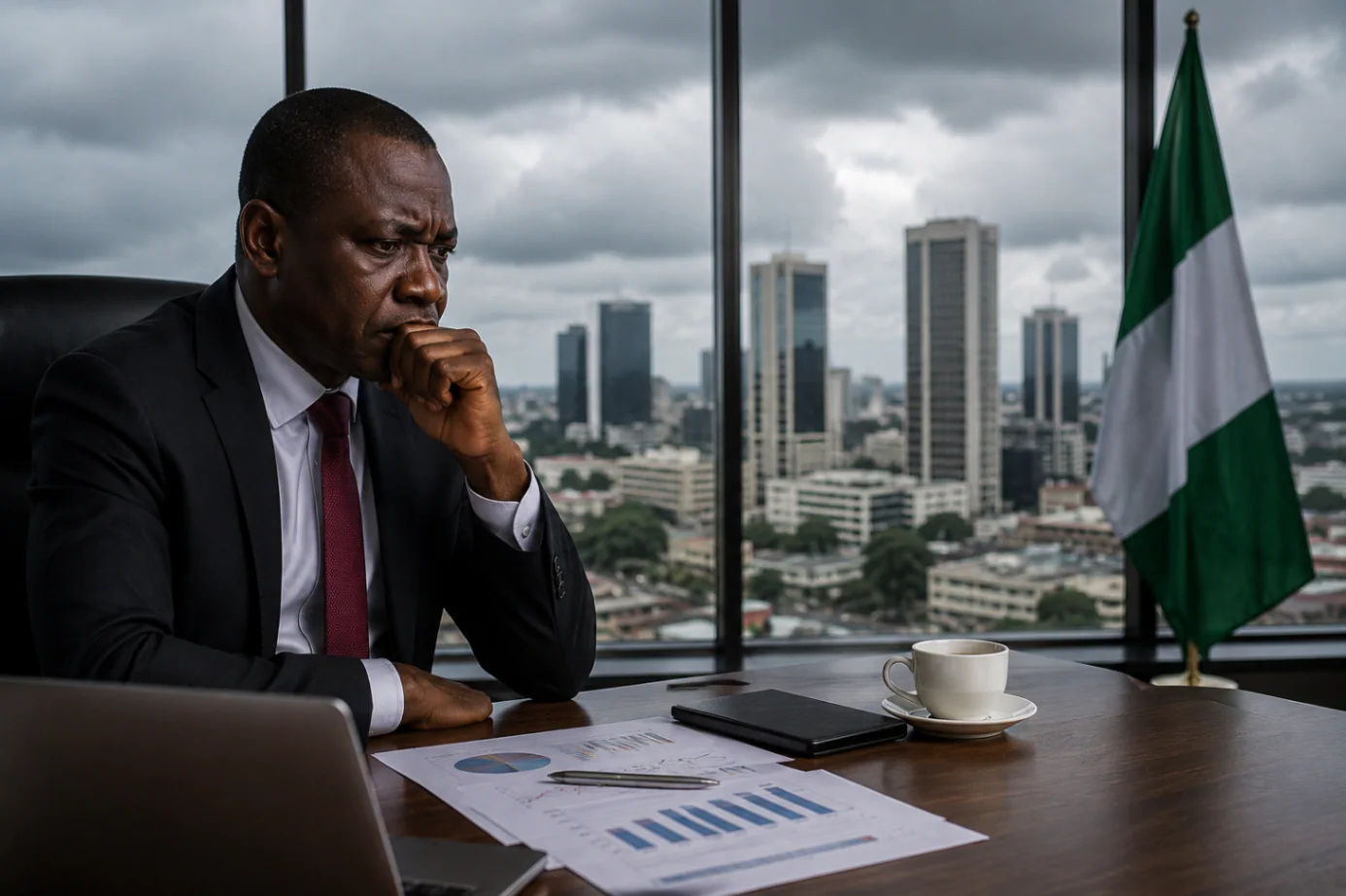
Nigeria is trying to send a clear message to international investors: the country is open for business.
But some foreign investors appear to be responding with another message:
“We are interested — but we are still waiting.”
A recent report indicates that foreign funds are becoming more positive about Nigeria's economic reforms, while concerns about tax policy and the 2027 presidential election are encouraging some investors to hold back before committing significant capital. (independent.ng)
The situation presents an important challenge for President Bola Tinubu's administration.
Nigeria needs foreign investment to support businesses, infrastructure, employment and economic growth.
But investors need confidence that the rules of the game will remain predictable.
Investors Want to Know What Happens After 2027
One of the biggest questions facing international investors is the upcoming 2027 presidential election.
Elections naturally create uncertainty.
Investors want to know whether the next administration will continue existing economic policies or introduce major changes.
For a long-term investor, this question matters enormously.
A company considering investing hundreds of millions of dollars in Nigeria is not necessarily thinking about the next six months.
It may be thinking about the next 10, 15 or even 20 years.
If the economic rules could change significantly after an election, investors may decide to wait.
Nigeria's Economic Reforms Have Attracted Attention
The caution does not mean investors have lost interest in Nigeria.
The country's reforms have attracted considerable attention.
The government has made major changes to fuel subsidies, foreign-exchange policy and taxation as part of its attempt to stabilise the economy and create conditions for stronger long-term growth.
Some investors view these changes positively because they believe difficult reforms could eventually produce a more stable economic environment.
But reforms also create short-term uncertainty.
Businesses need time to adjust.
Consumers face higher costs.
Companies have to reassess investment decisions.
And investors need to understand how the new rules will affect their businesses.
Tax Policy Is Another Concern
Tax reform is particularly important.
Nigeria is restructuring aspects of its tax system with the aim of improving revenue collection and creating a more efficient framework.
From the government's perspective, stronger tax revenue can help finance infrastructure and public services while reducing dependence on borrowing and oil revenue.
From an investor's perspective, however, the question is slightly different:
How much will it cost to operate in Nigeria?
Investors want clarity about corporate taxes, compliance requirements, incentives and other obligations.
Uncertainty can be almost as concerning as high taxes.
A business may be able to operate with a relatively high tax burden if the rules are clear and predictable.
Constant changes are more difficult to plan for.
Why Policy Stability Matters
Imagine an international company planning to establish a manufacturing facility in Nigeria.
The company must calculate:
Construction costs
Labour costs
Energy costs
Transportation expenses
Taxes
Import duties
Currency risks
Financing costs
Regulatory requirements
If several of those variables can change unexpectedly, the investment becomes harder to justify.
The company may therefore decide to wait.
That does not necessarily mean Nigeria has become unattractive.
It means investors want greater certainty before putting their money at risk.
Foreign Investment Can Create Jobs
This matters because foreign investment is not simply about bringing dollars into the country.
A major investment can create jobs.
It can introduce new technology.
It can create demand for local suppliers.
It can improve skills.
It can increase tax revenue.
It can expand exports.
And it can help Nigerian businesses become part of international supply chains.
That is why attracting long-term investment should remain an important economic priority.
But Nigeria Should Not Beg for Investment
There is another important side to this discussion.
Nigeria should not design economic policy simply to satisfy foreign investors.
The government has a responsibility to protect the interests of Nigerians.
That means creating a tax system capable of funding public services.
It means ensuring workers are protected.
It means preventing businesses from exploiting consumers.
It means maintaining environmental standards.
And it means ensuring that investment actually contributes to the wider economy.
The goal should therefore be quality investment, not investment at any cost.
What Investors Really Want
Despite all the discussion about incentives, many investors ultimately want something relatively simple:
Predictability.
They want to know what the rules are.
They want those rules to be enforced fairly.
They want contracts respected.
They want to move money legally.
They want access to foreign exchange.
They want reliable electricity and infrastructure.
They want security.
And they want confidence that government policies will not suddenly change without adequate consultation.
If Nigeria can provide those conditions consistently, the country becomes much more attractive.
Security Matters Too
Investment decisions cannot be separated from security.
Recent reports of kidnappings and attacks in northern Nigeria are a reminder that insecurity remains a major concern.
An investor establishing a factory, farm or logistics operation needs confidence that employees and assets can operate safely.
Security problems increase insurance costs.
They can disrupt supply chains.
They can discourage workers from relocating.
And they can make international companies reconsider whether a particular market is worth the risk.
Economic reform therefore cannot be separated from security reform.
Electricity Remains Critical
The same applies to electricity.
A manufacturing company needs reliable power.
A technology company needs stable connectivity and electricity.
A logistics company needs functioning transport infrastructure.
A hotel needs dependable energy.
When businesses have to spend heavily on alternative power, operating costs increase.
That makes Nigeria less competitive.
This is why investment policy cannot simply focus on taxes and incentives.
Nigeria needs the infrastructure that allows businesses to operate efficiently.
The 2027 Election Is an Opportunity
Rather than viewing the 2027 election only as a political contest, Nigeria could use it as an opportunity to demonstrate institutional maturity.
Political parties should explain their economic policies clearly.
Candidates should tell investors and Nigerians what they intend to maintain, what they intend to change and why.
The country does not need every political party to agree on economic policy.
It needs them to explain their plans transparently.
That would reduce uncertainty.
Investors Are Watching More Than Campaign Speeches
As the election approaches, investors will likely pay attention to more than who is leading in the polls.
They will watch:
What are the candidates promising?
What are their economic priorities?
Will they continue reforms?
Will they reverse existing policies?
How will they finance their programmes?
What will happen to taxation?
What will happen to the naira?
What will happen to foreign-exchange restrictions?
The answers will influence investment decisions.
Nigeria Has an Opportunity to Build Confidence
The government should see the concerns being expressed by investors as an opportunity rather than simply a criticism.
If investors are waiting for clarity, Nigeria can provide it.
That means publishing clear tax rules.
Explaining the long-term direction of economic policy.
Maintaining transparent regulations.
Strengthening institutions.
And demonstrating that investment decisions will not depend on personal relationships with political leaders.
A strong investment environment should survive changes in government.
The Country Needs Long-Term Thinking
Nigeria cannot afford to rebuild its economic policy every four years.
One administration should be able to introduce reforms.
The next should improve them.
The next should strengthen them.
There will always be disagreements about specific policies.
But the underlying institutions should remain stable.
That is how countries build investor confidence.
It is also how citizens gain confidence.
What Happens After 2027?
This is ultimately the question behind the investor hesitation.
Will Nigeria continue on its current reform path?
Will a new administration reverse some policies?
Will tax rules change?
Will the exchange-rate framework change?
Will subsidy policy change?
Will government spending priorities change?
Nobody can answer those questions with certainty yet.
But Nigeria can reduce uncertainty by building institutions that make economic policy more predictable regardless of who occupies the presidency.
Nigeria Cannot Wait Forever
Waiting for clarity is understandable for investors.
But Nigeria also needs capital now.
Businesses need expansion.
Young Nigerians need jobs.
Infrastructure needs investment.
Manufacturing needs financing.
Technology companies need capital.
Agriculture needs modernisation.
The longer investors wait, the longer some of these opportunities remain unrealised.
That is why the country needs to create an environment where investors can make long-term decisions with confidence.
The Real Competition Is Global
Nigeria is not competing only with other African countries.
It is competing for investment against markets across Asia, the Middle East, Europe and the Americas.
Investors can choose where to put their money.
If one country offers a clearer regulatory environment, better infrastructure and more predictable taxation, it may win an investment that another country loses.
Nigeria therefore cannot assume that its huge population and natural resources are enough.
They are advantages.
But advantages need to be supported by functioning institutions.
Nigeria's Message to Investors Should Be Simple
Nigeria should be able to tell investors:
The rules are clear.
The rules are fair.
The rules will be enforced.
Your investment is protected.
Our economy is open to legitimate business.
And our institutions are stronger than individual political administrations.
That would be a much more powerful investment message than simply announcing another investment summit.
The Bigger Picture
Foreign investors holding back because of uncertainty should not automatically be interpreted as a failure of Nigeria's economic reforms.
Some caution is normal during major reforms and election periods.
The real test is whether Nigeria can turn that temporary uncertainty into long-term confidence.
The country has the market.
It has the population.
It has natural resources.
It has talented workers.
It has entrepreneurs.
It has enormous economic potential.
What it needs is predictability.
Because investors can tolerate risk.
What they struggle with is uncertainty they cannot price.
What Nigerians Should Watch
As Nigeria approaches the 2027 election, several issues will be important for both citizens and investors:
The direction of tax reforms.
The future of fuel-subsidy policy.
Naira and foreign-exchange policy.
Electricity and infrastructure development.
Security.
Government borrowing and spending.
Support for local manufacturing.
Political stability.
Continuity of economic reforms after 2027.
The decisions made over the next year could influence Nigeria's investment environment for years to come.
Key Facts
Main issue: Foreign investors remain cautious about committing funds to Nigeria
Major concerns: Tax uncertainty and 2027 election-related policy risk
Positive factor: Interest in Nigeria's economic reforms remains
Investor priority: Predictability and policy stability
Potential benefits of investment: Jobs, technology, infrastructure and economic growth
Major challenges: Security, electricity, taxation and exchange-rate uncertainty
Election: Nigeria's 2027 presidential election
Status: Investors continue to assess Nigeria's economic outlook
Sources
Independent Nigeria — report on foreign funds holding back amid tax and election concerns. Independent Nigeria
PUBLISHER NOTE
About Talk Ya True
Talk Ya True publishes independent reporting and analysis with clear attribution, source transparency and corrections when needed.
Related Articles
Business
Nigeria’s Inflation Falls to 15.43% - But Why Do Things Still Feel So Expensive?

Nigeria
Police Raid Ex-Niger Deputy Governor’s Aide’s Home at 1am, Arrest Him

Nigeria
Rivers Police Nab Suspected One-Chance Robbery Gang in Port Harcourt

Opinion
Nigeria Has the Talent. Nigeria Has the Potential. So Why Can't We Make Things Work?
Stay Informed
Get the latest stories from Nigeria.
Free news updates. Unsubscribe anytime.
By subscribing, you agree to receive free news updates from Talk Ya True. You can unsubscribe at any time.