Politics
Nigeria’s 2027 Election Campaigns Begin as Tinubu, Obi and Atiku Enter Fresh Political Battle
Nigeria’s 2027 presidential and National Assembly election campaigns have officially begun, opening a new phase of political competition as President Bola Tinubu seeks a second term against opposition figures including Peter Obi and Atiku Abubakar. Candidates have also signed a peace accord pledging to avoid violence, hate speech and personal attacks.
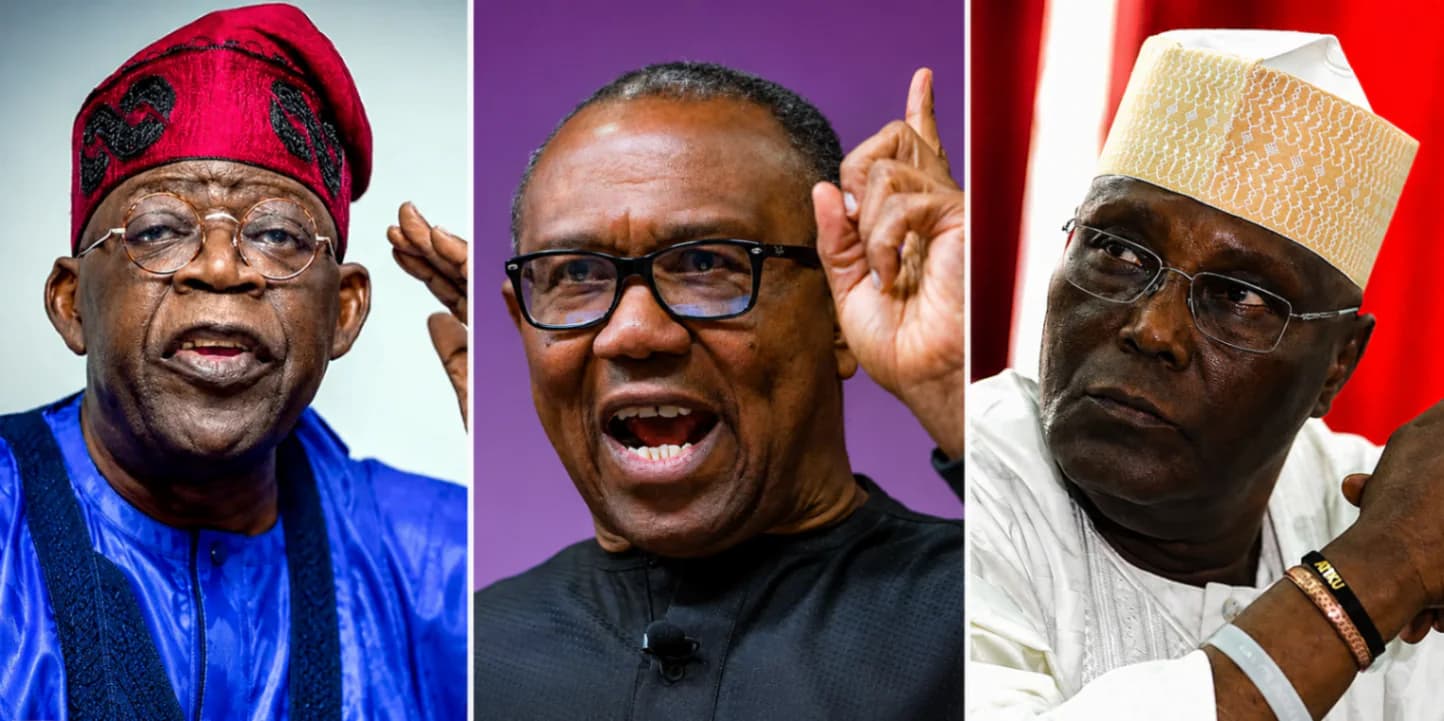
Nigeria has officially entered the 2027 election campaign season, with political parties and candidates now permitted to begin campaigning for the presidential and National Assembly elections scheduled for January 2027.
The campaign period opened on Wednesday, August 19, 2026, in line with the timetable issued by the Independent National Electoral Commission (INEC). The presidential and National Assembly campaigns are scheduled to continue until shortly before election day.
The development marks the beginning of what is expected to be a fiercely contested political season, with President Bola Tinubu seeking re-election under the All Progressives Congress (APC) and major opposition figures including Peter Obi and Atiku Abubakar preparing to challenge the incumbent.
Tinubu Begins Second-Term Campaign
Tinubu enters the campaign seeking another four years in office after winning the 2023 presidential election.
His administration has spent much of its first term implementing major economic reforms, including the removal of the petrol subsidy and changes to the foreign-exchange system.
The government has argued that the reforms were necessary to address longstanding structural problems and attract investment.
However, the policies have also contributed to significant economic pressure on households, with Nigerians continuing to grapple with the cost of food, transportation and other essentials.
Reuters reported that the economy and insecurity are expected to be among the biggest issues confronting Tinubu as the campaign begins.
That creates a complicated political environment for the president: supporters can point to improving macroeconomic indicators and investment interest, while opponents are likely to focus heavily on the impact of the reforms on ordinary Nigerians.
Obi and Atiku Prepare for Another Challenge
Peter Obi and Atiku Abubakar are again among the most prominent opposition figures entering the presidential contest.
Obi, who finished third in the 2023 presidential election, is now associated with the African Democratic Congress (ADC), while Atiku remains one of the country's most experienced opposition politicians.
Their challenge will be to convert significant individual support into a sufficiently broad political coalition capable of competing with the APC's nationwide structure.
The opposition's ability to cooperate could become one of the defining issues of the campaign.
The Associated Press reported that the opposition remains fragmented, with several attempts to create a unified challenge to Tinubu having failed to produce a single dominant opposition structure.
Candidates Sign Peace Accord
As the campaigns formally opened, presidential and National Assembly candidates signed a National Peace Accordpledging to conduct their campaigns peacefully.
Tinubu, Obi, Atiku and other candidates were among those who signed the agreement.
The accord commits participants to avoiding violence, hate speech, misinformation, personal attacks and other behaviour capable of undermining the electoral process.
The agreement comes amid concerns that the intense competition surrounding the 2027 election could increase political tensions across the country.
Candidates and political parties will therefore face pressure to ensure that their campaigns focus on policies and issues rather than inflammatory rhetoric.
Cost of Living Will Be a Major Election Issue
The economy is expected to dominate much of the campaign.
Although Nigeria's headline inflation rate has fallen significantly from the levels recorded during the early period of Tinubu's administration, many households continue to complain about the high cost of basic goods and services.
Food prices, the value of the naira, fuel costs, unemployment and household purchasing power are likely to feature prominently in campaign speeches.
For the APC, the argument will be that the government's reforms are beginning to produce longer-term benefits.
Opposition candidates are expected to counter that argument by pointing to the immediate hardship experienced by millions of Nigerians.
That debate could become particularly important among younger voters, many of whom were already politically active during the 2023 election.
Security Remains Another Major Concern
Security is another issue expected to dominate the campaign.
Nigeria continues to face attacks, kidnappings and other forms of insecurity in different parts of the country.
Reuters noted that insecurity remains one of the major challenges facing Tinubu as he seeks another term.
The opposition is likely to use security incidents to question the government's record, while the APC will point to its security policies and investments in the armed forces.
The ability of candidates to present credible solutions to insecurity could therefore influence voters beyond traditional party loyalties.
A Different Political Landscape From 2023
The 2027 contest is already shaping up differently from the election four years earlier.
In 2023, Tinubu won with approximately 36.6 percent of the vote, while Atiku received about 29 percent and Obi about 25 percent.
The opposition's failure to unite helped Tinubu secure the presidency.
The same issue is again emerging as a major factor ahead of 2027.
The Associated Press reports that the opposition remains divided, potentially giving the incumbent an advantage despite dissatisfaction over economic conditions.
At the same time, political alliances and defections have significantly altered the landscape since 2023.
That means voters will be watching not only the candidates but also the alliances surrounding them.
What People Are Watching Online
The official opening of the campaign has already generated intense discussion across Nigerian social media.
Political supporters are sharing campaign messages, old election results and arguments about the records of the major candidates.
Tinubu's supporters are highlighting infrastructure and economic reforms, while supporters of Obi and Atiku are focusing on the cost of living, insecurity and what they see as shortcomings of the current administration.
The online conversation is also heavily focused on the question of whether the opposition can finally unite behind a candidate capable of defeating the APC.
However, social-media enthusiasm should not automatically be interpreted as evidence of nationwide electoral support. Online political communities can be highly partisan and do not necessarily represent the views of the wider electorate.
What Happens From Here?
The campaign season will now intensify as candidates begin travelling across the country to meet voters, address rallies and present their programmes.
For the electorate, the most important task will be separating campaign promises from practical policy proposals.
The 2027 election is scheduled for January 16, 2027, meaning candidates have several months to convince Nigerians that they deserve their votes.
The campaign will likely be dominated by three questions:
Can Tinubu convince Nigerians that his economic reforms are working?
Can the opposition overcome its divisions?
And perhaps most importantly, which candidate can convince voters that they have a credible plan for Nigeria's economy and security?
The answers will gradually emerge as the campaign progresses.
For now, Nigeria has officially entered another presidential election season — and the political battle for 2027 has begun.
Sources
ThisDay — report on the official opening of the 2027 presidential campaign season.
Reuters — analysis of Tinubu's re-election campaign, economic challenges and opposition.
Associated Press — report on the fragmented opposition and Tinubu's re-election prospects.
The PUNCH — report on Tinubu, Obi and other candidates signing the 2027 National Peace Accord.
Vanguard — report on candidates signing the peace accord and commitments to issue-based campaigns.
INEC — official campaign timetable and commencement date for presidential and National Assembly campaigns.
PUBLISHER NOTE
About Talk Ya True
Talk Ya True publishes independent reporting and analysis with clear attribution, source transparency and corrections when needed.
Related Articles
Politics
Nigeria's Opposition Searches for Common Ground as 2027 Grand Alliance Talks Gather Momentum
Politics
AI-Edited Images Mock Nigeria's Traditional and Religious Leaders, Spark Political Backlash
Politics
Appeal Court Restores ADC, Four Other Political Parties Ahead of 2027 Elections
Politics
Peter Obi Pledges to Serve Only One Term if Elected President in 2027
Stay Informed
Get the latest stories from Nigeria.
Free news updates. Unsubscribe anytime.
By subscribing, you agree to receive free news updates from Talk Ya True. You can unsubscribe at any time.