Nigeria
Lagos Deputy Governor Moves Against ‘Car Spotting’ on Lekki-Epe Expressway as Residents React
Lagos Deputy Governor Obafemi Hamzat has taken a firm position against roadside “car spotting” on the Lekki-Epe Expressway, declaring the practice criminal. The announcement has generated debate over street extortion, security and the growing presence of informal groups demanding money from motorists.

The Lagos State Government has moved to address growing concerns over “car spotting” and roadside money demands along the Lekki-Epe Expressway, with Deputy Governor Obafemi Hamzat declaring the practice criminal.
The development has triggered a fresh conversation among Lagos residents, motorists and social-media users about the activities of informal groups who allegedly position themselves around busy roads and demand money from motorists.
The issue has become particularly sensitive along the Lekki-Epe corridor, where rapid development has brought more traffic, businesses and residential communities.
What Is ‘Car Spotting’?
The term has increasingly been used on social media to describe people who allegedly identify or approach motorists on the road and demand money, sometimes claiming to represent a local community or another interest group.
The practice is different from legitimate traffic management or authorised road-related charges.
Critics say motorists can find themselves confronted by individuals who appear to operate outside any clearly defined government structure.
For drivers, the experience can range from persistent requests for money to what they perceive as intimidation.
Deputy Governor's Position
Hamzat's reported declaration that the practice is criminal has been welcomed by people who say Lagos needs to take stronger action against roadside extortion.
The message is significant because the Lekki-Epe axis is one of Lagos's most commercially important corridors.
If motorists are repeatedly stopped or approached for money, it can contribute to a sense of insecurity and lawlessness.
The state government's position suggests that informal collection of money from motorists will not be tolerated simply because it is being carried out under the guise of community activity.
Nigerians Have Been Complaining About the Practice
The issue has generated increasingly strong reactions online.
Recent discussions among Nigerians have described what some residents see as an expanding culture of roadside money collection in Lagos.
One widely discussed conversation described people demanding money from motorists and questioned the sense of entitlement behind such activities. Others said the problem has been getting worse in parts of the city.
Some residents say they have encountered situations where drivers are expected to pay simply because they are travelling through a particular neighbourhood.
That has led to growing calls for authorities to establish exactly who is legally permitted to collect money from motorists.
‘Who Authorised Them?’
That is one of the questions being repeatedly raised.
If an individual or group is collecting money from motorists, residents want to know:
Who gave them permission?
Is the payment backed by legislation?
Is there an official receipt?
Does the money go into a government account?
Or is it simply being collected because nobody has stopped the practice?
These questions become more important when motorists feel they have no practical option but to comply.
Supporters Welcome the Crackdown
Those supporting the deputy governor's position argue that Lagos cannot continue allowing unofficial groups to create their own systems of taxation on public roads.
They say motorists already face fuel costs, vehicle maintenance, tolls where applicable and other expenses.
Adding unofficial roadside payments creates another burden.
Some also argue that such activities can eventually evolve into more serious forms of extortion.
But Others Point to Unemployment and Poverty
There is another side to the conversation.
Some Nigerians argue that many young people involved in informal roadside activities are themselves products of an economy where stable employment is difficult to find.
That does not make extortion acceptable.
But it does raise the question of what happens to the people who currently depend on such activities for income if enforcement removes them.
Some residents therefore want the government to combine enforcement with employment and skills programmes.
The Bigger Problem Is Not Just Lekki-Epe
Although the current discussion is focused on the Lekki-Epe Expressway, the issue reflects a wider concern about informal roadside activities in Nigerian cities.
Across Lagos, residents regularly encounter informal operators performing activities ranging from parking management to loading and unloading vehicles.
Some provide genuinely useful services.
Others have been accused of intimidating people into paying.
The challenge for government is distinguishing legitimate community services from unlawful extortion.
Why the Lekki-Epe Corridor Matters
The Lekki-Epe Expressway is one of Lagos's major transport corridors.
It connects densely populated residential communities with commercial and industrial areas stretching towards Epe.
The corridor has undergone major infrastructure investment, including extensive reconstruction and upgrades. A Lagos government procurement document, for example, lists a major rehabilitation and upgrade project along the Eti-Osa/Lekki-Epe Expressway corridor.
With more people using the road, concerns over security and traffic management naturally become more significant.
Residents Want More Than a Declaration
While many people have welcomed the deputy governor's position, there is another question:
What happens next?
Declaring an activity criminal is only the first step.
Authorities will need to identify the people involved, enforce the law consistently and provide motorists with a clear channel for reporting incidents.
If enforcement is inconsistent, the practice could simply move to another section of the road.
The Risk of Selective Enforcement
There are also concerns about whether enforcement will be applied equally.
Residents want authorities to target anyone involved in unlawful roadside extortion, regardless of political connections, community affiliation or status.
A crackdown that removes one group while leaving others untouched could create another controversy.
Consistency will therefore be critical.
Social Media Has Amplified the Issue
The issue has gained momentum partly because motorists and residents can now record encounters and share them online.
A short video showing someone demanding money from a driver can quickly reach thousands of people.
That has created pressure on authorities to respond to problems that might previously have remained localised.
It also means authorities must distinguish between genuine evidence and exaggerated or misleading claims circulating online.
A Security Issue as Well as an Economic One
The controversy is not only about money.
It is also about security.
When motorists are approached by unknown individuals on a busy road, they may not know whether the people are legitimate officials, community representatives or criminals.
That uncertainty can create fear.
For a major metropolitan area like Lagos, maintaining clear and predictable rules around public roads is therefore important.
The Government's Challenge
The Lagos government now has an opportunity to make its position meaningful.
If “car spotting” is criminal, motorists need to know what constitutes the offence and where to report it.
Security agencies and relevant state authorities also need to work together so that motorists are not left to deal with roadside intimidation themselves.
At the same time, authorities should ensure that legitimate community activities are not mistakenly criminalised.
The Bottom Line
Lagos Deputy Governor Obafemi Hamzat has reportedly declared roadside “car spotting” a criminal activity, drawing renewed attention to complaints about people demanding money from motorists along the Lekki-Epe Expressway.
The development has been welcomed by residents who say informal roadside collections have become increasingly troubling.
Online discussions have described the practice as part of a broader problem involving street extortion and informal groups demanding money from motorists.
Others, however, argue that enforcement should be accompanied by efforts to address unemployment and poverty, particularly among young people who depend on informal activities for income.
The key question now is whether the government's declaration will translate into consistent enforcement on the ground.
Because for motorists, the issue is bigger than a few people asking for money.
It is about whether a driver can travel through Lagos without being stopped, intimidated or forced to pay unofficial charges.
If Lagos wants to end car spotting, residents will be watching to see whether the crackdown reaches the streets — not just the headlines.
PUBLISHER NOTE
About Talk Ya True
Talk Ya True publishes independent reporting and analysis with clear attribution, source transparency and corrections when needed.
Related Articles
Nigeria
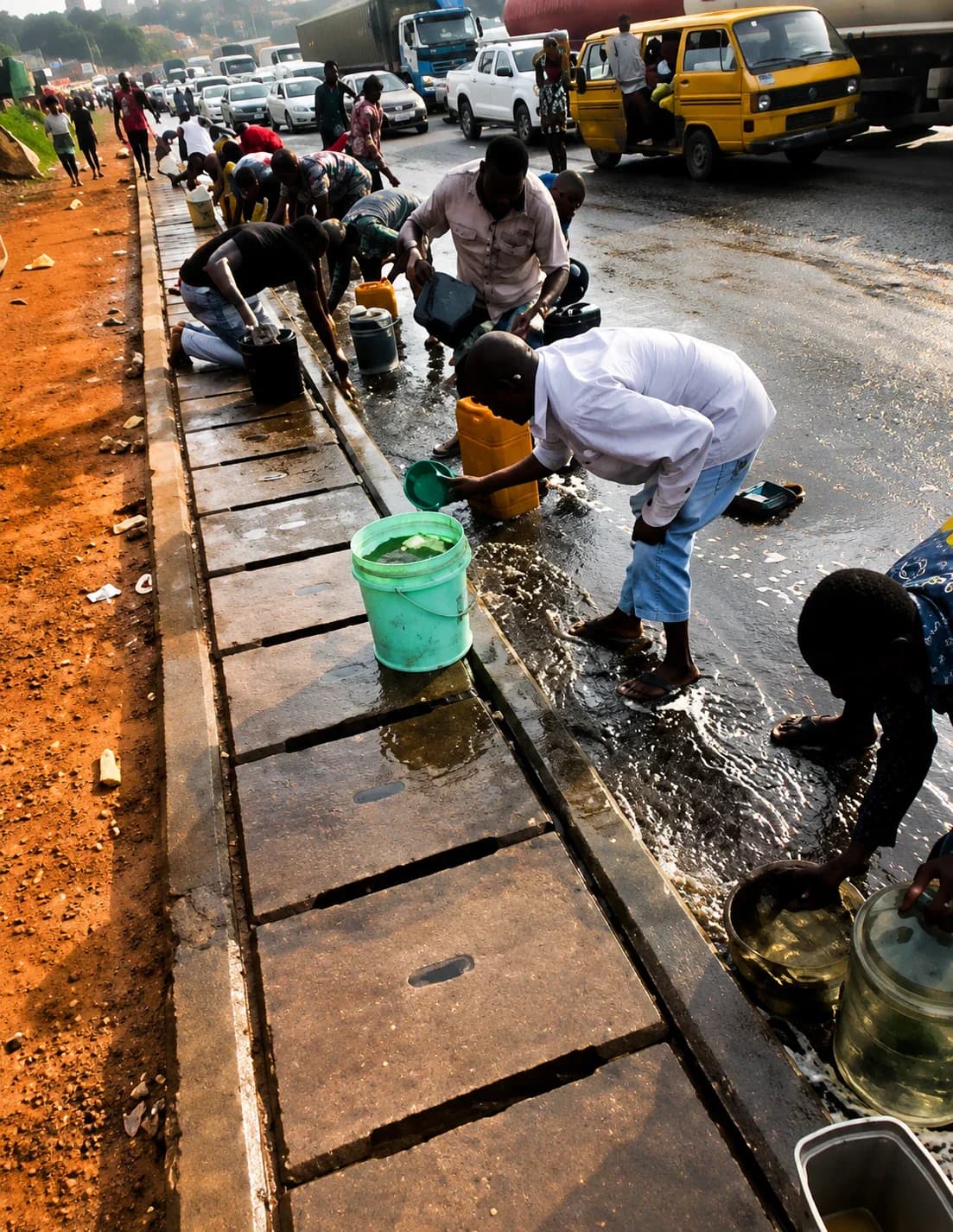
Lagos Residents Risk Lives Scooping Diesel From Overturned Tanker in Apapa

Business
Nigeria’s Internet Subscriptions Hit 157.4 Million as Broadband Penetration Reaches 56.1%

Politics
Showunmi Praises Seyi Tinubu After City Boy Movement Visit, Highlights Inclusive Leadership
Entertainment
Travel Vlogger Sparks Debate After Heated Uber Fare Dispute in Enugu
Stay Informed
Get the latest stories from Nigeria.
Free news updates. Unsubscribe anytime.
By subscribing, you agree to receive free news updates from Talk Ya True. You can unsubscribe at any time.