Nigeria
Lagos Residents Risk Lives Scooping Diesel From Overturned Tanker in Apapa
Videos showing residents rushing to collect diesel from an overturned tanker at Lagos' Tincan-Liverpool Bridge have sparked concern online. Emergency officials moved to secure the scene and warned members of the public against approaching spilled petroleum products because of the risk of fire or explosion.
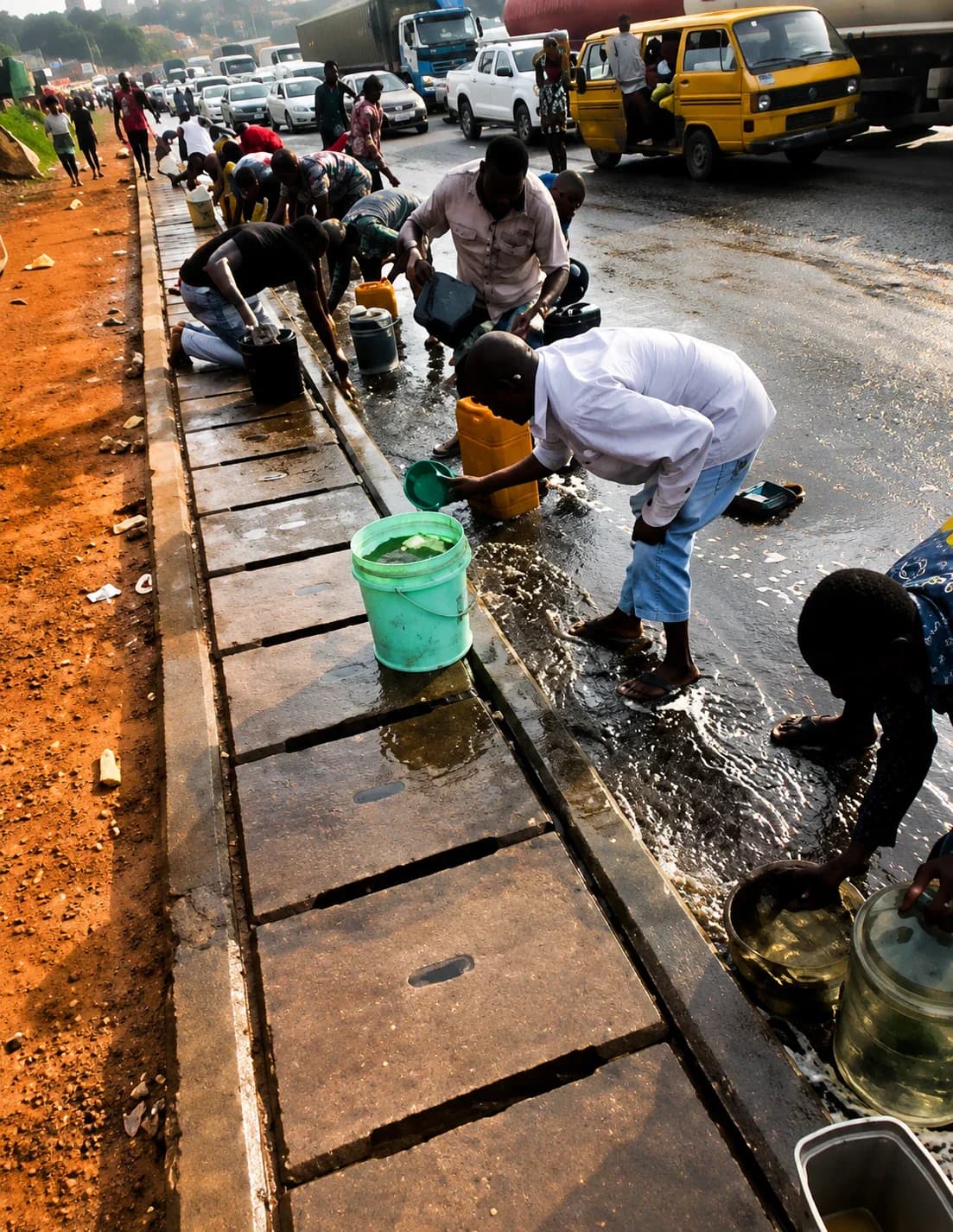
A dangerous scramble for spilled diesel has sparked concern after residents and passersby were seen scooping fuel from an overturned tanker at the Tincan-Liverpool Bridge in Apapa, Lagos.
Videos circulating online show people approaching the fallen tanker with jerrycans, buckets and other containers as diesel leaked from the damaged vehicle.
The incident has renewed concerns about the recurring practice of people attempting to collect petroleum products from crashed tankers, despite the potentially fatal consequences.
Emergency responders were deployed to the scene, while authorities urged residents to keep away from the area.
Tanker Overturns on Liverpool Bridge
The tanker, reportedly carrying a large quantity of diesel, overturned on the Liverpool Bridge in the Apapa area of Lagos.
Reports said the vehicle sustained significant damage, causing diesel to spill across the bridge and into the area below.
The situation immediately created a serious safety concern because of the presence of a large quantity of petroleum product in an area with motorists, pedestrians and nearby residents.
The Lagos State Emergency Management Agency (LASEMA) activated emergency response protocols, while the Lagos State Fire and Rescue Service and other agencies moved to secure the area.
Residents Move Towards the Spillage
Despite the obvious danger, footage from the scene showed several people moving towards the leaking tanker.
Some were seen using containers to collect the diesel.
The images quickly spread across social media, prompting Nigerians to question why people would put themselves at such risk for spilled fuel.
The Lagos State Government has previously warned residents against approaching tanker accident scenes, particularly when petroleum products are leaking.
The danger is not limited to petrol. Authorities have also warned that diesel spills can create serious fire and environmental hazards.
Emergency Officials Intervene
The Lagos State Traffic Management Authority (LASTMA) and the Lagos State Fire and Rescue Service were among the agencies involved in responding to the incident.
Officials moved to disperse people attempting to scoop the fuel and cordoned off the affected area.
LASTMA also worked with the police to control the crowd and manage traffic around the bridge.
Emergency responders subsequently transferred the remaining diesel from the damaged tanker into another vehicle before the tanker was removed from the scene.
The intervention helped prevent what authorities described as the possibility of a much larger disaster.
Why Fuel Scooping Is So Dangerous
The practice of collecting fuel from overturned tankers has repeatedly resulted in deaths across Nigeria.
A major reason is the possibility of ignition.
Petroleum products can produce vapours that ignite when exposed to a spark, flame or another ignition source.
That means seemingly harmless activities around a tanker crash — including smoking, starting an engine or using certain equipment — can potentially trigger a fire.
The risk becomes even greater when large crowds gather around a damaged tanker.
Lagos Government Warns Residents
Lagos authorities have repeatedly urged residents to stay away from tanker accident scenes.
During a similar incident, Governor Babajide Sanwo-Olu warned that residents were putting their lives at risk by attempting to scoop spilled fuel.
He said the consequences could have been catastrophic if a spark had ignited the leaked product.
The governor's warning came after a previous tanker incident in Apapa in which residents were filmed collecting diesel.
The state government said emergency responders had to work quickly to prevent a secondary incident.
Nigeria Has Seen Deadly Tanker Explosions
The latest images are particularly concerning because Nigeria has experienced several deadly tanker explosions involving people who gathered to collect spilled petroleum products.
In January 2025, a petrol tanker explosion in Suleja, Niger State, killed at least 86 people after residents gathered around the overturned tanker.
Other deadly incidents have occurred in different parts of the country, including explosions involving fuel tankers along major highways.
The Federal Road Safety Corps has previously warned Nigerians that no quantity of fuel is worth risking a human life.
What People Are Saying Online
The footage from Lagos has triggered strong reactions across social media.
One major theme is shock.
Many Nigerians watching the videos are questioning why people would walk towards a tanker leaking petroleum products when the possibility of a fire remains.
Another group has focused on the economic circumstances that can encourage people to take such risks.
Some social-media users argue that the scramble for spilled fuel reflects the pressure created by high living costs and expensive petroleum products.
Others reject that explanation, saying no economic hardship justifies approaching a potentially dangerous tanker accident.
There are also calls for emergency agencies and law-enforcement officers to respond more quickly and establish stronger cordons around tanker crashes.
The Debate Goes Beyond This One Incident
The Apapa incident has revived a familiar Nigerian debate: why do people continue to scoop fuel despite the country's history of deadly tanker explosions?
Some commentators believe stronger enforcement and faster emergency responses are needed.
Others argue that public education must improve, particularly in communities located along busy tanker routes.
There is also a broader conversation about road safety, tanker maintenance, driver training and the regulation of petroleum transportation.
No Major Fire Reported
Importantly, the available reports do not indicate that the Lagos incident resulted in a major fire or explosion.
Emergency responders were able to secure the tanker, control the situation and transfer the remaining diesel.
The tanker driver was also rescued after sustaining serious injuries and taken to hospital, according to reports.
That outcome could easily have been very different if the spilled product had ignited while people were gathered around it.
A Warning Nigerians Should Not Ignore
The images from Apapa may look like another example of Nigerians rushing to collect something of value from an accident scene.
But the history of tanker explosions shows how quickly such situations can become deadly.
For residents who encounter an overturned tanker, the safest response is to move away from the area and allow trained emergency responders to handle the situation.
The authorities' intervention in Lagos prevented the incident from becoming a larger disaster.
But the scenes of people still approaching the tanker have once again raised an uncomfortable question about how much risk Nigerians are willing to take for petroleum products.
For now, the most important message from the incident is simple:
No litre of diesel is worth a human life.
What People Are Saying on X
The reaction online is largely focused on the danger captured in the videos.
Some Nigerians are angry, describing the behaviour as reckless and warning that tanker explosions have killed people in similar circumstances.
Others are sympathetic, arguing that the willingness to risk death for spilled fuel reflects the economic pressure facing ordinary Nigerians.
Another group is blaming the authorities, asking whether emergency agencies should be able to reach tanker accident scenes quickly enough to prevent crowds from gathering.
The discussion has also brought back memories of previous tanker explosions across Nigeria, with users warning that scenes like this can quickly turn tragic.
We have not found reliable evidence of a major fire or casualty from this particular incident, so Talk Ya True should avoid suggesting that anyone died unless authorities subsequently confirm it.
Sources
Channels Television — report on the tanker incident, residents scooping diesel and Governor Sanwo-Olu's safety warning.
Arise News — details of the diesel tanker, emergency response and warnings from LASEMA and LASTMA.
The Guardian Nigeria — report on LASTMA and the Fire Service's intervention at Liverpool Bridge.
Premium Times — Lagos government's warning against fuel scooping and details of the emergency response.
PUNCH — report on the injured tanker driver, the fuel scooping and the eventual safe transfer of the diesel.
BusinessDay — FRSC warning following previous tanker explosion deaths in Nigeria.
PUBLISHER NOTE
About Talk Ya True
Talk Ya True publishes independent reporting and analysis with clear attribution, source transparency and corrections when needed.
Related Articles

Business
Nigeria’s Internet Subscriptions Hit 157.4 Million as Broadband Penetration Reaches 56.1%

Nigeria
Lagos Deputy Governor Moves Against ‘Car Spotting’ on Lekki-Epe Expressway as Residents React

Politics
Showunmi Praises Seyi Tinubu After City Boy Movement Visit, Highlights Inclusive Leadership
Entertainment
Travel Vlogger Sparks Debate After Heated Uber Fare Dispute in Enugu
Stay Informed
Get the latest stories from Nigeria.
Free news updates. Unsubscribe anytime.
By subscribing, you agree to receive free news updates from Talk Ya True. You can unsubscribe at any time.