Nigeria
Nigeria Needs $23 Billion to Fix Electricity System, REA Says
Nigeria's Rural Electrification Agency says the country needs about $23 billion in investment to address critical electricity infrastructure gaps and improve power access. The warning comes as unreliable electricity continues to affect households, businesses and industries across the country.
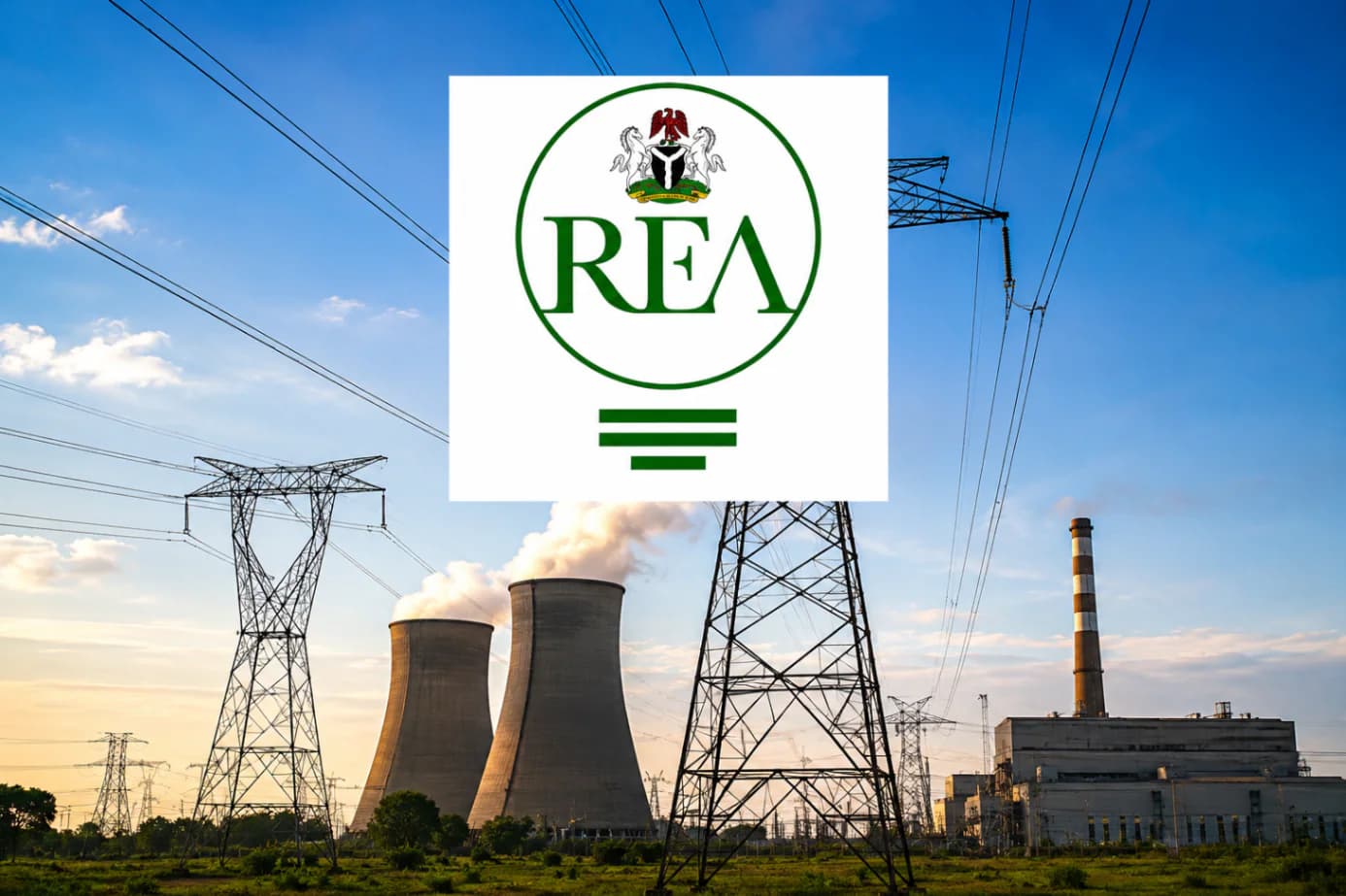
Nigeria's electricity challenge may require as much as $23 billion in investment to address infrastructure gaps and build a more reliable power system, according to the Rural Electrification Agency (REA).
The figure highlights the scale of the investment challenge facing Africa's most populous country as millions of Nigerians continue to rely on petrol and diesel generators when electricity from the national grid is unavailable.
The REA says substantial investment is needed across generation, transmission, distribution and decentralised energy systems if Nigeria is to significantly improve electricity access.
Why Nigeria Needs More Investment
Nigeria has one of Africa's largest populations, yet electricity supply has struggled to keep pace with demand.
Power infrastructure has faced years of underinvestment, technical losses, ageing equipment and limited capacity.
For many households, businesses and manufacturers, unreliable electricity means additional spending on alternative sources of power.
Small businesses often have to purchase petrol or diesel to operate generators, while larger companies may invest heavily in independent power solutions.
The result is that the true cost of electricity for many Nigerians is significantly higher than the amount shown on their electricity bill.
The $23 Billion Challenge
The REA's estimate illustrates how much capital may be required to close Nigeria's electricity infrastructure gap.
The funding would be needed for projects designed to increase electricity access and improve reliability, including renewable-energy projects, mini-grids and other decentralised power systems.
The agency has increasingly promoted distributed energy as a way of reaching communities that are difficult or expensive to connect to the national grid.
Solar-powered mini-grids, for example, can provide electricity to rural communities without requiring the immediate construction of extensive transmission infrastructure.
Rural Communities Remain a Major Focus
One of the biggest challenges is providing electricity to communities located far from Nigeria's existing grid infrastructure.
Extending transmission and distribution lines to every remote settlement can be expensive.
Mini-grids and standalone solar systems can offer an alternative.
REA has been involved in programmes designed to expand electricity access through renewable energy and distributed systems.
The approach is particularly relevant in rural areas where businesses, schools and healthcare facilities may have limited access to reliable power.
Electricity Problems Affect Businesses
The electricity crisis is not simply a household problem.
Nigerian businesses have repeatedly identified energy costs as one of the major challenges affecting their operations.
Manufacturers require reliable electricity to operate machinery.
Shops and restaurants need power for refrigeration, lighting and other equipment.
Technology companies depend on stable electricity and internet infrastructure.
Even small businesses such as barbers, tailors and food vendors often rely on generators when grid supply is unavailable.
Higher energy costs can eventually be passed on to consumers through higher prices.
The Generator Economy
Nigeria's unreliable power supply has created a huge market for generators.
Millions of households and businesses use generators as backup or primary sources of electricity.
While generators provide an immediate solution, they also create additional costs through fuel purchases, maintenance and repairs.
They also contribute to noise and air pollution.
A more reliable electricity system could therefore have benefits beyond simply keeping the lights on.
It could reduce the amount households and businesses spend on alternative power and potentially improve productivity.
Renewable Energy Could Play a Bigger Role
Solar energy is increasingly being viewed as part of the solution.
Nigeria receives substantial sunlight throughout much of the year, making solar power attractive for both urban and rural applications.
Solar systems can also be deployed relatively quickly compared with large-scale conventional power infrastructure.
For rural communities, a solar mini-grid can provide electricity without waiting years for connection to a larger transmission network.
However, renewable energy also requires investment in batteries, distribution infrastructure, maintenance and financing models.
The National Grid Still Matters
While decentralised energy can help close some gaps, Nigeria cannot rely entirely on mini-grids and standalone systems.
The national grid remains central to the country's electricity system.
Improving transmission and distribution infrastructure will therefore remain important.
Generation capacity must also increase if the country wants to provide reliable electricity to a growing population and expanding economy.
That means Nigeria's power challenge requires a combination of solutions rather than a single project or technology.
What $23 Billion Could Mean
The scale of the proposed investment raises an important question:
Where will the money come from?
Nigeria's government faces significant fiscal pressures and cannot be expected to provide the entire amount from public funds.
Private investment, development-finance institutions and international partners are therefore likely to play an important role.
Creating an environment where investors can commit long-term capital will require predictable regulations, viable electricity markets and confidence that projects can generate sustainable returns.
Nigerians Are Already Paying the Price
For ordinary Nigerians, the power-sector debate is ultimately about everyday life.
A household without reliable electricity may have to spend money charging phones, running a generator or buying fuel.
A small business may lose products when refrigeration fails.
A manufacturer may experience production delays when electricity becomes unavailable.
Students may struggle to study at night.
Healthcare facilities can face serious challenges when backup power is limited.
These are the practical consequences behind the billions of dollars being discussed.
What People Are Saying Online
The announcement has generated familiar reactions from Nigerians online.
Some users argue that $23 billion is a huge amount of money but necessary if Nigeria wants to solve its electricity problems permanently.
Others are questioning how much has already been spent on the power sector over the years and why electricity remains unreliable despite successive government programmes.
A common criticism is that Nigerians have repeatedly heard promises about improved electricity without experiencing a corresponding improvement in supply.
Some users are also calling for greater transparency around power-sector contracts and spending.
Others believe the private sector should play a larger role, particularly in renewable energy and mini-grid development.
The Bigger Economic Picture
Reliable electricity could have a significant impact on Nigeria's economy.
Lower energy costs could make Nigerian businesses more competitive.
Manufacturers could reduce their dependence on expensive diesel generators.
Small businesses could keep more of their earnings rather than spending large portions of their income on fuel.
Better electricity could also support digital businesses, education and healthcare.
That makes investment in the power sector not only an infrastructure issue but also an economic-development issue.
What Happens Next?
The $23 billion estimate puts the scale of Nigeria's electricity challenge into perspective.
The country will need to determine how to mobilise the required capital, which projects should receive priority and how to ensure that investment translates into actual improvements for consumers.
For Nigerians, the most important measure will not be the amount of money announced.
It will be whether that investment eventually means more hours of reliable electricity, lower dependence on generators and lower energy costs for households and businesses.
Until those changes are visible, the power-sector debate will continue.
What People Are Saying
The main reactions online centre around three questions:
How much has Nigeria already spent on electricity without solving the problem?
Where will the proposed $23 billion come from?
Will ordinary Nigerians actually see better electricity if the money is invested?
There is also strong support for renewable energy, particularly solar mini-grids, as a way of providing electricity to communities that remain poorly connected to the national grid.
The overall sentiment is that Nigerians want fewer promises and more reliable power.
Sources
Rural Electrification Agency — information on Nigeria's rural electrification programmes and distributed-energy initiatives.
Champion Newspapers — report on the REA's $23 billion estimate for addressing Nigeria's power-sector infrastructure needs. (championnews.com.ng)
Federal Ministry of Power — background on Nigeria's electricity-sector development and reforms.
World Bank — background on Nigeria's electricity access and energy-sector challenges.
Tags
PUBLISHER NOTE
About Talk Ya True
Talk Ya True publishes independent reporting and analysis with clear attribution, source transparency and corrections when needed.
Related Articles
Nigeria
Breaking: Fire Erupts at SPAR Mall in Calabar After Reported Explosion
Nigeria
Gunmen Abduct Worshippers During Friday Prayers in Niger State
Nigeria
Nearly 100 Days Later, Families Demand Rescue of Abducted Borno Children
Nigeria
Lagos Residents Risk Lives Scooping Diesel From Overturned Tanker in Apapa
Stay Informed
Get the latest stories from Nigeria.
Free news updates. Unsubscribe anytime.
By subscribing, you agree to receive free news updates from Talk Ya True. You can unsubscribe at any time.