Nigeria
Nigerian Woman Recovers ₦3 Million From Access Bank After VeryDarkMan Intervenes
A Nigerian woman who alleged that nearly ₦3 million disappeared from her Access Bank account has reportedly recovered the money after social media activist VeryDarkMan intervened in her case. The woman had earlier appealed for help after claiming that her savings were withdrawn while she was living in Dubai. The case has renewed debate about banking security, inactive SIM cards and how customers can protect their savings.
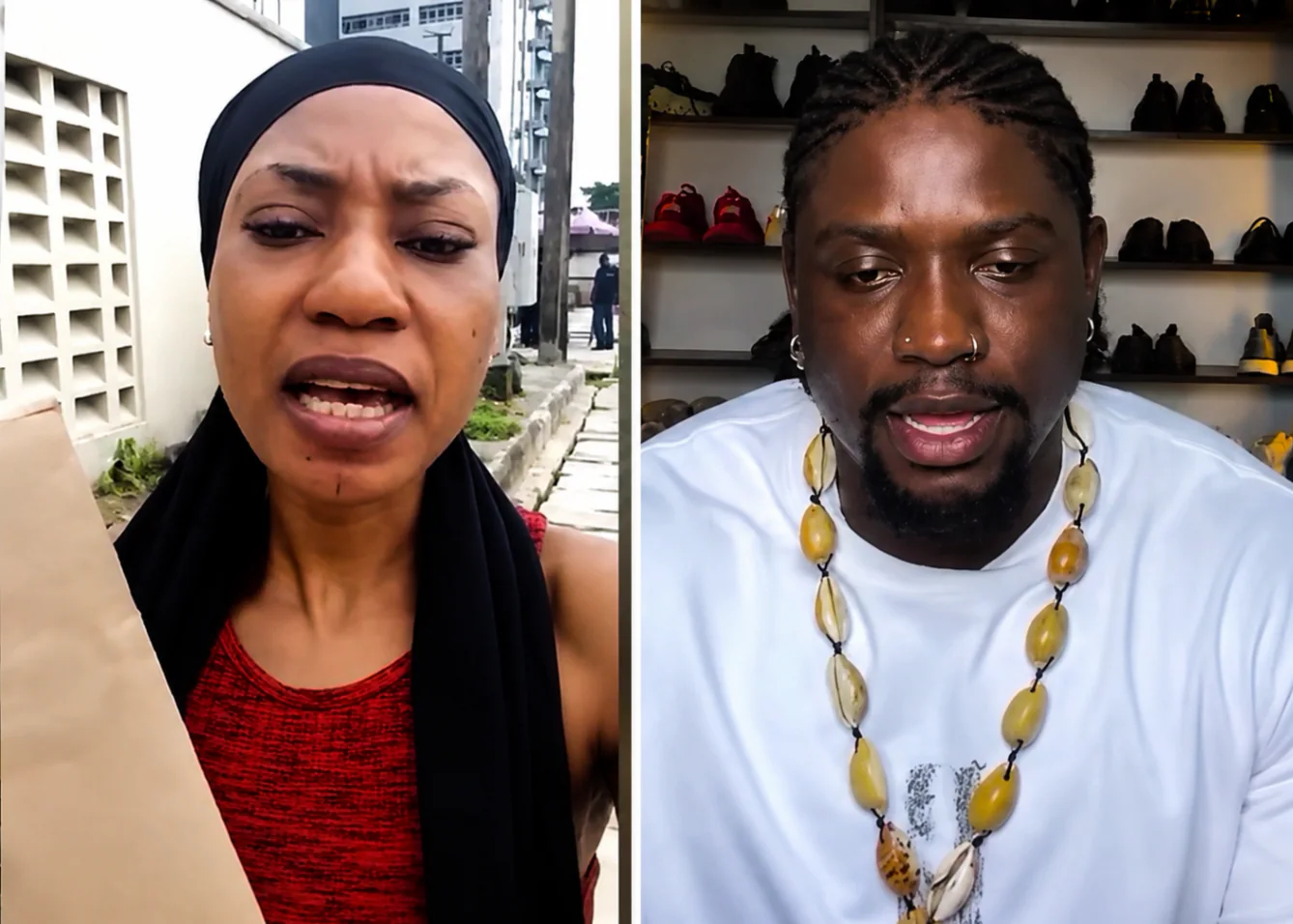
A Nigerian woman has reportedly recovered nearly ₦3 million from her Access Bank account following the intervention of social media activist Martins Vincent Otse, popularly known as VeryDarkMan.
The development comes days after the woman went public with an emotional appeal over the disappearance of her savings.
According to reports circulating online, the woman had saved the money in her Access Bank account before travelling to Dubai.
When she later returned and checked her account, she allegedly discovered that most of her savings had disappeared.
She subsequently appealed for help, saying she had spent years building up the money and wanted the bank to return it.
The case eventually attracted the attention of VeryDarkMan, who offered to intervene.
THE WOMAN'S ₦3 MILLION SAVINGS
The woman reportedly said she had been saving the money since 2022.
She was living and working in Dubai and had left the funds in her Nigerian bank account.
According to her account, she later discovered that transactions had been made from the account without her authorisation.
Reports indicate that the transactions began before she became aware that her money was disappearing.
By the time she raised the alarm, the account reportedly had less than ₦200 remaining.
The woman said she contacted Access Bank and provided documents requested during the bank's investigation.
She also reportedly received information concerning beneficiaries connected to some of the disputed transactions.
However, she said she was struggling to resolve the matter and appealed publicly for assistance.
HOW VERYDARKMAN GOT INVOLVED
The situation eventually came to the attention of VeryDarkMan.
In a social-media video, the activist indicated that he had seen the woman's appeal and was prepared to look into the matter.
He later shared an update indicating that the woman's case had been resolved and that the money had been returned.
A social-media post circulating after the intervention described the woman as having recovered her ₦3 million following VDM's involvement.
The development has since generated significant discussion online.
For supporters of VDM, the case is another example of the activist using his large social-media following to draw attention to complaints that ordinary Nigerians struggle to resolve.
However, it is important to distinguish the woman's account and the social-media reports from an independent statement by Access Bank.
As of the time of writing, I have not located an official Access Bank statement confirming the refund or explaining the precise circumstances surrounding the disputed transactions.
WHAT HAPPENED TO THE MONEY?
This remains one of the biggest unanswered questions.
The woman's account reportedly showed transactions that she did not authorise.
Some reports have linked the dispute to the reassignment of the telephone number associated with her banking arrangements while she was abroad.
That possibility has generated considerable debate online.
However, the exact technical mechanism through which the money was allegedly accessed has not been independently established.
It would therefore be premature to conclude that the reassignment of the SIM card was definitively responsible for the loss.
The bank, telecommunications provider and investigators would be in the best position to establish how the transactions were authorised.
THE SIM CARD QUESTION
One of the most discussed aspects of the story is the woman's telephone number.
Reports and online discussions indicate that she had been outside Nigeria for an extended period and that her Nigerian SIM was subsequently reassigned.
Some Nigerians have questioned whether the new owner of the number could have gained access to services linked to the woman's banking account.
Others have argued that banks should have additional layers of authentication that prevent access simply because a telephone number has changed hands.
This is an important discussion.
A mobile number is increasingly used for banking alerts, authentication and account recovery.
That makes the security of the number extremely important.
But the existence of a reassigned SIM does not by itself prove that it caused the disputed withdrawals.
That still needs to be established.
WHAT PEOPLE ARE SAYING
The case has triggered strong reactions online.
Some Nigerians have blamed the bank and argued that customers should not lose their savings simply because a linked telephone number becomes inactive or is reassigned.
Others have questioned why the woman did not regularly monitor the account while she was abroad.
Some commenters have also argued that the telecommunications company should have taken steps to disconnect existing financial services before reallocating the number.
There are therefore different views about where responsibility should lie.
The most important point is that the actual mechanism behind the disputed transactions needs to be established before blame is assigned.
WHY THE STORY MATTERS
The case highlights a problem that affects millions of Nigerians living abroad.
Many Nigerians in the diaspora maintain Nigerian bank accounts while working or studying in other countries.
They may continue receiving money, saving funds or paying expenses through those accounts even when they are physically outside Nigeria.
If a linked telephone number becomes inactive, the customer may not immediately realise that it has been reassigned.
That can create potential security risks if the number is also connected to financial services.
This is why customers living abroad need to take extra precautions.
BANKING SECURITY SHOULD NOT DEPEND ON ONE PHONE NUMBER
The story also raises a broader question about financial security.
A telephone number is useful for authentication, but it should not be the only barrier protecting a customer's savings.
Banks can use multiple layers of verification, including device recognition, biometric authentication, transaction limits, fraud monitoring and additional verification when unusual activity occurs.
For example, a customer who normally operates an account from one location but suddenly begins initiating transactions from a different device could trigger additional security checks.
The goal should be to make unauthorised access as difficult as possible.
THE CUSTOMER'S RESPONSIBILITY
Customers also have responsibilities.
Anyone travelling abroad for an extended period should ensure that their bank knows how they can be contacted.
They should keep their registered telephone numbers active where possible or update their banking details before the number becomes inactive.
Customers should also monitor their accounts regularly.
Banking applications and transaction alerts make it possible to detect suspicious activity much earlier.
If an unusual transaction appears, it should be reported immediately.
THE BANKING INDUSTRY'S RESPONSIBILITY
Banks also have an important role to play.
Customers entrust financial institutions with their savings.
When an account suddenly begins showing unusual transactions, automated fraud-detection systems should ideally identify the activity.
A customer who has not operated an account for an extended period may warrant additional verification before substantial transactions are processed.
The objective is not to make banking difficult.
It is to protect customers from increasingly sophisticated forms of fraud.
WHAT WE STILL DON'T KNOW
Several questions remain unanswered about the case.
How exactly were the disputed transactions authorised?
Was the woman's SIM card actually reassigned?
If so, when was it reassigned?
Did the new holder of the number have any role in the transactions?
Were the transactions carried out through USSD, mobile banking, internet banking or another channel?
Was anyone identified as a beneficiary?
Did Access Bank conduct an internal investigation?
What prompted the bank to refund the money?
Was the entire amount recovered?
These questions would be important for understanding what actually happened.
ACCESS BANK'S PREVIOUS VDM CONTROVERSIES
This is not the first time VeryDarkMan has publicly challenged Access Bank.
In November 2024, VDM made allegations concerning an alleged missing ₦500 million connected to a deceased customer's account.
Access Bank publicly rejected those allegations and said no ₦500 million or other funds were missing from the account. The bank described the claims as untrue and said investigations had been conducted.
The earlier dispute demonstrates why the latest case should also be reported carefully.
Social-media allegations can attract enormous attention, but the bank's position and independent evidence should be considered alongside them.
TALK YA TRUE ANALYSIS
The most interesting part of this latest story is not simply that VDM helped a woman recover money.
It is the question of why some customers feel they need a social-media personality to attract attention before their complaints receive wider public scrutiny.
That question deserves serious consideration.
Banks have formal complaint channels.
Customers can escalate disputes.
Regulators and financial institutions have mechanisms for resolving complaints.
But when a person believes those mechanisms are moving too slowly, social media can become the court of public opinion.
That can sometimes produce results.
But it also carries risks.
A viral accusation can damage a bank employee, financial institution or individual before the facts are fully established.
The better solution is to build complaint-resolution systems that work quickly enough that customers do not feel they have to go viral before being heard.
The woman should not have needed thousands or millions of social-media users to become aware of her problem before the matter could be resolved.
At the same time, the reported recovery shows the potential power of public advocacy when used responsibly.
The lesson for banks should be simple:
When a customer says their life savings have disappeared, the complaint should receive urgent attention.
And the lesson for customers is equally important:
Never assume that money is safe simply because it is sitting in a bank account.
Monitor it.
Secure your phone number.
Update your contact information.
And report suspicious transactions immediately.
FINAL WORD
A Nigerian woman who alleged that nearly ₦3 million disappeared from her Access Bank account has reportedly recovered the money following the intervention of VeryDarkMan.
The case began after she returned from Dubai and discovered that her savings had allegedly been withdrawn without her authorisation.
Her appeal attracted widespread attention online before VDM stepped in.
The reported recovery is welcome news for the woman, but important questions remain about how the disputed transactions occurred and what ultimately led to the refund.
Until Access Bank provides an official explanation, it would be premature to assign responsibility for the loss.
What the case does demonstrate is the importance of stronger banking security and effective customer complaint systems.
For Nigerians living abroad especially, the story is a reminder that maintaining a bank account from another country requires careful attention to linked telephone numbers, account alerts and security settings.
A person's savings may represent years of sacrifice.
Protecting that money should never depend on whether the owner has enough social-media influence to make their complaint go viral.
KEY FACTS
Person: Nigerian woman
Bank: Access Bank
Amount involved: Nearly ₦3 million
Reported issue: Savings allegedly disappeared from her account
Location while savings were allegedly accessed: Dubai
Reported savings period: Since 2022
Intervention: VeryDarkMan
Reported outcome: Money reportedly refunded/recovered
Possible issue discussed online: Reassignment of the telephone number linked to the account
Access Bank official confirmation of refund: Not located at the time of writing
Exact method used to access the account: Not independently established
Confirmed wrongdoing by Access Bank: Not established
Status: Developing
Tags
PUBLISHER NOTE
About Talk Ya True
Talk Ya True publishes independent reporting and analysis with clear attribution, source transparency and corrections when needed.
Related Articles
Business
Airport Taxi Driver Calls for Nationwide Uber and Bolt Ban as Nigeria Debates Airport Transport Rules
Politics
DSS Seeks to Pause Sowore Trial Until After 2027 Election as Activist Demands Case Withdrawal

Nigeria
Comedian Aiza Nwosu Shot Dead in Awka as Police Launch Manhunt for Attackers
Nigeria
VIDEO SHOWS REMAINS BEING MOVED FOR MASS BURIAL AT BENUE TEACHING HOSPITAL, RAISING QUESTIONS OVER UNCLAIMED BODIES
Stay Informed
Get the latest stories from Nigeria.
Free news updates. Unsubscribe anytime.
By subscribing, you agree to receive free news updates from Talk Ya True. You can unsubscribe at any time.