Nigeria
Tinubu Gives Security Chiefs 90 Days to Draw Up Five-Year Plan as Nigeria Battles Insecurity
President Bola Ahmed Tinubu has given Nigeria’s top defence, intelligence and security officials 90 days to complete a comprehensive National Threat Assessment and a rolling five-year Strategic Defence Operations Plan. The initiative is designed to move Nigeria’s security architecture beyond reacting to individual attacks and towards anticipating threats, prioritising risks and directing resources where they are most needed.
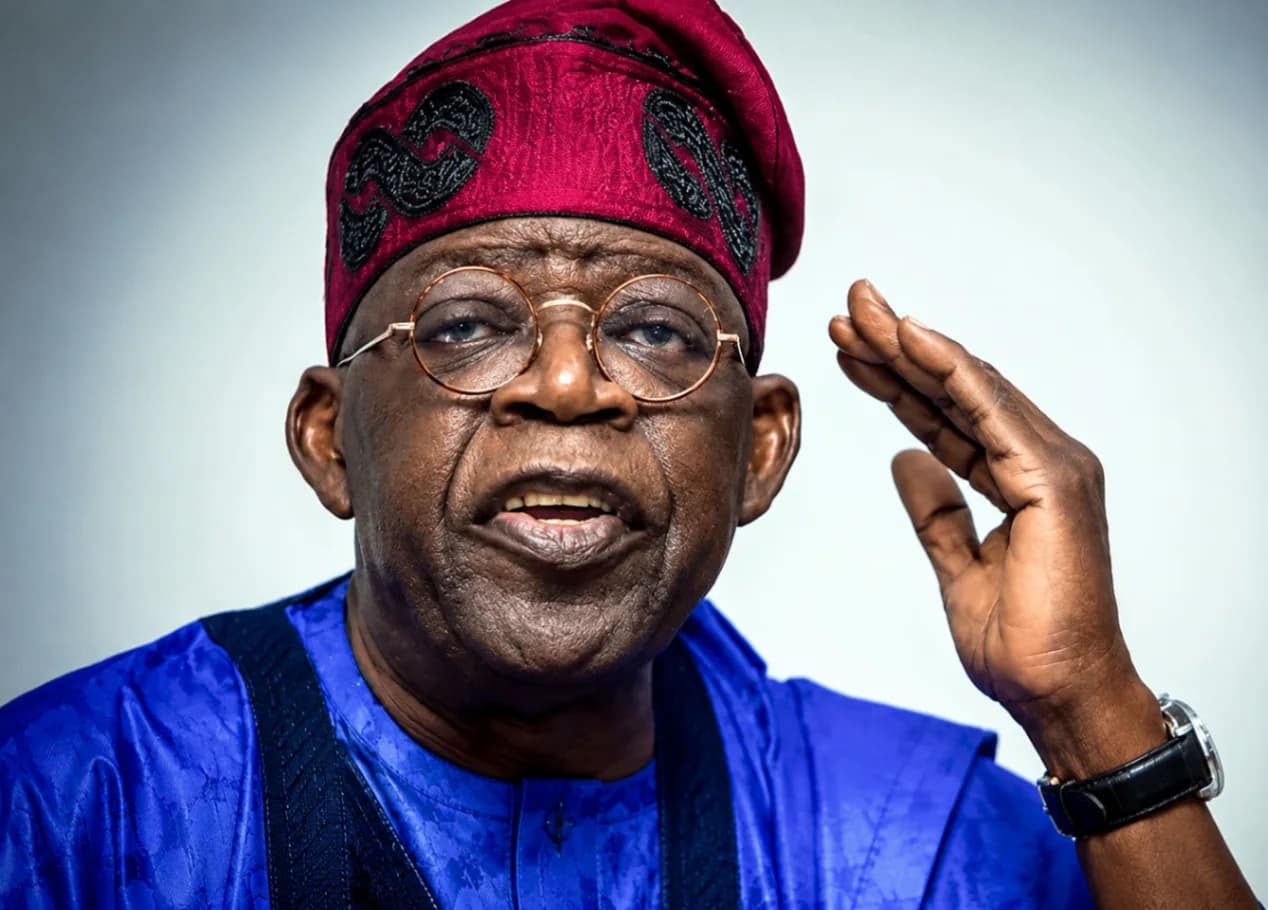
President Bola Ahmed Tinubu has given Nigeria’s top security, defence and intelligence officials 90 days to produce a comprehensive assessment of the country's security threats and a five-year plan for responding to them.
The directive comes as Nigeria continues to confront terrorism, banditry, kidnapping and other forms of organised violence across different parts of the country.
The Presidential Committee on National Threat Assessment and Five-Year Strategic Defence Operations Plan was inaugurated in Abuja on Wednesday by Secretary to the Government of the Federation, George Akume, on behalf of the President.
The committee is expected to submit both documents to Tinubu for consideration and approval within the 90-day deadline.
Why Tinubu Wants a New Security Strategy
The administration says Nigeria's security environment has become increasingly complicated.
Threats are no longer necessarily confined to one region or one type of armed group.
Terrorism, banditry, kidnapping, organised crime and other security challenges can overlap and exploit gaps between government institutions and jurisdictions.
According to Akume, Nigeria can no longer rely primarily on a system that responds to threats after they emerge.
The new approach is intended to help authorities identify threats earlier, establish priorities and determine what resources are required before security situations become more serious.
From Reaction to Prevention
One of the most important elements of the new strategy is the proposed shift from reaction to anticipation.
For years, many of Nigeria's security responses have followed a familiar pattern.
An attack occurs.
Security agencies deploy.
Rescue or counter-terrorism operations begin.
Suspects are pursued.
But the government now wants a system that can identify emerging threats before they develop into major crises.
The National Threat Assessment is expected to provide the information needed to make that possible.
What Is the National Threat Assessment?
The assessment is expected to provide government with a comprehensive picture of Nigeria's security environment.
It will identify existing and emerging threats, assess their significance and determine how those threats could evolve.
The document will also consider the consequences of failing to address particular threats and help determine the appropriate government response.
Importantly, the assessment is intended to become a common planning basis for the military, intelligence services and other security agencies.
That could help reduce situations where different agencies operate according to separate priorities.
What Is the Five-Year Defence Plan?
The second document will translate the threat assessment into practical operational requirements.
It is expected to identify:
The forces required in different operational theatres.
Equipment and weapons requirements.
Intelligence capabilities.
Infrastructure needs.
Logistics requirements.
Personnel and training needs.
Existing capability gaps.
Procurement priorities.
Implementation timelines.
The idea is straightforward: understand the threat first, then determine what Nigeria needs to confront it.
Who Is on the Committee?
The committee brings together some of the country's most senior security officials.
Its membership includes the National Security Adviser, Nuhu Ribadu; Minister of Defence, Christopher Musa; Minister of State for Defence, Bello Matawalle; Chief of Defence Staff, Olufemi Oluyede; Chief of Army Staff, Waidi Shaibu; Chief of Air Staff, Sunday Kelvin Aneke; and Chief of Naval Staff, Idi Abbas.
The heads of the Department of State Services and National Intelligence Agency are also included.
The President's Special Adviser on Homeland Security, Major General Adeyinka Famadewa, is coordinating the committee and providing secretariat support.
Why Coordination Matters
Nigeria has several security agencies with different responsibilities.
The military conducts operations against terrorists and other armed groups.
The police handle policing and internal security responsibilities.
Intelligence agencies gather and analyse information.
Other government institutions also contribute to border security, emergency response and national defence.
When these institutions do not share information or operate towards clearly defined common objectives, gaps can emerge.
The new framework is intended to close some of those gaps.
Tinubu Points to Recent Rescue Operations
The President has previously pointed to successful joint operations as evidence that better coordination can save lives.
Among the examples cited by the administration is the rescue of pupils and teachers abducted in Oriire Local Government Area of Oyo State.
Tinubu said the operation demonstrated what could happen when security and intelligence agencies work together around a clear objective and with the necessary intelligence.
The new strategy is intended to build that kind of coordination into Nigeria's broader security architecture.
The Timing Is Significant
The announcement comes at a particularly difficult moment for Nigeria's security situation.
Recent attacks and abductions in Borgu Local Government Area of Niger State have raised fresh concerns about the expansion of armed groups into new areas.
Suspected terrorists attacked communities around Dekara and reportedly abducted worshippers during Friday prayers.
A video subsequently circulated online that residents claimed showed a large number of captives, although the precise number and authenticity of the footage have not been independently verified.
BusinessDay reported on Wednesday that the Borgu forest belt is increasingly being viewed as a potentially important emerging security theatre, with implications not only for physical security but also for agriculture and food production.
Security and Food Security Are Connected
This is an important part of the national security conversation.
When farmers cannot safely access their farms, food production can suffer.
When rural roads become unsafe, agricultural products can struggle to reach markets.
When communities are displaced, farms can be abandoned.
That means insecurity can eventually become an economic and food-security problem.
A national threat assessment therefore needs to look beyond traditional military targets and consider how insecurity affects farms, transport routes, markets and communities.
The Five-Year Horizon Could Change Defence Spending
The proposed five-year plan could also influence how Nigeria spends money on defence.
Instead of agencies independently requesting equipment and resources based primarily on immediate operational needs, the government wants procurement to be connected to identified national priorities.
That could potentially improve the efficiency of defence spending.
For example, if intelligence identifies a particular threat as the highest priority, resources could be directed towards the technology, personnel and equipment needed to address it.
The government says the plan will provide the basis for a corresponding multi-year defence expenditure and procurement plan.
But Money Alone Will Not Solve the Problem
A new strategy document can provide direction.
It cannot, by itself, defeat terrorists or stop kidnappers.
Implementation will matter.
The government will need to provide the necessary funding, equipment and personnel.
Security agencies will need to cooperate.
Intelligence will need to be accurate.
And commanders will need to translate strategic priorities into effective operations.
A civil-society group, the Coalition of Patriots for Security Sector Reforms, has welcomed the initiative but warned that the 90-day process should produce measurable improvements, rather than simply another strategy document.
Nigerians Will Want to See Results
This is perhaps the biggest test facing the new initiative.
Nigerians have seen numerous security announcements over the years.
They have heard promises of new equipment.
They have heard announcements about new strategies.
They have heard assurances that terrorists and kidnappers will be defeated.
But communities continue to experience attacks.
That means the new five-year plan will ultimately be judged by what changes on the ground.
Can attacks be prevented?
Can intelligence improve?
Can kidnappers be intercepted?
Can rural communities become safer?
Can farmers return to their farms?
Can security agencies respond faster?
Those are the questions Nigerians will ask.
What Should the Plan Prioritise?
If the strategy is to make a meaningful difference, several areas deserve serious attention.
Intelligence: Nigeria needs stronger systems for detecting threats before attacks happen.
Inter-agency cooperation: Security agencies need reliable mechanisms for sharing information.
Technology: Surveillance, communications and intelligence technology can improve situational awareness.
Border security: Armed groups often exploit difficult-to-monitor borders and remote routes.
Rural security: Villages and farming communities need protection, not just major cities.
Personnel: Soldiers, police officers and intelligence officers need proper training and equipment.
Accountability: Nigerians need to know whether security resources are producing measurable results.
The Plan Must Survive Political Changes
Another important question is what happens after the five-year plan is approved.
A national security strategy should ideally not become irrelevant whenever there is a change in political leadership.
Security threats do not disappear because governments change.
Nigeria therefore needs institutions capable of maintaining long-term strategic planning while adapting to new threats.
The plan is reportedly designed as a rolling framework, meaning it can be reviewed annually to reflect changing threats, technology and lessons from ongoing operations.
That flexibility could be important.
A Major Test for the Tinubu Administration
The initiative represents a significant opportunity for the Tinubu administration.
If properly implemented, it could provide a more coherent framework for Nigeria's security operations.
It could help government agencies understand which threats deserve the greatest attention.
It could also improve the connection between national security needs and defence spending.
But failure to implement the recommendations effectively could produce another document that generates headlines without significantly changing the security situation.
The 90-Day Countdown Has Begun
The committee now has a clearly defined deadline.
Within 90 days, it is expected to deliver both the National Threat Assessment and the Five-Year Strategic Defence Operations Plan.
The documents will then go to President Tinubu for consideration and approval.
What happens after that may be even more important than the drafting process itself.
The government will have to turn the strategy into budgets, procurement, intelligence operations, training and measurable security outcomes.
Nigeria Needs a Security Strategy That Works
The country does not lack security agencies.
Nigeria has soldiers, police officers, intelligence officers, aircraft, naval assets and other security capabilities.
The bigger challenge is ensuring that all these resources work together effectively against threats that are becoming increasingly sophisticated.
Tinubu's new initiative recognises that problem.
The proposed strategy is essentially an attempt to answer three questions:
What threats does Nigeria face?
What does Nigeria need to defeat them?
How will the country know whether its strategy is working?
Those are important questions.
But Nigerians will ultimately want more than answers on paper.
They want safer communities.
They want their children to attend school without fear.
They want farmers to work their land.
They want travellers to use Nigeria's roads without worrying about kidnapping.
And they want families to feel secure in their homes.
Final Word
President Tinubu's 90-day deadline is ambitious.
But the urgency is understandable.
Nigeria's security challenges are evolving, and the government is attempting to create a framework that looks beyond individual attacks and short-term responses.
The proposed five-year strategy could become an important turning point if it is properly funded, implemented and monitored.
The real measure of success, however, will not be the quality of the document produced in Abuja.
It will be what happens in Nigerian communities after the document is approved.
If the strategy can help prevent attacks before they happen, save lives, protect farms and make communities safer, Nigerians will notice.
And that is ultimately the standard that matters.
Key Facts
President: Bola Ahmed Tinubu
Announcement date: August 26, 2026
Deadline: 90 days
Main committee: Presidential Committee on National Threat Assessment and Five-Year Strategic Defence Operations Plan
Main task: Prepare a comprehensive National Threat Assessment
Second task: Prepare a rolling five-year Strategic Defence Operations Plan
Committee coordinator: Major General Adeyinka Famadewa
Key officials involved: NSA, defence ministers, service chiefs, DSS and NIA leadership
Purpose: Identify threats, prioritise risks and align security resources with national objectives
Five-year plan focus: Forces, equipment, intelligence, infrastructure, logistics, technology, training and capability gaps
Expected benefit: Better coordination and a shift from reactive to anticipatory security planning
Review mechanism: The five-year plan is expected to operate on a rolling basis and be reviewed annually
Current status: Committee inaugurated; 90-day countdown underway
Tags
PUBLISHER NOTE
About Talk Ya True
Talk Ya True publishes independent reporting and analysis with clear attribution, source transparency and corrections when needed.
Related Articles

Business
Nigeria’s Foreign Reserves Hit $52.83 Billion as Naira Holds Relatively Steady
Nigeria
Tinubu’s 2026 Budget: ₦54.46 Trillion Spending Plan Puts Government Finances Under Spotlight
Politics
Katsina Political Crisis Deepens as Governor Radda’s CSO and ADC Are Reportedly Detained
Nigeria
Tinubu Orders Urgent Rescue Operation After Mass Abduction in Niger State
Stay Informed
Get the latest stories from Nigeria.
Free news updates. Unsubscribe anytime.
By subscribing, you agree to receive free news updates from Talk Ya True. You can unsubscribe at any time.