Politics
TVC Journalist Babajide Otitoju Faces Backlash Over Osun Election Analysis
Veteran journalist Babajide Kolade-Otitoju has come under fire online after his analysis of the Osun governorship election and comments about Davido's involvement in the race triggered a heated debate. Supporters of the Accord Party accuse him of bias, while others defend his right to offer political analysis as the August 15 election approaches.
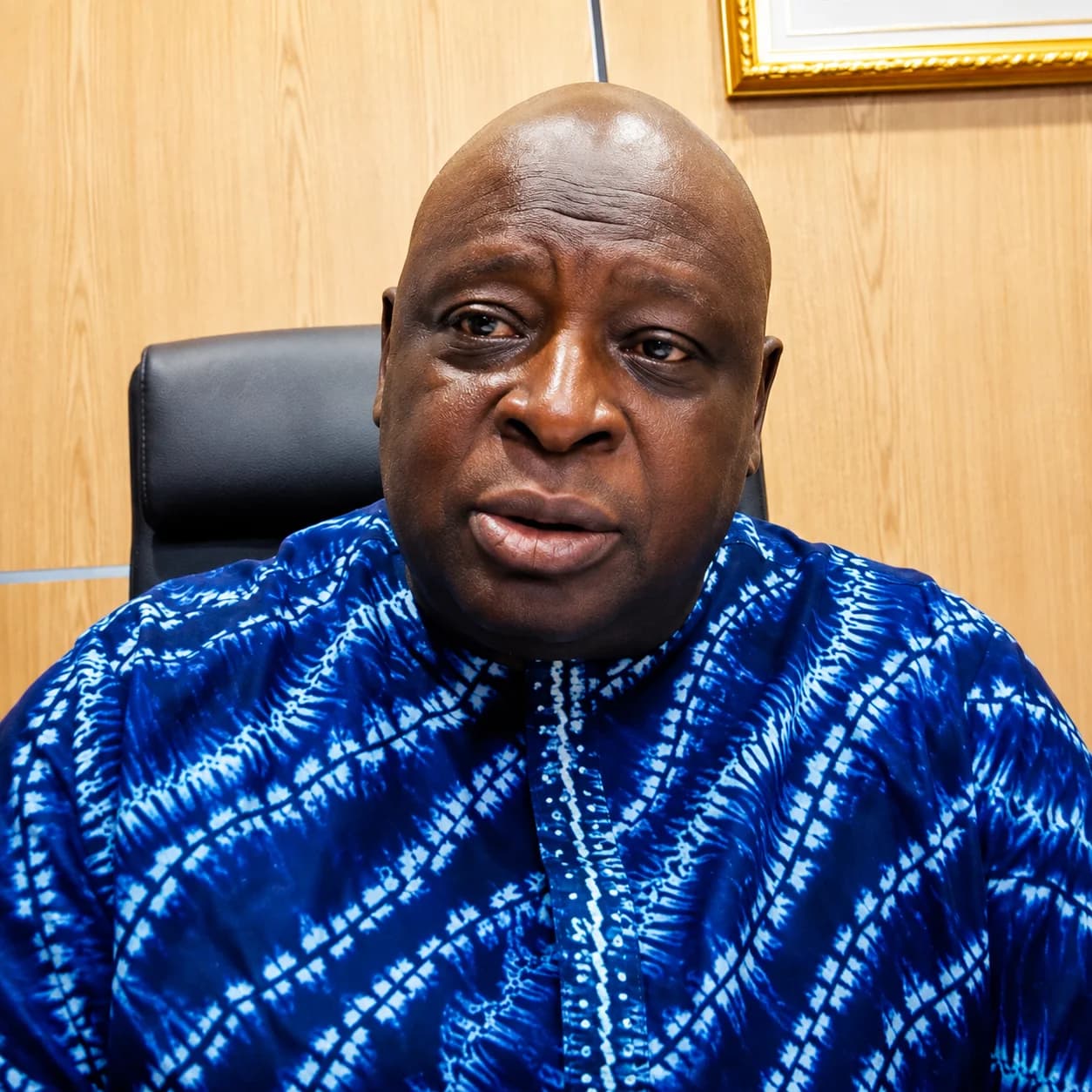
Veteran journalist Babajide Kolade-Otitoju has become the latest media personality to find himself at the centre of Nigeria's increasingly heated Osun governorship election debate.
The Director of News at TVC Communications has been providing regular analysis of the race between the major contenders, including incumbent Governor Ademola Adeleke and APC candidate Bola Oyebamiji, popularly known as AMBO.
But his latest comments, particularly those involving Afrobeats superstar Davido and the Accord Party, have triggered a wave of criticism online.
What began as political analysis has quickly become another argument about media neutrality, celebrity influence and whether journalists are being fair in their coverage of the Osun election.
What Did Otitoju Say?
Otitoju has been closely following the Osun race and has argued that the outcome will depend heavily on the ability of the major political camps to mobilise voters.
In one of his recent analyses, he discussed the potential consequences of an Accord defeat and the political implications for those supporting the party.
His comments about Davido were particularly provocative.
Reports on his exchange with the singer indicate that Otitoju challenged Davido's intervention in the Osun election conversation, with the veteran journalist telling the music star that he was still a "small boy" in political experience.
That line quickly became one of the most discussed parts of the exchange.
Why Davido Became Part of the Debate
Davido is not simply an entertainer in Osun politics.
He is the nephew of Governor Ademola Adeleke and has been one of the most visible celebrity supporters of the governor and his political family.
His recent intervention in the election has attracted considerable attention, including his threat to seek international attention over concerns about the fairness of the election.
That has made him a political actor in the eyes of many Nigerians, even though he is not a candidate.
Otitoju's criticism therefore touched a much larger question:
How much influence should a celebrity have over a state's political conversation?
X Erupts Over the Journalist's Analysis
The reaction on X has been sharply divided.
Some users have accused Otitoju of presenting himself as a neutral journalist while making comments they believe favour one side of the political contest.
Supporters of Adeleke and Accord have particularly objected to what they see as dismissive treatment of Davido and their political movement.
Some users have argued that the journalist's analysis sounds less like neutral election commentary and more like political advocacy.
Others, however, have pushed back against that interpretation.
They argue that being a journalist does not mean being forbidden from expressing an analytical opinion.
"He Is Just Giving His Analysis"
Otitoju's defenders say the criticism demonstrates how emotionally charged the Osun election has become.
According to this view, any journalist who questions Adeleke, Davido or Accord supporters is immediately accused of supporting APC.
That, they argue, is unfair.
Political analysis is supposed to involve examining weaknesses, questioning campaign claims and assessing the chances of each candidate.
A journalist saying something that supporters dislike does not automatically prove political bias.
But Critics Want Greater Neutrality
The opposing argument is equally strong.
Critics say journalists who analyse elections have a responsibility to be especially careful with their language.
This is particularly important when the journalist works for a major television network and has a large national audience.
They argue that describing political actors in dismissive terms can create the impression that the journalist has already chosen a side.
For them, the issue is not whether Otitoju is allowed to have an opinion.
It is whether his presentation gives viewers enough distinction between reported facts, analysis and personal opinion.
Osun Is Already a Highly Charged Political Environment
The controversy comes at a particularly sensitive time.
The Osun governorship election is only days away.
Political parties are intensifying their campaigns.
Supporters are becoming more aggressive online.
And allegations of intimidation, vote buying and political violence have become part of the wider conversation.
TVC itself recently reported growing security concerns ahead of the August 15 poll, citing political violence in several parts of the state and warnings from the National Peace Committee.
In that environment, every prominent political comment is likely to receive heightened scrutiny.
The Media Is Becoming Part of the Election Battlefield
The Otitoju controversy illustrates a larger problem facing Nigerian journalists during elections.
Political campaigns no longer take place only at rallies and on television.
They take place on X, TikTok, Facebook, WhatsApp and YouTube.
A journalist's statement on television can become a viral clip within minutes.
Supporters can then interpret that clip through their own political loyalties.
A comment intended as analysis can therefore quickly become a political controversy.
The "Davido Factor"
Davido's involvement makes the situation even more complicated.
He has a huge following among young Nigerians.
His political statements can generate millions of views and extensive discussion.
His family connection to Adeleke also makes his involvement impossible to separate entirely from the election.
Supporters see him as someone defending his family's political interests.
Critics see him as a celebrity attempting to influence an election.
Otitoju's comments have therefore touched one of the most interesting aspects of the 2026 Osun contest:
Can celebrity influence translate into political influence?
Does Celebrity Popularity Equal Electoral Power?
That remains uncertain.
Davido may have millions of followers, but followers are not the same thing as voters.
Even if large numbers of young Nigerians agree with him, an election depends on turnout, geography, party organisation and individual voting decisions.
That is why Otitoju's broader argument about political mobilisation has attracted attention.
The real test of every campaign's strength will come on election day.
Otitoju Has Been a Prominent Voice on the Election
This is not the first time Otitoju has analysed the Osun contest.
TVC has recently featured him discussing how the Osun governorship election could be won, while another TVC segment highlighted his views on the political implications of the race.
His long experience in journalism gives his analysis considerable visibility.
He has also been described by political figures as a journalist known for outspoken and fearless analysis.
That reputation may be part of why his comments attract such strong reactions.
The Bigger Question: Can Political Journalism Ever Be Completely Neutral?
This controversy has reopened an old Nigerian media debate.
Should political journalists simply report what candidates say?
Or should they challenge political claims and offer their own analysis?
The answer is probably somewhere between the two.
Journalists should be able to analyse.
But audiences should also be able to identify when they are hearing:
News.
Analysis.
Opinion.
Those distinctions become especially important during elections.
What Critics Are Really Angry About
For many of the people criticising Otitoju, the problem is not simply that he disagrees with Adeleke or Davido.
It is the perception that his platform gives his views greater authority than those of ordinary social-media users.
A statement from a television journalist can influence how undecided voters understand a candidate.
That creates a responsibility to be precise.
Critics therefore want stronger evidence, clearer sourcing and less language that could be interpreted as partisan.
What His Supporters Are Saying
His defenders argue that journalists should not be bullied into silence simply because politicians or their supporters dislike their conclusions.
They say Otitoju has spent decades analysing Nigerian politics and should be allowed to challenge popular narratives.
They also point out that every political camp tends to accuse journalists of bias whenever coverage becomes unfavourable.
From this perspective, the backlash is evidence of how polarised the election has become rather than proof of journalistic misconduct.
The Election Will Ultimately Settle the Argument
There is one thing that neither Otitoju nor his critics can determine.
The result.
If Accord wins, critics may argue that predictions against the party underestimated its grassroots strength.
If APC wins, supporters may argue that Otitoju correctly identified the political momentum.
But election analysis is never a guarantee.
Political analysts can be wrong.
Voters can surprise everyone.
And campaigns can change dramatically in the final days.
Why the Controversy Matters
The dispute matters because Nigeria needs credible election coverage.
Millions of voters rely on journalists and analysts to help them understand complicated political contests.
They need information about candidates' records, policies, controversies and campaign promises.
They also need journalists who can challenge powerful politicians without becoming political actors themselves.
That balance is difficult.
But it is essential.
The Bigger Osun Battle
The Osun election is increasingly shaping up as a contest involving much more than Adeleke and Oyebamiji.
It includes political parties, governors, senators, celebrities, traditional leaders, trade groups, religious figures, journalists and thousands of online activists.
Each group is attempting to influence the narrative.
That makes the media's role even more important.
The public needs credible information amid the noise.
The Bottom Line
Veteran TVC journalist Babajide Kolade-Otitoju is facing backlash over his recent analysis of the Osun governorship election, particularly his comments concerning Davido and the Accord Party.
Critics accuse him of sounding partisan and dismissing the influence of Adeleke's supporters, while his defenders argue that he is an experienced journalist providing political analysis and should not be expected to agree with every campaign narrative.
The controversy comes at a critical moment, with the August 15 Osun governorship election only days away and security concerns already rising around the contest.
But beyond the argument over one journalist lies a bigger question:
Can Nigerian journalists analyse fiercely contested elections without becoming part of the political battle themselves?
For Otitoju, the answer appears to be that journalists must be willing to say what they believe the political facts show — even when powerful supporters disagree.
For his critics, however, the standard is higher.
In an election this close, they argue, the messenger matters almost as much as the message.
PUBLISHER NOTE
About Talk Ya True
Talk Ya True publishes independent reporting and analysis with clear attribution, source transparency and corrections when needed.
Related Articles
Nigeria
APC Rice Distribution in Osun Triggers Vote-Buying Debate Days Before Election
Politics
Senator Yayi Turns 57, Pledges Renewed Commitment to Service as 2027 Ogun Race Looms
Politics
Viral Osun Rice Video Triggers Political Storm as Woman Praises APC Candidate
Politics
Davido Raises Alarm Over Osun Poll, Says He Could Turn to Trump if Election Is Rigged
Stay Informed
Get the latest stories from Nigeria.
Free news updates. Unsubscribe anytime.
By subscribing, you agree to receive free news updates from Talk Ya True. You can unsubscribe at any time.