TALK YA TRUE

Politics

Viral Osun Rice Video Triggers Political Storm as Woman Praises APC Candidate

A viral video showing a woman distributing rice to residents in Osun State while urging them to support the APC has triggered fierce reactions on X. Critics have accused politicians of turning food relief into an electioneering tool, while the controversy has also raised questions over the identity of the candidate mentioned in the video.

Talk Ya True Editorial TeamIndependent African Newsroom
Share
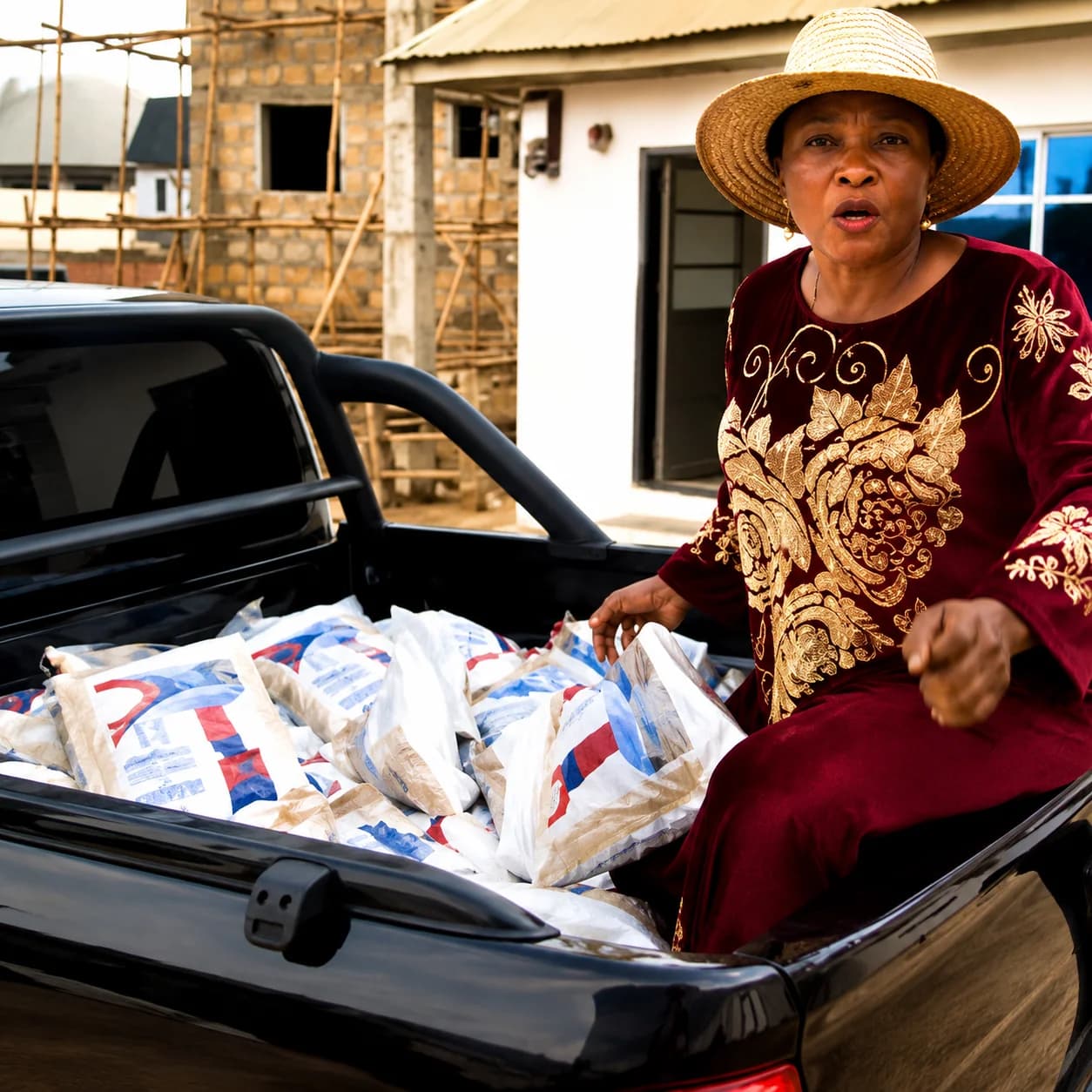
Woman distributing bags of rice to residents in Osun State while campaigning for the APC ahead of the governorship election.

A video showing a woman distributing rice to residents in Osun State while openly campaigning for the All Progressives Congress has sparked a heated political debate online, just days before the state's governorship election.

In the footage circulating across X and other social-media platforms, the woman addresses residents and praises a politician she identifies as “Oyebanji,” before urging them to vote for the APC candidate.

She tells those gathered that the politician sent her to distribute rice and says he will take care of them and their families.

The message has since become the centre of a much bigger conversation about poverty, food distribution and vote-seeking in Nigerian politics.

"Rice Is the Solution"

One phrase attached to the viral conversation has particularly caught attention:

“Rice is the SOLUTION.”

Critics have seized on the phrase sarcastically, arguing that politicians repeatedly turn to rice, food packages and other short-term giveaways whenever elections approach.

On X, some users questioned whether distributing bags of rice can genuinely address the economic problems facing residents or whether such gestures simply provide temporary relief while politicians seek votes.

Others argued that hungry people cannot be expected to reject assistance simply because an election is approaching.

That disagreement has become one of the central themes of the online debate.

The Candidate's Name Raises Questions

The video also contains an unusual political detail.

The woman repeatedly refers to “Oyebanji” as the APC candidate for Osun.

However, the APC's candidate in the August 15, 2026 Osun governorship election is Asiwaju Munirudeen Bola Oyebamiji, popularly known as AMBO.

Oyebamiji emerged as the party's candidate after the APC primary and has been campaigning on his “Prosperity Agenda.”

The name confusion has therefore generated another layer of discussion online.

It is particularly notable because Biodun Oyebanji is the APC governor of neighbouring Ekiti State, not the APC candidate for Osun. Oyebanji won re-election in Ekiti in June 2026.

Whether the woman misspoke, whether the name was misreported in the circulation of the video, or whether there is another explanation remains unclear from the available footage.

What Nigerians Are Saying

The reaction on X has been fierce.

Critics have described the video as another example of what they see as the use of economic hardship for political advantage.

Some users questioned why citizens struggling with food prices should be expected to exchange their political support for bags of rice.

Others took a more pragmatic position.

They argued that if a family is hungry, receiving food is still valuable regardless of the political motivation behind the distribution.

That has created a familiar Nigerian political argument:

Is accepting a political gift the same thing as selling your vote?

The "Rice Politics" Debate

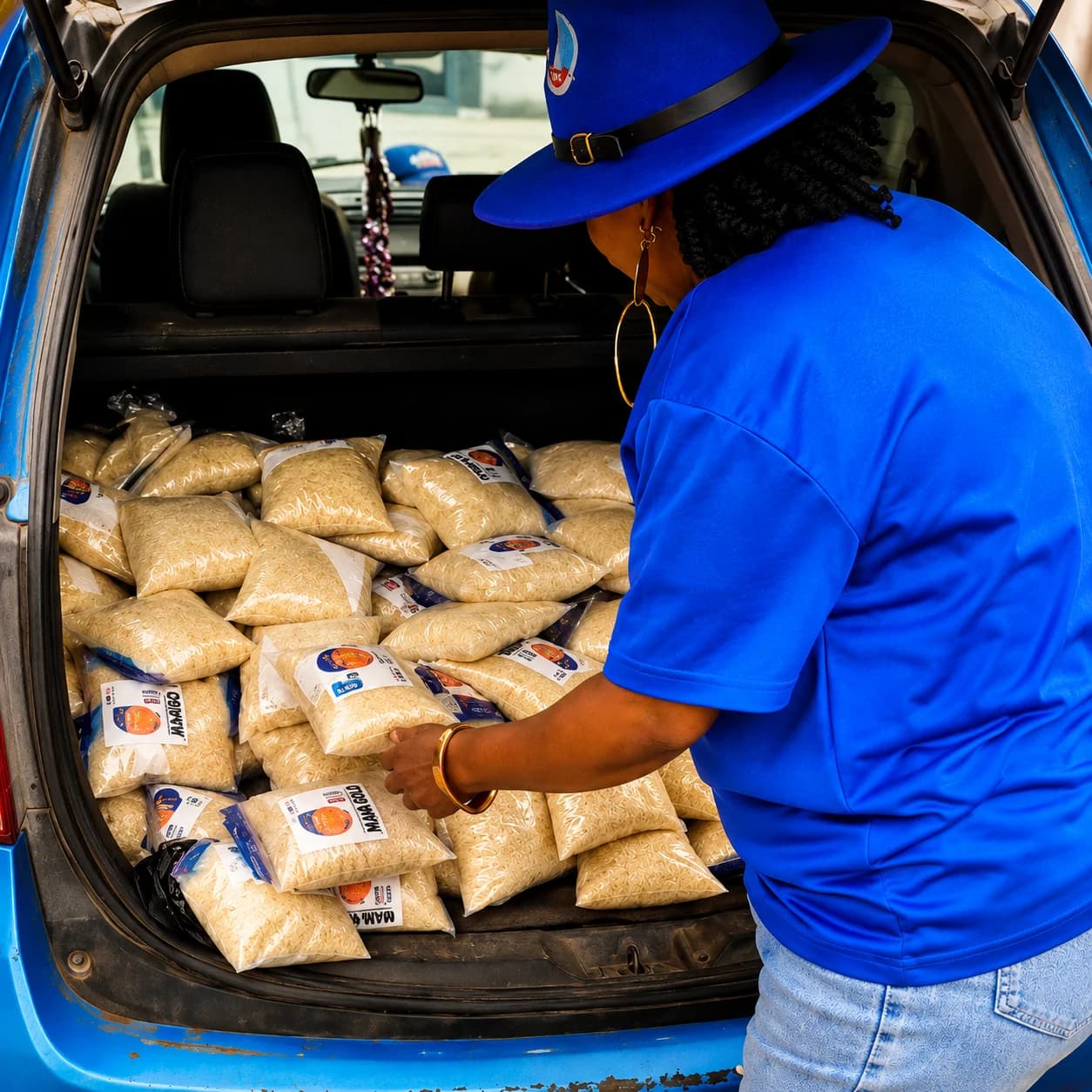
Food distribution has become a recurring feature of Nigerian political campaigns.

Rice, cooking oil, clothing, cash and other items are frequently distributed at political gatherings and community events.

Supporters often describe such activities as empowerment or humanitarian assistance.

Critics, however, see them as a form of political inducement, particularly when beneficiaries are simultaneously encouraged to vote for a particular candidate.

The distinction becomes even more important during election periods.

Nigeria's electoral laws prohibit vote buying and other forms of inducement designed to influence voters.

However, determining whether a particular distribution constitutes unlawful vote buying depends on the circumstances and evidence surrounding the activity.

Why the Video Is Striking

What makes this particular video different is the direct connection made between the rice and the candidate.

The woman does not merely appear to be distributing food.

She explicitly praises the politician and asks residents to support him.

That combination is what has made the footage so powerful online.

It has allowed critics to frame the scene as an illustration of how economic hardship can become an electoral weapon.

But Supporters See It Differently

Not everyone agrees with that interpretation.

Supporters of the APC candidate have also shared videos and reports of food and other forms of assistance being distributed to communities in Osun.

They argue that helping people during difficult economic times should not automatically be condemned simply because an election is approaching.

For a family struggling to afford food, a bag of rice has immediate value.

The political argument therefore becomes more complicated than simply asking whether the rice was useful.

The bigger question is what was expected in return?

The Economic Reality Behind the Controversy

The debate is taking place against a difficult economic background.

Food prices remain a major concern for Nigerian households, and rice has become one of the most politically recognisable symbols of economic hardship.

That is why the sight of politicians distributing rice can produce two completely different reactions.

For some people, it represents meaningful assistance.

For others, it represents a temporary solution to a structural problem.

And the closer the country gets to an election, the more politically charged the gesture becomes.

Can Rice Change an Election?

That is perhaps the most interesting question raised by the video.

A bag of rice may provide food for a household for several days or weeks.

But voters also have to consider issues such as:

  • Employment

  • Security

  • Healthcare

  • Education

  • Infrastructure

  • Electricity

  • Food production

  • Economic opportunity

Those issues cannot be solved with a bag of rice.

That is why critics argue that voters should judge candidates by their policies and record rather than temporary gifts.

Osun Heads Toward a Closely Watched Election

The controversy comes just days before the August 15 Osun governorship election.

The APC's Oyebamiji is challenging incumbent Governor Ademola Adeleke, making the contest one of the most closely watched state elections in Nigeria this year.

Oyebamiji recently unveiled his Prosperity Agenda, promising economic growth, social inclusion and development through what he described as prudent leadership and private-sector-driven investment.

Against that backdrop, every campaign activity is attracting heightened scrutiny.

The Bigger Question: What Do Voters Really Want?

The rice video has produced plenty of jokes online, but it also exposes a much more serious problem.

When people are struggling to feed their families, even a relatively small food donation can carry enormous weight.

That creates an uncomfortable imbalance between politicians seeking votes and citizens facing immediate economic needs.

The answer cannot simply be to blame people for accepting food.

Nor can it be to pretend that short-term gifts are enough to solve poverty.

The real test for any politician is what happens after the rice is finished.

The Bottom Line

The viral Osun rice video has ignited another fierce political debate over the relationship between poverty and election campaigning in Nigeria.

While the woman in the footage openly links the rice distribution to support for an APC candidate, the video also contains a notable name discrepancy: she refers to “Oyebanji,” while the APC's actual Osun governorship candidate is Bola Oyebamiji.

Beyond the confusion, the central question remains the same:

Should voters judge a politician by the bag of rice they receive today — or by what that politician can deliver for the next four years?

As Osun voters prepare to go to the polls, that question may matter far more than the rice itself.

EDITORIAL TEAM

About Talk Ya True Editorial Team

The Talk Ya True Editorial Team is an independent newsroom committed to factual reporting, responsible journalism and thoughtful analysis across Africa and around the world.

Stay Informed

Get the biggest stories from Nigeria, Africa and around the world.

Free news updates. Unsubscribe anytime.

By subscribing, you agree to receive free news updates from Talk Ya True. You can unsubscribe at any time.

Share