Nigeria
Umahi Orders Arrest of Hartland MD Over Alleged Failure to Complete ₦14bn Benin-Onitsha Road Section
Minister of Works David Umahi has ordered the immediate arrest of the Managing Director of Hartland Nigeria Limited over the alleged failure to complete an 11-kilometre section of the Benin-Onitsha Expressway despite about ₦14 billion reportedly being paid for the project. Umahi said the contractor had completed only about 40 per cent of the agreed work and ordered officials to begin recovering the funds while auditing the company's other federal projects.
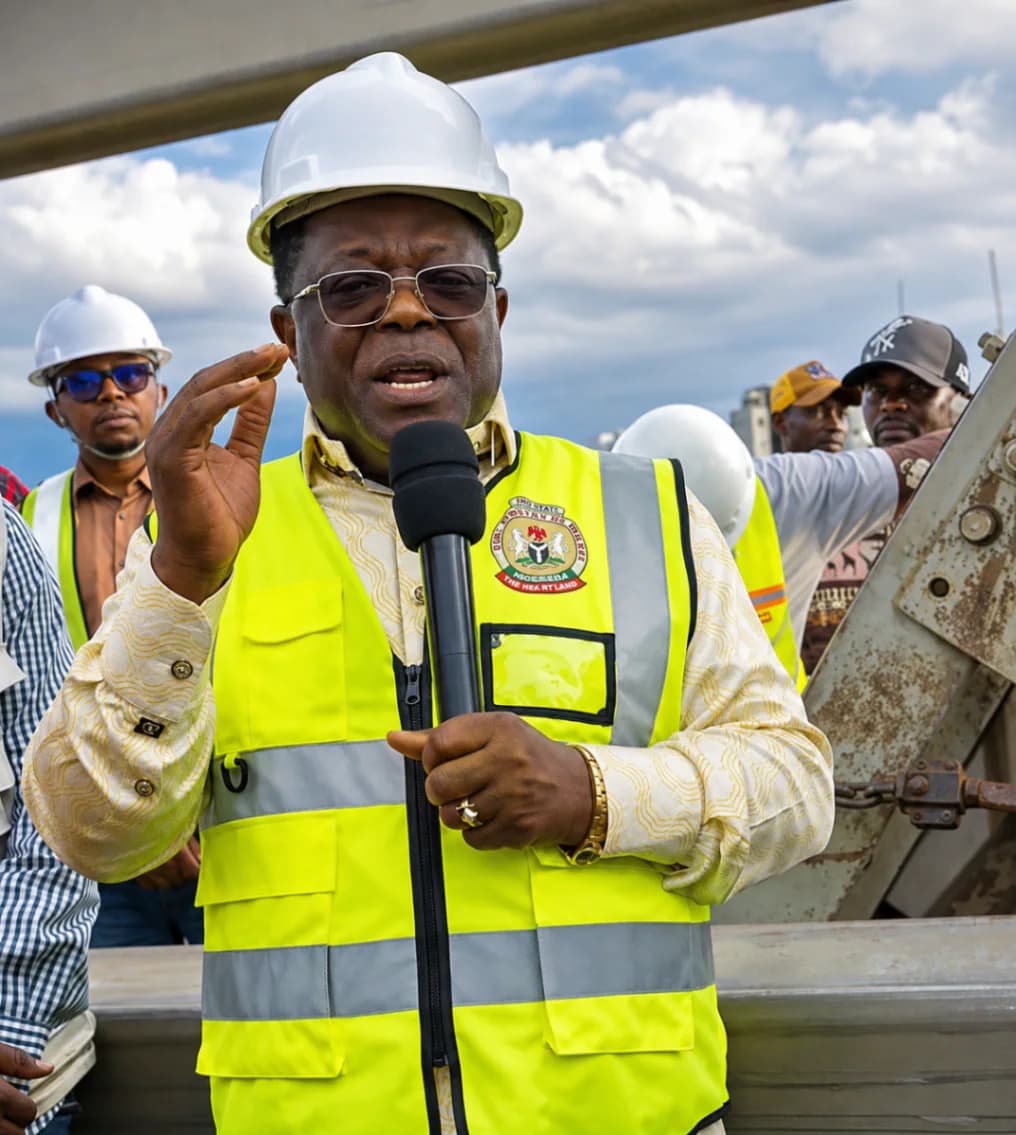
Umahi Takes Action Over ₦14bn Road Contract
Nigeria's Minister of Works, David Umahi, has ordered the arrest of the Managing Director of Hartland Nigeria Limited following his dissatisfaction with the company's performance on an 11-kilometre section of the Benin-Onitsha Expressway.
Umahi issued the directive during an inspection of federal road infrastructure along the Agbor-Asaba-Onitsha corridor in Delta State.
According to the minister, the contractor had received approximately ₦14 billion for the work but had completed only about 40 per cent of what was agreed.
The affected section runs from Summit Junction to the Head Bridge and includes road works, channelisation and hydraulic structures.
The minister's reaction has now pushed the project into the national spotlight, particularly because of the amount of public money involved.
What Umahi Ordered
Umahi did not simply criticise the contractor's performance.
He directed officials of the Federal Ministry of Works to locate and arrest the company's managing director.
He also ordered the ministry to begin the process of recovering money paid to the contractor.
In addition, officials were instructed to activate the advance payment guarantee and approach the relevant banks for the recovery of funds.
The minister also ordered a comprehensive audit of Hartland's payment records and certificates across its other federal projects.
That means the consequences could extend beyond the particular Benin-Onitsha road section if the ministry's review finds additional contractual problems.
Why Is the Government Angry?The central issue is the gap between the amount reportedly paid and the amount of work completed.
Umahi said the agreement was for Hartland to complete the entire 11-kilometre stretch, including the associated channelisation and hydraulic structures.
Instead, the minister said only about 40 per cent had been completed.
The government therefore appears to be questioning why a significant amount of public money has already been paid while a substantial portion of the contracted work remains unfinished.
Umahi described the situation as unacceptable and ordered immediate attention to the approach sections around the Head Bridge.
The Minister Wants the Money BackOne of the most significant aspects of the directive is the attempt to recover funds.
Umahi instructed ministry officials to activate the contractor's advance payment guarantee and communicate with the banks involved.
The objective is to recover money that the ministry believes should be returned if the contractor has failed to meet the conditions attached to the payment.
This is important because the story is not simply about an unfinished road.
It is about how government manages billions of naira committed to infrastructure projects.
If public money is released for a specific project, Nigerians expect the contracted work to be delivered.
The Arrest Order Does Not Establish Criminal GuiltThere is an important distinction that should not be lost in the dramatic headline.
The minister has ordered the arrest of Hartland's managing director.
That does not, by itself, establish that the executive has committed a criminal offence.
The allegations surrounding the contractor's performance still need to be addressed through the appropriate legal and administrative processes.
For that reason, Talk Ya True will refer to the contractor's alleged failure to meet its obligations rather than presenting wrongdoing as already proven.
Hartland's Other Federal Projects Under ReviewUmahi also ordered officials to audit Hartland's records across its other projects with the Federal Ministry of Works.
The review is expected to examine:
Payment records
Project certificates
Work completed
Contract obligations
Funds released
The contractor's performance across other projects
The minister said the company could face sanctions if the audit establishes that it breached its obligations.
That could potentially turn the Benin-Onitsha dispute into a broader examination of the contractor's relationship with the Federal Government.
What Happens to the Road Now?Umahi ordered immediate work on the approaches to the Head Bridge.
He directed officials to ensure that both sides of the bridge approach were filled without delay.
The instruction is significant because the road is part of a major transportation corridor connecting communities and commercial centres across the region.
The Agbor-Asaba-Onitsha route is particularly important for movement between Delta State and Anambra State and for wider traffic through southeastern Nigeria.
Any prolonged deterioration along the route can affect motorists, businesses, commuters and the movement of goods.
The Second Niger Bridge Has Also Come Under ScrutinyThe minister's inspection did not end with the Hartland project.
Umahi also visited the Second Niger Bridge, where he raised concerns about the vandalism of critical components.
According to the minister, vandals had removed items including bolts, steel members and expansion joints.
He warned that continued removal of such components could compromise the safety of the bridge and potentially create a serious danger for road users.
The government has therefore ordered immediate replacement of damaged components.
CCTV and Solar Lighting Coming to the BridgeUmahi also ordered the installation of solar-powered lighting and CCTV cameras around the bridge.
The proposed surveillance system is expected to provide security agencies and designated government officials with access to live feeds.
The aim is to make it more difficult for vandals to operate undetected.
The minister's position is that the government cannot continue spending public funds repairing infrastructure only for components to be repeatedly stolen.
Erosion Is Another ProblemThe inspection also covered areas around the Second Niger Bridge affected by erosion.
Umahi directed that remedial work should begin immediately.
Erosion can become a serious threat to major infrastructure when left unchecked, particularly around bridge approaches and drainage structures.
The directive therefore adds another layer to the government's current intervention along the corridor.
Why This Story Matters Beyond One ContractorThe controversy raises a much bigger question about Nigeria's infrastructure spending.
The country commits billions of naira to roads, bridges and other public projects every year.
Yet Nigerians frequently complain about unfinished projects, deteriorating roads and contractors leaving construction sites before completion.
The key question is not simply:
How much money was approved?
It is:
What was actually delivered for the money spent?
That is the issue Umahi's intervention brings into focus.
Public Money Needs Public AccountabilityIf the government pays a contractor ₦14 billion to complete a specified section of road, there should be a clear mechanism for determining whether the contractor has delivered what was promised.
That requires:
Clear contracts.
Milestones.
Independent verification.
Payment tied to measurable progress.
Regular inspections.
Penalties for non-performance.
Recovery mechanisms where contractual obligations are not met.
Without those safeguards, large infrastructure budgets can produce impressive numbers on paper without delivering equivalent value on the ground.
But Recovery Is Just as Important as ArrestThe arrest directive has understandably attracted attention.
However, from a public-interest perspective, the more important question may be what happens next.
If the ministry believes money is recoverable, will it actually recover it?
If the contractor owes work, will the road be completed?
If the contractor breached its agreement, will the contract be terminated or restructured?
And if other projects handled by the company are also found wanting, will similar action be taken?
Those are the questions Nigerians should watch.
The Benin-Onitsha Corridor Needs ResultsFor motorists, the political and administrative details are secondary.
They need a road that works.
Businesses need predictable transportation.
Trucks need to move goods.
Passengers need safer journeys.
Communities along the route need reliable access.
That means the ultimate measure of Umahi's intervention should not be how dramatic the arrest order sounds.
It should be whether the road is eventually completed to the required standard.
Talk Ya True AnalysisThere is something encouraging about a minister physically inspecting a project and demanding answers when the work does not match expectations.
But there is also a bigger lesson here.
Government should not have to wait until a project becomes a public embarrassment before enforcing a contract.
A ₦14 billion project should have monitoring systems from the beginning.
If a contractor is supposed to complete 11 kilometres, progress should be measurable at every stage.
If payments are linked to milestones, government should know precisely how much work has been completed before releasing additional funds.
And if a contractor falls behind, intervention should happen early.
That would be far more effective than allowing a project to deteriorate for years and then ordering an arrest when public frustration reaches a peak.
The government should therefore use the Hartland case to demonstrate something bigger than punishment.
It should demonstrate a new standard for infrastructure accountability.
What Nigerians Should Watch NextThe next developments will be important.
1. Will Hartland's managing director actually be arrested?
The minister has issued the directive, but the outcome remains to be seen.
2. Will the ₦14 billion be recovered?
Officials have been instructed to activate the advance payment guarantee.
3. Will Hartland return to the site?
The minister previously sought the company's return to complete the project.
4. What will the audit reveal?
The ministry is reviewing Hartland's payment records and certificates across its other federal projects.
5. When will the road section be completed?
This may ultimately be the most important question for motorists.
Final WordThe Federal Government's latest confrontation with Hartland Nigeria Limited is about more than an abandoned or incomplete road section.
It is about what happens when billions of naira are committed to infrastructure and the promised work is not delivered at the expected level.
David Umahi has ordered the arrest of Hartland's managing director, directed moves to recover funds and ordered an audit of the company's other federal projects.
At the same time, immediate work has been ordered around the Head Bridge, while the government is addressing vandalism and erosion around the Niger Bridge corridor.
Now the public will be watching to see whether the government's tough response produces tangible results.
Because at the end of the day, Nigerians do not simply need arrests and promises.
They need roads that are completed, money that is accounted for and infrastructure that works.
Key Facts — Easy to Copy
Minister: David Umahi, Minister of Works
Contractor: Hartland Nigeria Limited
Project: 11-kilometre section of the Benin-Onitsha Expressway
Road section: Summit Junction to Head Bridge
State: Delta State
Amount reportedly paid: About ₦14 billion
Work reportedly completed: About 40%
Minister's action: Ordered arrest of Hartland's Managing Director
Financial action: Ordered steps to recover funds paid to the contractor
Additional action: Ordered audit of Hartland's payment records and certificates across federal projects
Immediate road directive: Fill both sides of the Head Bridge approach
Other issue inspected: Vandalism of components of the Second Niger Bridge
Security measures ordered: CCTV cameras and solar-powered lighting
Important clarification: The contractor's alleged failure to meet its obligations has not, by itself, established criminal guilt.
Status: Developing
Tags
PUBLISHER NOTE
About Talk Ya True
Talk Ya True publishes independent reporting and analysis with clear attribution, source transparency and corrections when needed.
Related Articles
Nigeria
Ogun Forest Meth Lab: How NDLEA Uncovered a ₦480bn Alleged Drug Operation — and What Happens Next
Nigeria
Nigerians Rush to Rescue Injured Soldiers After Military Truck Crash on Ohafia Road

Business
Nigeria’s Foreign Reserves Hit $52.83 Billion as Naira Holds Relatively Steady

Nigeria
Foreign Investors Hold Back on Nigeria as Tax and 2027 Election Risks Grow
Stay Informed
Get the latest stories from Nigeria.
Free news updates. Unsubscribe anytime.
By subscribing, you agree to receive free news updates from Talk Ya True. You can unsubscribe at any time.