World
Anak Krakatau Erupts, Grounding Hundreds of Flights Across Indonesia
Indonesia’s Mount Anak Krakatau erupted on Sunday, sending volcanic ash high into the atmosphere and forcing the suspension of flights at several airports, including Jakarta’s main international airport. Hundreds of flights have been affected, with thousands of passengers left waiting as authorities monitor the situation.
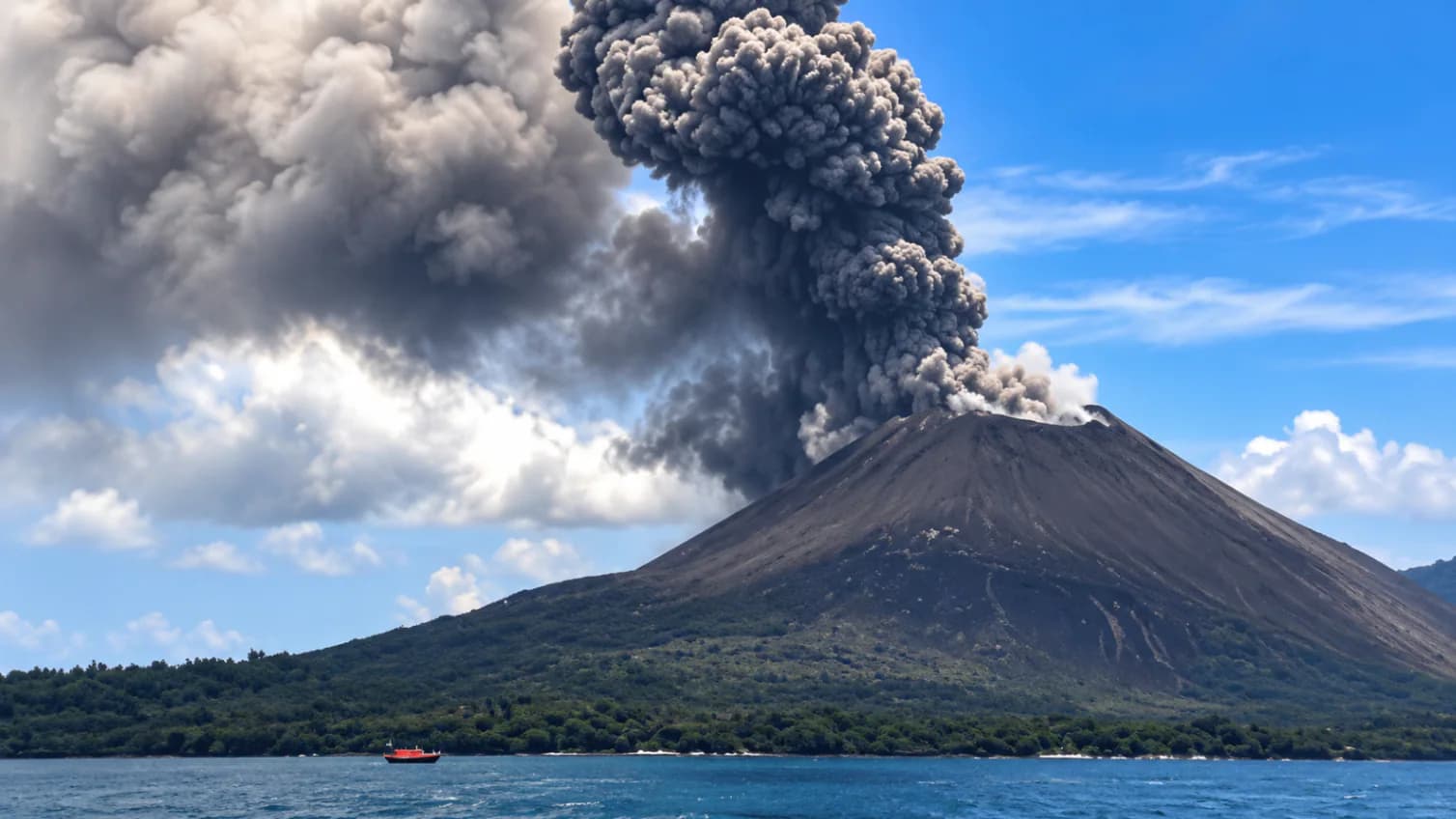
Indonesia has been hit by a major travel disruption after Mount Anak Krakatau erupted, sending volcanic ash across parts of western Indonesia and forcing authorities to suspend flight operations at several airports.
The eruption occurred early Sunday as the volcano, located in the Sunda Strait between the islands of Java and Sumatra, continued a period of increased activity.
The eruption produced lava and ash, with volcanic material reaching altitudes of up to 50,000 feet in some areas.
The ash cloud created an immediate danger for aviation because volcanic ash can damage aircraft engines and other critical systems.
As a result, authorities suspended operations at Soekarno-Hatta International Airport, Indonesia’s main airport serving Jakarta, along with several other airports in the region.
By Sunday afternoon, hundreds of flights had been affected.
Airport operator Angkasa Pura reported that 301 flights had been affected at Soekarno-Hatta, including domestic, international and cargo services. Later figures from Indonesian authorities showed that 209 scheduled flights at the airport had been cancelled during the initial disruption period.
Thousands of passengers were left waiting inside the airport as airlines cancelled, delayed or rearranged flights.
International services connecting Jakarta with destinations including Singapore, Kuala Lumpur, Doha, Guangzhou and Hong Kong were among those affected.
Singapore Airlines was also forced to cancel flights between Singapore and Jakarta because of the disruption.
The disruption was not limited to Jakarta.
Indonesian authorities suspended operations at several airports after volcanic ash was detected in surrounding airspace. The affected airports included Soekarno-Hatta, Halim Perdanakusuma, Radin Inten II, Budiarto, Pondok Cabe and Husein Sastranegara.
Authorities have continued extending the airport closures while monitoring the movement of the volcanic ash and the volcano’s activity.
The situation has also affected daily life in some communities near the volcano.
Some schools suspended activities, while fishermen stopped going out because of the ash and concerns about conditions in affected areas.
Health authorities have advised people exposed to ash to use masks and eye protection, reduce outdoor activities and take precautions while driving because ash can reduce visibility.
No casualties have been reported from the latest eruption, and authorities have not issued a general evacuation order.
There is also no immediate tsunami threat reported from the eruption.
However, authorities have maintained an exclusion zone around the volcano and warned residents and visitors to remain cautious as activity continues.
Why Anak Krakatau Matters
Anak Krakatau, meaning “Child of Krakatoa,” emerged from the sea in the caldera left by the catastrophic 1883 eruption of Krakatoa.
That historic eruption was one of the most destructive volcanic events ever recorded and caused enormous loss of life.
Anak Krakatau itself became internationally associated with another deadly event in 2018, when a partial collapse of the volcano triggered a tsunami that struck coastal communities in Java and Sumatra, killing more than 400 people.
The current eruption, however, does not mean that another disaster on the scale of 2018 is occurring.
Indonesian authorities are closely monitoring the volcano, and officials have stressed that frequent eruptions do not automatically mean that a much larger eruption will follow.
For now, the immediate impact is being felt most strongly in the aviation sector.
Passengers have been advised to check directly with their airlines before travelling, while airports and aviation authorities continue assessing whether conditions are safe enough for flights to resume.
The eruption is another reminder of the challenges faced by Indonesia, a country located along the Pacific Ring of Fire and home to numerous active volcanoes.
As Anak Krakatau continues to erupt, authorities will be watching the volcano closely while airlines work to manage thousands of disrupted passengers and flights.
Key Facts
Event: Mount Anak Krakatau eruption
Location: Sunda Strait, Indonesia
Date: September 6, 2026
Major airport affected: Soekarno-Hatta International Airport
Flights affected: Hundreds, with 301 reported affected at Soekarno-Hatta during the disruption
Airports affected: Six airports reported suspended operations
Volcanic ash: Detected at altitudes reaching up to 50,000 feet in some areas
Casualties: No casualties reported from the latest eruption
Tsunami warning: No immediate tsunami threat reported
Previous major Anak Krakatau disaster: 2018 tsunami
Sources
Reuters
Associated Press
Al Jazeera
The Jakarta Post
ANTARA News
AP News
PUBLISHER NOTE
About Talk Ya True
Talk Ya True publishes independent reporting and analysis with clear attribution, source transparency and corrections when needed.
Related Articles

World
Diezani’s UK Acquittal Won’t End Nigeria’s Probe, HEDA Says
World
Houthi Attacks Hit Saudi Energy Sites as 73 Are Injured and Oil Prices Surge Toward $100

World
Oil Prices Near $98 as US-Iran Tensions Raise Fresh Fears Over Global Fuel Costs

World
Dolly Parton Dies at 80: Remembering the Country Music Legend Who Turned a Humble Beginning Into a Global Legacy
Stay Informed
Get the latest stories from Nigeria.
Free news updates. Unsubscribe anytime.
By subscribing, you agree to receive free news updates from Talk Ya True. You can unsubscribe at any time.