World
Oil Prices Near $98 as US-Iran Tensions Raise Fresh Fears Over Global Fuel Costs
Brent crude briefly climbed to nearly $98 a barrel on Monday as escalating attacks between the United States and Iran raised fresh concerns about oil supplies through the Strait of Hormuz. The surge could have consequences for fuel prices, inflation and economies such as Nigeria that rely heavily on crude oil exports.
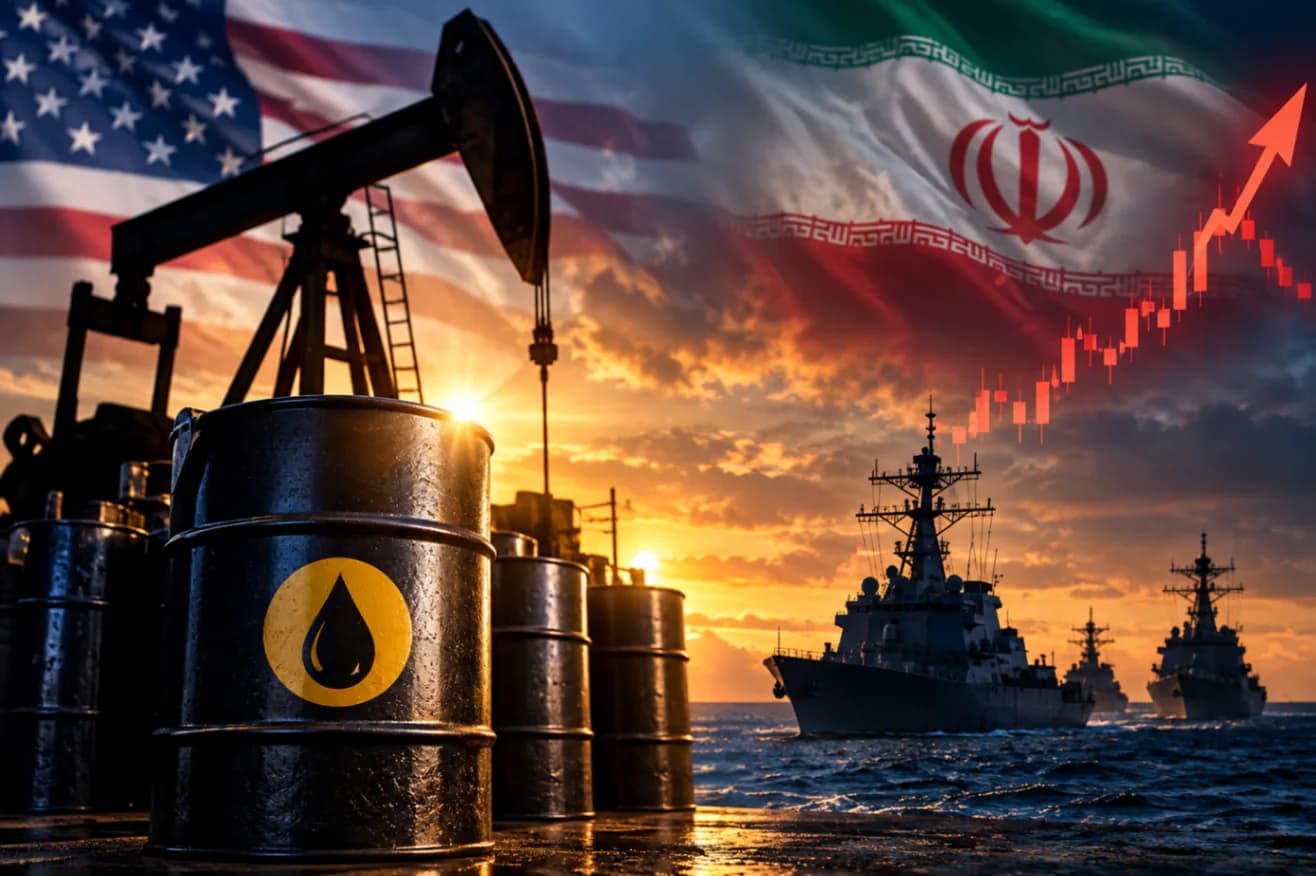
Global oil prices have surged to their highest level in almost seven weeks as escalating military tensions between the United States and Iran raise fresh concerns about the security of oil supplies moving through the Strait of Hormuz.
Brent crude, the international benchmark for oil prices, briefly climbed to $97.93 a barrel on Monday before easing back. West Texas Intermediate, the US benchmark, also moved above $92 a barrel.
The latest increase comes after oil prices already recorded a sharp rise last week. Brent gained about 7.8% during the week, while WTI climbed almost 10% as renewed US-Iranian attacks disrupted shipping activity around the region.
The Strait of Hormuz has become the centre of the latest concern.
The narrow waterway between Iran and Oman is one of the world's most important energy routes, with a significant share of global oil supplies normally passing through it.
But shipping activity has fallen sharply amid the growing military confrontation.
Data from analytics firm Kpler showed that an average of only about 10 commodity vessels passed through the Strait of Hormuz each day over the previous 10 days, the lowest level recorded since May.
Only two vessels crossed on Saturday and six on Sunday, highlighting the growing concerns among commercial shipping operators.
US-Iran Attacks Raise Supply Concerns
The latest escalation followed attacks involving oil tankers and military vessels.
US Central Command said US forces struck three Iranian oil tankers on Saturday, including one near Kharg Island, an important Iranian oil-export hub.
Iran's Islamic Revolutionary Guard Corps said it had also targeted three oil tankers travelling through the Strait of Hormuz and three additional US vessels in other areas.
The attacks have raised concerns that commercial shipping could become increasingly caught up in the conflict.
Maritime intelligence experts have described the development as a significant escalation because commercial tankers are increasingly becoming part of the confrontation.
Iran has also announced plans for a new restricted maritime zone around the Gulf.
Mohsen Rezaei, Iran's Supreme National Security Council secretary, said Tehran would announce the zone in the coming days and publish maps for a proposed new shipping corridor.
The announcement has added another layer of uncertainty for shipping companies operating through the region.
Why Oil Prices Are Rising
Oil prices respond strongly to fears about supply disruptions.
When traders believe that less crude oil could reach the international market, prices tend to rise as buyers compete for potentially tighter supplies.
The current situation is particularly important because the Strait of Hormuz is a critical route for Middle Eastern energy exports.
If shipping through the waterway remains severely restricted, the global oil market could face a much larger supply shock.
For now, however, oil is still flowing through the region.
That distinction is important.
The current price increase reflects both actual reductions in shipping activity and the possibility that the disruption could become significantly worse if the conflict continues.
What Could Happen to Fuel Prices?
Higher crude oil prices can eventually translate into higher fuel costs, although the impact varies from country to country.
Oil is only one component of the final price consumers pay at the pump. Refining costs, transportation, taxes, exchange rates and local market conditions also play major roles.
However, a prolonged increase in global crude prices would put additional pressure on countries that import refined petroleum products.
That could become particularly important for African economies already dealing with high living costs.
What It Means for Nigeria
The development presents a complicated picture for Nigeria.
As one of Africa's largest oil producers, Nigeria can benefit from higher crude prices because increased export prices can generate more foreign-exchange earnings and government revenue.
Higher oil prices can therefore provide some support for Nigeria's external reserves and public finances if production levels remain strong.
But there is another side to the story.
Nigeria also depends on imported petroleum products and remains exposed to global energy-market movements.
If international energy prices remain elevated for an extended period, transportation costs, production expenses and inflationary pressures could increase.
The impact will also depend on the naira-dollar exchange rate and the price at which petroleum products are sold domestically.
In other words, higher oil prices are not automatically good news for every Nigerian.
The government may earn more from crude exports, but businesses and consumers could face higher costs if global energy pressures feed through to transportation and other parts of the economy.
OPEC+ Holds Production Policy Steady
The latest oil-price increase also comes after OPEC+ decided to keep its October production policy unchanged.
The group had increased production for six consecutive months but is now pausing those increases while members work on future production quotas.
The decision adds another factor for traders to consider as the market attempts to determine how much additional crude could become available if supply disruptions worsen.
Markets Remain on Edge
Investors are now watching the Strait of Hormuz closely.
A prolonged disruption could push oil prices significantly higher and increase inflationary pressure around the world.
Financial markets have already reacted to the combination of higher oil prices and geopolitical uncertainty.
Reuters reported that global stocks edged lower on Monday as investors worried that rising energy costs could make inflation harder for central banks to control.
For now, Brent crude remains close to $97 a barrel after briefly approaching $98.
The biggest question is no longer simply how high oil prices can go.
It is whether the US-Iran confrontation will continue disrupting one of the world's most important energy corridors.
If shipping through the Strait of Hormuz continues to decline, the pressure on global oil markets could intensify.
And if crude prices remain elevated for long enough, consumers far beyond the Middle East could eventually feel the impact at fuel stations, in transportation costs and through higher prices for goods and services.
Key Facts
Brent crude: Briefly reached $97.93 per barrel
WTI crude: Above $92 per barrel
Brent weekly increase: About 7.8%
WTI weekly increase: Nearly 10%
Main cause of market concern: US-Iran military escalation
Critical shipping route: Strait of Hormuz
Recent Hormuz traffic: About 10 commodity vessels per day over the past 10 days
OPEC+ decision: October production policy left unchanged
Potential impact: Higher energy costs, inflation and pressure on global markets
Nigeria angle: Higher crude prices could increase oil-export earnings but may also increase domestic economic pressure if global energy costs remain high.
Tags
PUBLISHER NOTE
About Talk Ya True
Talk Ya True publishes independent reporting and analysis with clear attribution, source transparency and corrections when needed.
Related Articles
Stay Informed
Get the latest stories from Nigeria.
Free news updates. Unsubscribe anytime.
By subscribing, you agree to receive free news updates from Talk Ya True. You can unsubscribe at any time.