Politics
Atiku, Obi and Makinde Hold Firm as Opposition Struggles for One 2027 Candidate
Nigeria’s opposition is facing a major test ahead of the 2027 presidential election as Atiku Abubakar, Peter Obi and Seyi Makinde continue to pursue their presidential ambitions despite growing calls for a single opposition candidate. A coalition of opposition groups says it hopes to reach a consensus by September 30, but disagreements over who should lead the ticket could complicate the effort.
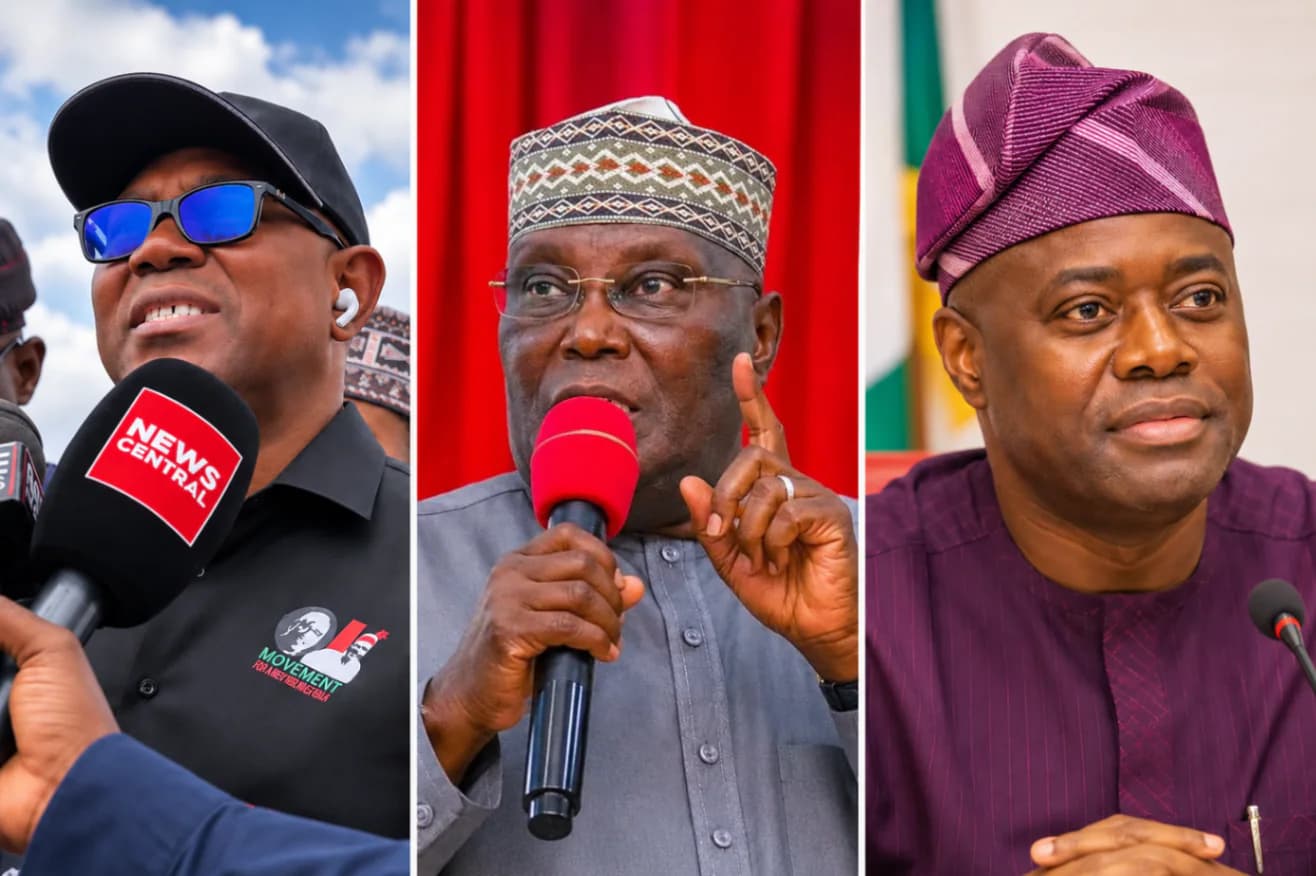
Nigeria’s opposition movement is entering a critical phase ahead of the 2027 presidential election, with three of its most prominent figures refusing to step aside as efforts intensify to create a single candidate capable of challenging President Bola Tinubu and the ruling All Progressives Congress.
Former Vice President Atiku Abubakar, former Anambra State Governor Peter Obi and Oyo State Governor Seyi Makinde have all maintained their presidential ambitions despite growing pressure for opposition parties to unite behind one candidate.
The development presents one of the biggest challenges facing the opposition as political parties attempt to avoid a repeat of the vote splitting that characterised previous elections.
The latest push for unity is being driven by the G-100, a coalition of political groups and stakeholders seeking to create a broad opposition platform ahead of 2027.
The group recently brought together representatives of six opposition parties at the Shehu Musa Yar’Adua Centre in Abuja as part of efforts to develop a framework for cooperation.
The ultimate objective is to produce a consensus presidential candidate.
However, the process has already encountered resistance.
A member of the G-100, Ambassador Umanu Elijah, said consultations were continuing and expressed confidence that the group could reach an agreement by September 30.
He acknowledged that no single candidate had yet been adopted.
The challenge is that the leading opposition figures have continued to position themselves as potential presidential candidates rather than publicly agreeing to withdraw in favour of another contender.
Atiku’s camp has maintained that the former vice president intends to contest the 2027 election.
An ally of Atiku told PUNCH that although the former vice president remains open to discussions, he is committed to his presidential bid.
Atiku is currently the presidential candidate of the African Democratic Congress, the platform that emerged as a major vehicle for the opposition coalition.
Peter Obi, meanwhile, remains the presidential candidate of the Nigeria Democratic Congress.
His supporters have continued to promote him as one of the strongest potential challengers to the APC.
The NDC has also indicated that it remains open to discussions about an opposition alliance, while maintaining confidence in Obi's chances.
Seyi Makinde is facing a similar situation.
The Oyo State governor is the presidential candidate of the Allied Peoples Movement and has also shown no indication that he intends to withdraw from the contest.
The APM has said Makinde is contesting to win and could himself become the consensus candidate if the opposition eventually agrees on a single contender.
Makinde and Obi have also recently appeared together at political events as opposition leaders attempt to build greater cooperation.
The two were among opposition figures involved in the unveiling of a “Reset Nigeria” agenda, which focused on economic reforms and the direction of the country ahead of the 2027 election.
Why the opposition wants one candidate
The push for a consensus candidate is largely driven by concerns that several opposition candidates could divide votes and make it easier for the ruling APC to retain the presidency.
The 2023 election demonstrated how multiple major opposition candidates could split support across different political blocs.
The G-100 believes a coordinated opposition campaign could create a stronger challenge to the ruling party.
But producing a single candidate is easier said than done.
Atiku, Obi and Makinde each have their own political structures, supporters and regional bases.
Convincing one of them to withdraw would require negotiations over not only the presidential ticket but potentially the future political structure of the coalition.
The question of who becomes the candidate is therefore only one part of the negotiations.
The opposition would also have to agree on a common political programme, campaign structure, power-sharing arrangements and a process for resolving disputes.
There is also the question of whether supporters of an unsuccessful candidate would actually transfer their support to whoever emerges as the consensus choice.
The September 30 target
Despite the disagreements, the G-100 says the process is still moving forward.
Ambassador Umanu Elijah said consultations are continuing behind the scenes and expressed confidence that a consensus candidate could emerge before the end of September.
If successful, the process would represent one of the most significant attempts by Nigeria's opposition parties to create a unified presidential challenge ahead of 2027.
If it fails, Atiku, Obi, Makinde and other opposition candidates could enter the election separately, potentially splitting the anti-APC vote.
For now, none of the major contenders appears ready to be the first to withdraw.
That leaves the opposition facing a difficult political calculation: unite behind one candidate and risk disappointing the supporters of other contenders, or maintain multiple presidential campaigns and risk dividing the electorate.
The coming weeks could therefore prove decisive.
With the 2027 election approaching, the opposition's ability to turn discussions about unity into an actual agreement may determine whether it presents Nigerians with a single alternative to the APC or enters the election divided.
Key Facts:
• Atiku Abubakar is seeking the presidency under the African Democratic Congress.
• Peter Obi is seeking the presidency under the Nigeria Democratic Congress.
• Seyi Makinde is the presidential candidate of the Allied Peoples Movement.
• The three politicians have not indicated that they are prepared to step aside for another candidate.
• The G-100 is working to establish a broader opposition alliance.
• Six opposition parties have been involved in the group's recent discussions.
• The G-100 says it hopes to reach a consensus by September 30.
• No single opposition presidential candidate has yet been adopted by the group.
• The major challenge is agreeing who would lead a united opposition ticket.
• Multiple opposition candidates could potentially divide votes in the 2027 presidential election.
Sources:
PUNCH
Channels Television
The Guardian Nigeria
Vanguard
TheCable
PUBLISHER NOTE
About Talk Ya True
Talk Ya True publishes independent reporting and analysis with clear attribution, source transparency and corrections when needed.
Related Articles
Politics
Tinubu Supporters Take 2027 Campaign to Bayelsa With Yenagoa Walk
Politics
Kwankwasiyya Red Caps Burned in Viral Kano Video as Obi Alliance Sparks Political Backlash
Politics
Nigeria’s 2027 Election Campaigns Begin as Tinubu, Obi and Atiku Enter Fresh Political Battle
Politics
Atiku’s Fuel Subsidy Proposal Sparks Fresh 2027 Fight With Tinubu and Wike
Stay Informed
Get the latest stories from Nigeria.
Free news updates. Unsubscribe anytime.
By subscribing, you agree to receive free news updates from Talk Ya True. You can unsubscribe at any time.