Business
Nigeria’s Inflation Falls to 15.43% - But Why Do Things Still Feel So Expensive?
Nigeria's headline inflation rate has fallen to 15.43%, according to the latest figures, but the improvement has not necessarily translated into cheaper food, transport and household essentials for many Nigerians. The development raises an important question: if inflation is slowing, why are millions of households still struggling with the cost of living?
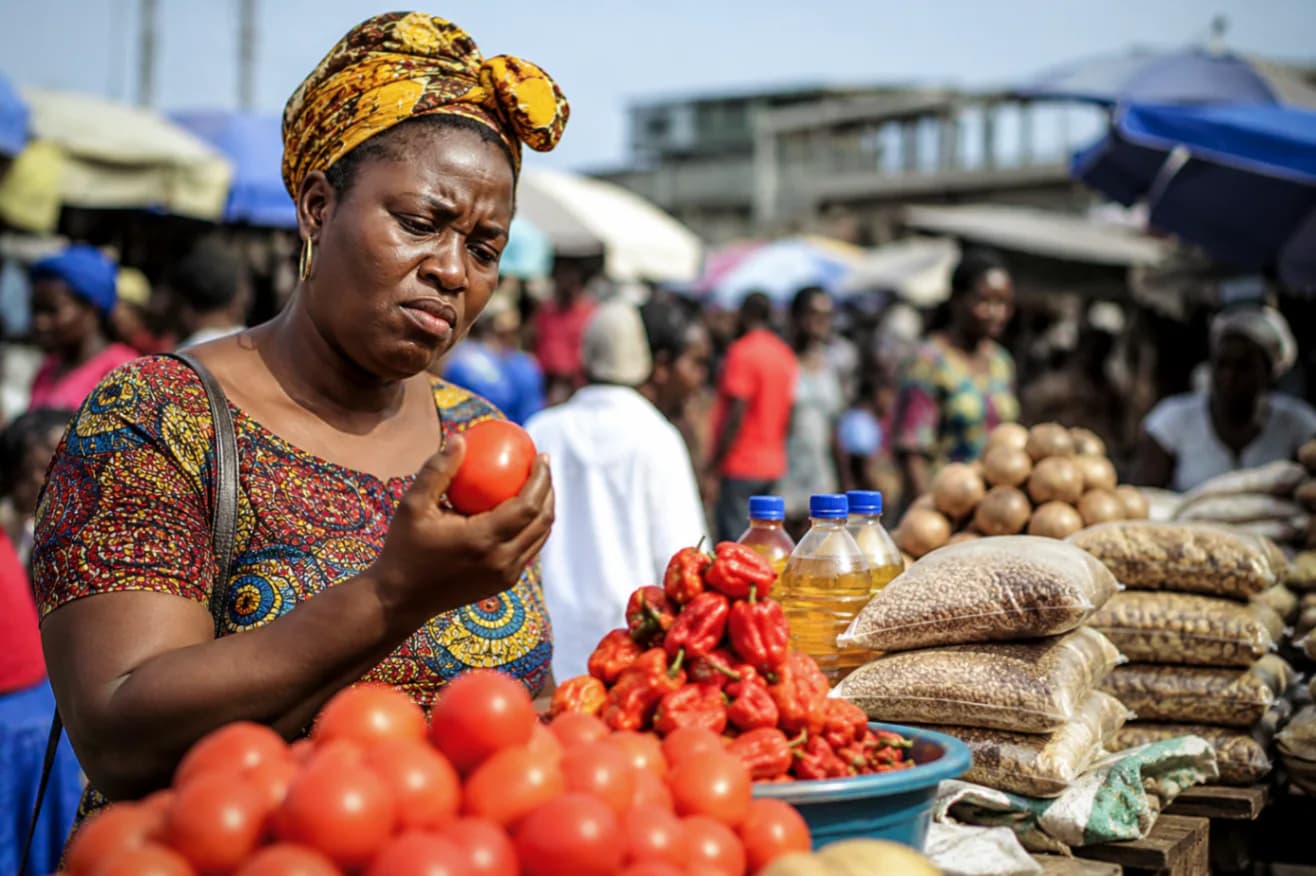
Nigeria's latest inflation figures appear to offer some good news.
The country's headline inflation rate has reportedly fallen to 15.43%, marking a significant slowdown compared with the much higher rates Nigerians experienced during the height of the country's cost-of-living crisis.
But for millions of households, there is an obvious question:
If inflation is falling, why does everything still feel so expensive?
That question deserves a serious answer.
Because while economic statistics are important, Nigerians experience the economy differently.
They experience it at the market.
At the petrol station.
At the supermarket.
When paying school fees.
When renewing rent.
When buying medicine.
And when trying to keep a small business alive.
Falling Inflation Does Not Mean Falling Prices
This is one of the most important distinctions Nigerians need to understand.
A decline in the inflation rate does not necessarily mean that prices are falling.
It generally means that prices are increasing at a slower rate than before.
For example, if a bag of rice rises from ₦50,000 to ₦60,000 and later rises from ₦60,000 to ₦62,000, inflation may be slowing.
But the consumer is still paying ₦62,000.
The price has not returned to ₦50,000.
This is why Nigerians can hear that inflation has fallen while continuing to complain about the cost of living.
The two things can happen at the same time.
The Statistics and the Kitchen Tell Different Stories
For policymakers and economists, inflation statistics are essential.
They help the Central Bank and government understand price movements and make decisions about monetary and fiscal policy.
But ordinary Nigerians are often less concerned with the percentage itself.
They want to know:
Can I still afford my normal shopping?
Can I pay my bills?
Can I feed my family properly?
Can my salary keep up with prices?
Those questions are much more personal.
A family that was spending ₦100,000 a month on basic necessities two years ago may still be spending considerably more today even if inflation is now slowing.
That household does not necessarily feel that the economy has improved.
Food Prices Remain the Biggest Concern
Food is perhaps the clearest example.
For low- and middle-income households, food represents a significant part of monthly spending.
When prices of rice, beans, yam, cooking oil, vegetables, meat and other staples rise, families immediately feel the pressure.
Even if the overall inflation rate falls, food prices can remain elevated.
That means the government cannot celebrate a lower headline figure without also asking whether Nigerians can actually afford nutritious food.
The real test of an economic recovery is not simply whether inflation is slowing.
It is whether households are gaining purchasing power.
Salaries Matter Too
There is another side to the inflation debate that is sometimes overlooked.
Prices do not exist in isolation.
What matters is the relationship between income and prices.
If a person's salary increases by 10% while the cost of essential goods increases by 15%, that person is effectively poorer.
If wages remain stagnant while food, transportation, rent and electricity become more expensive, the household experiences an even greater squeeze.
This is why economic policy must focus not only on inflation but also on employment, wages and productivity.
Small Businesses Are Feeling the Pressure
Nigeria's small businesses are particularly vulnerable.
A small restaurant owner may be dealing with higher food costs.
A barber may face rising electricity and equipment expenses.
A trader may pay more to transport goods.
A manufacturer may spend more on energy and raw materials.
These businesses cannot always pass the full increase on to their customers.
If they increase prices too much, customers may stop buying.
If they don't increase prices, their profit margins disappear.
This is one reason why the cost-of-living crisis can become a business crisis.
The Naira Still Matters
Nigeria's exchange rate also plays an important role.
The country imports many products and inputs used by businesses.
When the naira loses value against major currencies, imported goods and materials can become more expensive.
That increase can eventually reach consumers.
A manufacturer paying more for imported components may raise prices.
A retailer paying more for imported stock may do the same.
The effects can therefore spread throughout the economy.
What Should Nigerians Expect Next?
If inflation continues to slow, that could eventually provide relief.
Lower inflation can make it easier for businesses and households to plan.
It can also create room for monetary policy to become less restrictive if other economic conditions allow.
But slowing inflation alone is not enough.
Nigeria needs sustained improvements in:
Food production
Electricity supply
Transportation
Manufacturing
Employment
Wages
Exchange-rate stability
Infrastructure
These are the areas that ultimately determine whether ordinary people feel better off.
Government Should Explain the Difference
The government also has a responsibility to communicate economic statistics clearly.
When officials announce that inflation has fallen, they should explain what that means for ordinary households.
Otherwise, Nigerians may hear one message from government and experience something completely different at the market.
That creates distrust.
There is nothing wrong with celebrating an improvement in inflation.
But the government should also acknowledge that prices can remain high even when inflation is falling.
Both statements can be true.
The Real Question Is Purchasing Power
Perhaps the most useful way to judge Nigeria's economy is to ask:
How much can the average Nigerian actually buy with their income?
That is purchasing power.
If wages rise while essential prices fall or stabilise, households become better off.
If prices continue rising faster than incomes, households remain under pressure.
This is why the inflation figure should never be considered in isolation.
It is one part of a much bigger economic picture.
Nigerians Need More Than Better Numbers
There is nothing wrong with wanting positive economic statistics.
In fact, lower inflation is welcome.
But Nigerians ultimately want those improvements to become visible in their lives.
They want food prices to stabilise.
They want affordable transportation.
They want reliable electricity.
They want businesses to survive.
They want salaries that can support families.
They want to save money again.
And they want to believe that next year will be financially easier than this year.
Those are much more meaningful indicators of economic progress.
The Government Has an Opportunity
If the latest inflation figures genuinely reflect a sustained improvement rather than a temporary change, the government should use the opportunity to deepen the reforms that can make the improvement permanent.
That means improving domestic food production, supporting productive businesses, strengthening infrastructure and creating conditions where private investment can generate jobs.
The objective should not simply be to reduce the inflation number.
It should be to build an economy in which Nigerians earn more, produce more and spend less of their income simply surviving.
So, Is Nigeria's Economy Improving?
The honest answer is:
There are signs of improvement, but many households may not feel the benefits yet.
A lower inflation rate is encouraging.
But it does not erase the price increases that already happened.
It does not automatically make food cheaper.
It does not automatically make rent affordable.
It does not automatically increase salaries.
And it does not automatically restore the purchasing power Nigerians lost during the years of rapid price increases.
That work is still ahead.
The Number Is Important — But the Nigerian Household Matters More
Nigeria should welcome falling inflation.
But the celebration should not stop at the headline figure.
The ultimate measure of economic success is whether Nigerian families can live with greater financial security than they did before.
If inflation falls to 15%, but a family still cannot afford food, the government still has work to do.
If inflation falls and wages rise, businesses expand, jobs increase and household purchasing power improves, then the statistics will finally begin to match people's experiences.
That is the outcome Nigerians are waiting for.
They don't just want inflation to fall.
They want the cost of living to become manageable again.
Key Facts
Headline inflation: 15.43%
Main concern: Cost of living remains high despite slower inflation
Important distinction: Lower inflation does not necessarily mean lower prices
Key household pressures: Food, transport, housing, electricity and other essentials
Economic priority: Improve purchasing power and household incomes
Business impact: Higher operating costs continue to affect small businesses
Outlook: Continued improvement will depend on sustained economic stability
Tags
PUBLISHER NOTE
About Talk Ya True
Talk Ya True publishes independent reporting and analysis with clear attribution, source transparency and corrections when needed.
Related Articles

Nigeria
Foreign Investors Hold Back on Nigeria as Tax and 2027 Election Risks Grow

Nigeria
Police Raid Ex-Niger Deputy Governor’s Aide’s Home at 1am, Arrest Him

Nigeria
Rivers Police Nab Suspected One-Chance Robbery Gang in Port Harcourt

Opinion
Nigeria Has the Talent. Nigeria Has the Potential. So Why Can't We Make Things Work?
Stay Informed
Get the latest stories from Nigeria.
Free news updates. Unsubscribe anytime.
By subscribing, you agree to receive free news updates from Talk Ya True. You can unsubscribe at any time.